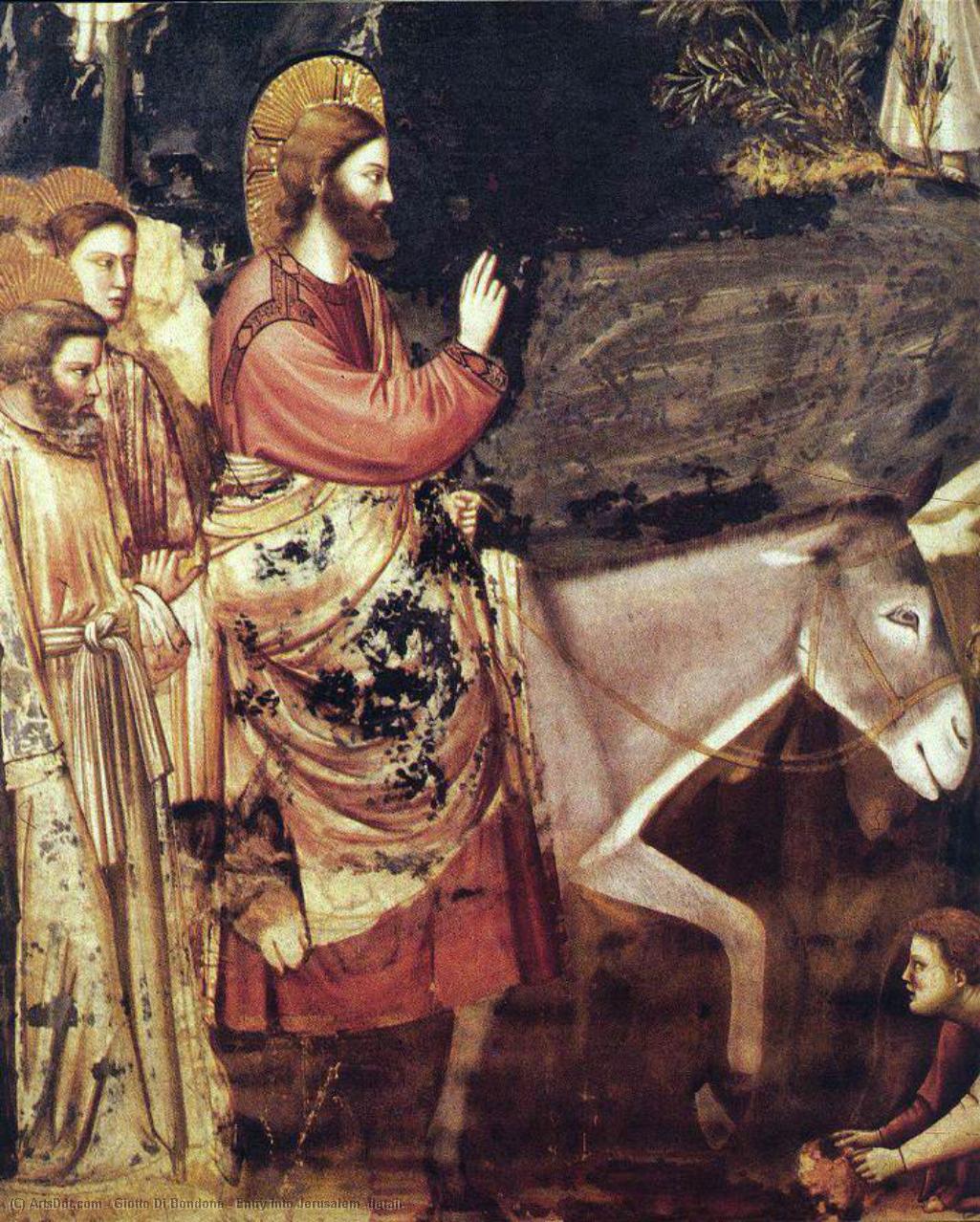
A Moment of Divine Humility
In the quiet, textured depths of Giotto di Bondone’s Entry into Jerusalem, we are invited to witness more than just a biblical procession; we are invited into a moment of profound spiritual intimacy. This exquisite detail captures the very essence of the Proto-Renaissance, where the rigid, golden abstractions of the Byzantine era began to dissolve into something far more human and tangible. As Christ approaches the gates of Jerusalem mounted upon a humble donkey, the scene avoids the bombast of a conquering king. Instead, Giotto presents a narrative of quiet reverence and heavy anticipation. The viewer is not merely an observer of a historical event but a participant in the huspectful hush that precedes the storm of the Passion. There is a palpable weight to the figures, a sense that these are bodies made of flesh, bone, and spirit, moving through a world that feels increasingly real.
The emotional resonance of this work lies in its masterful balance between the monumental and the minute. Through his revolutionary approach, Giotto imbues each character with an individual psychological presence. The way the light catches the folds of the drapery and the subtle, weary strength in the donkey’s form creates a sense of grounded reality that was unprecedented in the early 14th century. For the collector or the lover of fine art, this piece offers a window into the dawn of Western naturalism—a time when painters first dared to breathe life and volume into the flat planes of medieval tradition.
The Alchemy of Tempera and Light
To look closely at this detail is to appreciate the meticulous craftsmanship of the egg tempera technique. Giotto’s hand is visible in the layered, rhythmic brushstrokes that build form from within. Unlike the fluid, sweeping motions of later oil paintings, tempera demands a disciplined, additive process, creating a matte finish and a slightly grainy texture that lends the artwork an ancient, venerable soul. This technique allows for subtle gradations of light and shadow, particularly evident in the way the shadows define the musculature of the donkey and the heavy, sculptural folds of the disciples' robes.
The color palette is a masterclass in earthy sophistication. Dominated by warm ochres, deep reds, and rich browns, the composition feels rooted in the very soil of the Holy Land. These tones do not merely decorate; they establish a mood of solemnity and warmth. The contrast between the brighter, more illuminated figures and the darker, receding background creates a nascent sense of depth, guiding the eye toward the central figure of Christ. For an interior designer, such a palette offers incredible versatility, providing a sophisticated anchor for a room that seeks to evoke feelings of stability, history, and timeless elegance.
A Legacy Written in Stone and Pigment
Giotto di Bondone, often hailed as the father of European painting, was an artist who bridged worlds. His work serves as the vital link between the symbolic rigidity of the Middle Ages and the humanistic triumphs of the Renaissance. This specific detail, likely part of a larger cycle such as those found in the magnificent Scrovegni Chapel, reflects his obsession with observation and emotional realism. He moved away from the purely iconographic, choosing instead to depict the movement and counter-movement of a living procession—the laying down of garments, the reaching out of hands, and the rhythmic gait of the animals.
Symbolically, every element in this composition serves a higher purpose. The donkey is not merely a beast of burden but a profound symbol of meekness and divine service. The gestures of the crowd, though rendered with simplified forms, convey a collective spirit of welcome and sacrifice. Owning a high-quality reproduction of such a masterpiece is an opportunity to bring a piece of art history’s most transformative era into a modern space. It is an invitation to contemplate the beauty of humility and the enduring power of a vision that changed the course of Western art forever.