Explore Giotto di Bondone (1267-1337), the revolutionary Italian painter! Discover his proto-Renaissance frescoes, naturalism & emotional depth in works like the Scrovegni Chapel. A key figure in art history.
A Vision of Regal Dignity: Giotto’s “Justice”
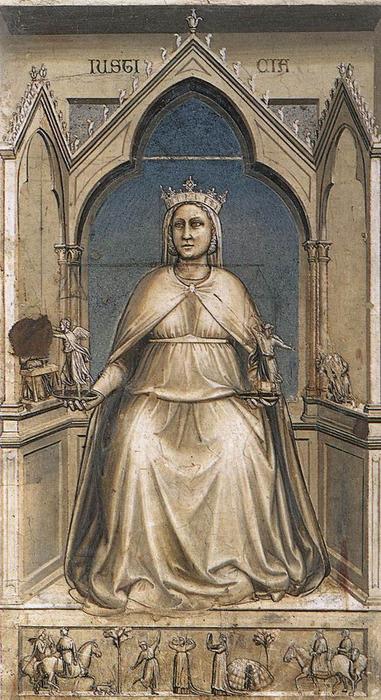
Giotto di Bondone, a name synonymous with the dawn of the Renaissance, wasn't merely an artist; he was a revolutionary who irrevocably altered the trajectory of Western art. Born in Florence around 1267, Giotto defied the conventions of his time—the stylized grandeur of Byzantine iconography—embracing a newfound realism that would inspire generations to come. His influence extends far beyond the frescoes adorning churches like Santa Croce and Assisi; it resides within the very core of artistic innovation itself. Consider “Justice,” an enigmatic painting attributed to Giotto, capturing a moment frozen in time – a woman seated upon a bench, radiating authority and contemplation.
The Proto-Renaissance Spirit Embodied
“Justice” exemplifies the Proto-Renaissance style, a transitional phase between medieval art and the blossoming artistic fervor of Florence’s golden age. Unlike the flattened perspectives and shimmering gold backgrounds characteristic of Byzantine churches, Giotto sought to depict figures with palpable physicality and emotional nuance. The artist meticulously rendered the woman's posture—seated gracefully on the bench—creating an impression of serene composure. Cimabue, Giotto’s teacher, instilled in him a profound understanding of anatomy and naturalism, principles that would become hallmarks of his distinctive approach. This departure from tradition wasn’t simply stylistic; it represented a fundamental shift toward humanist ideals – an acknowledgement of human experience as worthy of artistic representation.
Detailed Technique: A Masterful Blend
Giotto's technique was groundbreaking for its era. He employed tempera paint on wood panels, layering pigments with painstaking precision to achieve astonishing depth and luminosity. Observe the subtle gradations of color in the bench’s design—a deliberate choice intended to enhance the overall visual impact. The artist skillfully utilized chiaroscuro – the dramatic interplay between light and shadow – sculpting form and conveying emotion through nuanced tonal variations. This masterful manipulation of light contributes significantly to the painting's solemn atmosphere, inviting viewers into a contemplative space where regal dignity intertwines with profound introspection.
Symbolism: Crowns and Contemplation
The woman’s crown is more than just ornamentation; it symbolizes her role as ruler—a figure embodying justice and wisdom. Her downward gaze speaks volumes about inner reflection – suggesting that true authority lies not merely in outward display but in unwavering moral conviction. The bench itself serves as a visual anchor, grounding the figure within a familiar domestic setting while simultaneously elevating her status to one of symbolic grandeur. These elements converge to communicate a powerful message: contemplation and righteousness are inseparable components of leadership and spiritual fulfillment.
Emotional Resonance: An Echo of Timeless Beauty
“Justice” transcends mere representation; it evokes an emotional response that resonates across centuries. The painting’s quiet dignity, combined with its masterful execution, speaks to the enduring human fascination with themes of virtue and contemplation. A hand-painted reproduction captures this essence perfectly—allowing collectors and interior designers alike to experience Giotto's visionary artistry firsthand. Bringing a piece of Renaissance brilliance into your home is an investment in beauty, intellect, and a connection to artistic history.