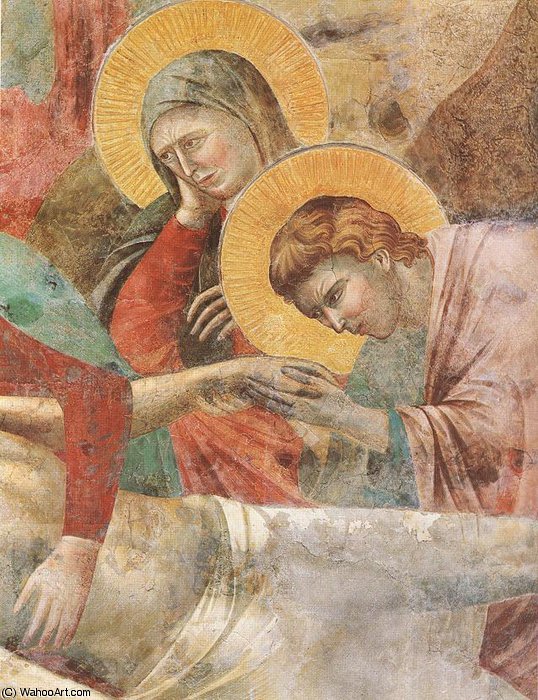
Explore Giotto’s "Lamentation" detail – a pivotal Renaissance fresco showcasing realism & emotion in the Scrovegni Chapel. Discover its beauty and historical significance.
Explore Giotto di Bondone (1267-1337), the revolutionary Italian painter! Discover his proto-Renaissance frescoes, naturalism & emotional depth in works like the Scrovegni Chapel. A key figure in art history.
A Revolutionary Embrace of Reality: Giotto’s Lamentation
The fresco “Lamentation” by Giotto di Bondone stands as a cornerstone of artistic innovation, marking the definitive break from Byzantine formalism and ushering in the dawn of the Renaissance. Painted between 1304 and 1306 for the Scrovegni Chapel in Padua, Italy – a commission that profoundly shaped the chapel’s spiritual atmosphere – this monumental artwork transcends mere depiction; it strives to convey profound emotion and psychological depth, qualities previously absent from Western art. Its influence reverberates through subsequent generations of artists, establishing Giotto as the father of Italian Renaissance painting.
The Byzantine Legacy Challenged: Style and Technique
Giotto’s artistic vision was firmly rooted in the traditions of Byzantium, where stylized figures and flattened perspectives dominated visual representation. However, unlike his predecessors, Giotto possessed an unwavering determination to capture human anatomy with unprecedented accuracy—a daring departure that shocked audiences accustomed to idealized representations. The fresco employs a technique known as *tempera*, utilizing pigments mixed with egg yolk and bound by lime onto wet plaster. This method allowed for subtle gradations of color and textural nuances unattainable through earlier methods, resulting in an astonishingly lifelike portrayal of grief. Notice the elongated figures—characteristic of Byzantine art—but crucially, observe how Giotto imbues them with palpable musculature and realistic drapery folds, conveying a sense of physicality absent from previous artistic endeavors. The careful layering of pigments contributes to a rich surface texture that invites contemplation.
A Narrative Heartbeat: Composition and Symbolism
The composition centers around Mary Magdalene, Nicodemus, Joseph of Arimathea, and Saint John the Evangelist gathered before Christ’s tomb—a scene from the Gospels depicting the mourning of Jesus after his crucifixion. Giotto skillfully employs a shallow space that draws the viewer into the emotional core of the narrative, prioritizing psychological realism over spatial illusion. The figures are arranged in pyramidal form, creating stability while simultaneously directing the eye towards the central figure – Christ – whose body lies prone on the stone slab. The subdued color palette—primarily earthy hues accented by shimmering gold halos—underscores the solemnity of the occasion and reinforces the spiritual significance of the scene. Each gesture and facial expression is meticulously rendered, conveying sorrow, compassion, and disbelief with remarkable sensitivity. The haloed heads symbolize holiness and divine grace, emphasizing the sacred nature of the event.
Historical Context: Padua’s Spiritual Renewal
The Scrovegni Chapel represents more than just a masterpiece of art; it embodies Padua's burgeoning spiritual fervor during the early Renaissance. Giotto’s commission coincided with a period of intense religious piety and artistic experimentation, fueled by papal patronage and a renewed interest in classical ideals. The chapel’s frescoes depict scenes from Christ’s life—from Nativity to Resurrection—representing a deliberate effort to revitalize Christian faith through visual storytelling. Giotto's work directly confronted the rigid dogma of the medieval Church, advocating for an empathetic portrayal of human emotion alongside theological contemplation.
Emotional Resonance: Grief and Compassion Embodied
“Lamentation” transcends mere artistic skill; it achieves profound emotional resonance. Giotto’s masterful depiction of grief captures the universal experience of loss—a testament to his ability to communicate complex psychological states through visual language. The sorrowful expressions on the faces of Mary Magdalene and Nicodemus convey palpable empathy, reflecting the compassion inherent in Christian faith. Ultimately, Giotto's Lamentation remains an enduring symbol of human vulnerability and spiritual yearning – a poignant reminder of our shared humanity and the transformative power of art to evoke emotion and inspire contemplation.