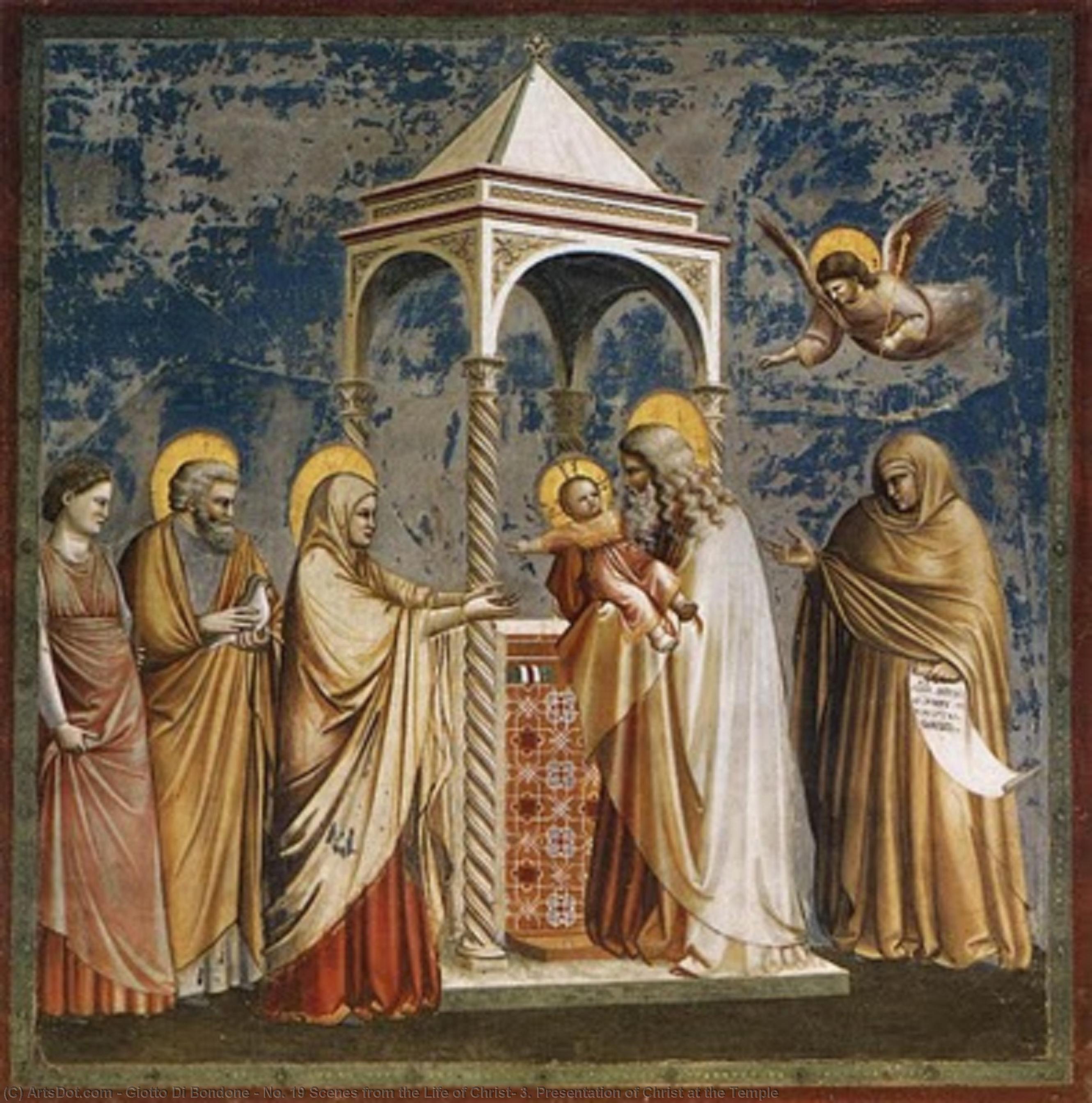
A Moment of Devotion: Giotto’s Presentation of Christ at the Temple
Giotto di Bondone's “No. 19 Scenes from the Life of Christ: 3. Presentation of Christ at the Temple,” created in 1304, is a pivotal work within the fresco cycle adorning the Cappella Scrovegni (Arena Chapel) in Padua, Italy. This masterpiece marks a significant departure from Byzantine artistic conventions and heralds the dawn of the Proto-Renaissance, profoundly influencing generations of artists to come.
Subject & Narrative
The scene depicts the biblical event described in Luke 2:22-38 – the Presentation of Jesus at the Temple. Mary, holding the infant Christ, and Joseph present their firstborn son according to Jewish law. They are met by Simeon, a devout man who recognizes Jesus as the Messiah, and Anna, a prophetess, both offering prayers and praise. The composition isn’t merely illustrative; it's a carefully constructed drama unfolding before our eyes, capturing a moment of profound religious significance.
Artistic Style & Technique
Giotto revolutionized painting through his embrace of naturalism and emotional realism. Unlike the stylized figures of Byzantine art, Giotto’s characters possess weight, volume, and individualized features. He masterfully employs *chiaroscuro* – the interplay of light and shadow – to model forms and create a sense of depth. The fresco technique itself, painting on wet plaster, demanded swift execution and precise planning, skills at which Giotto excelled. Notice how he uses a tent-like structure in the background not just as architectural detail but also to subtly define space and draw the viewer’s eye towards the central figures.
Symbolism & Iconography
The painting is rich with symbolic meaning.
The bird near the top of the composition represents peace and the Holy Spirit, a common motif in Christian art. The presence of Simeon and Anna signifies the fulfillment of prophecy and the recognition of Jesus’ divine nature.
The two books held within the scene symbolize knowledge, scripture, and the Law – highlighting the connection between the Old and New Testaments. Even the gestures of the figures are imbued with meaning; their hands raised in prayer or offering convey reverence and devotion.
Historical Context & Significance
The Cappella Scrovegni was commissioned by Enrico Scrovegni, a wealthy merchant seeking atonement for his family’s usury practices. Giotto's frescoes were intended as an act of piety and a visual narrative of salvation. This commission allowed Giotto to fully explore his innovative style, breaking away from the rigid conventions of the past. His work paved the way for the artistic advancements of the Renaissance, influencing masters like Masaccio, Michelangelo, and Raphael.
Emotional Impact & Interpretation
Giotto’s “Presentation” is not simply a depiction of a religious event; it's an invitation to *feel* its emotional weight. The tenderness in Mary’s gaze, the solemnity of Simeon’s expression, and the quiet reverence of the onlookers all contribute to a deeply moving experience.
The painting evokes a sense of awe, humility, and spiritual contemplation. It reminds us of the power of faith, the importance of tradition, and the enduring human search for meaning.
For Collectors & Designers
A reproduction of this artwork brings a touch of Renaissance grandeur and spiritual depth to any space. Its muted color palette – ochres, golds, and blues – complements both traditional and contemporary interiors. The composition’s balanced structure and compelling narrative make it a focal point for conversation and reflection. Whether displayed in a home, office, or gallery, Giotto's "Presentation of Christ at the Temple" is a timeless masterpiece that continues to inspire and captivate audiences centuries after its creation.
- Dimensions: 200 x 185 cm
- Date: 1304
- Medium: Fresco