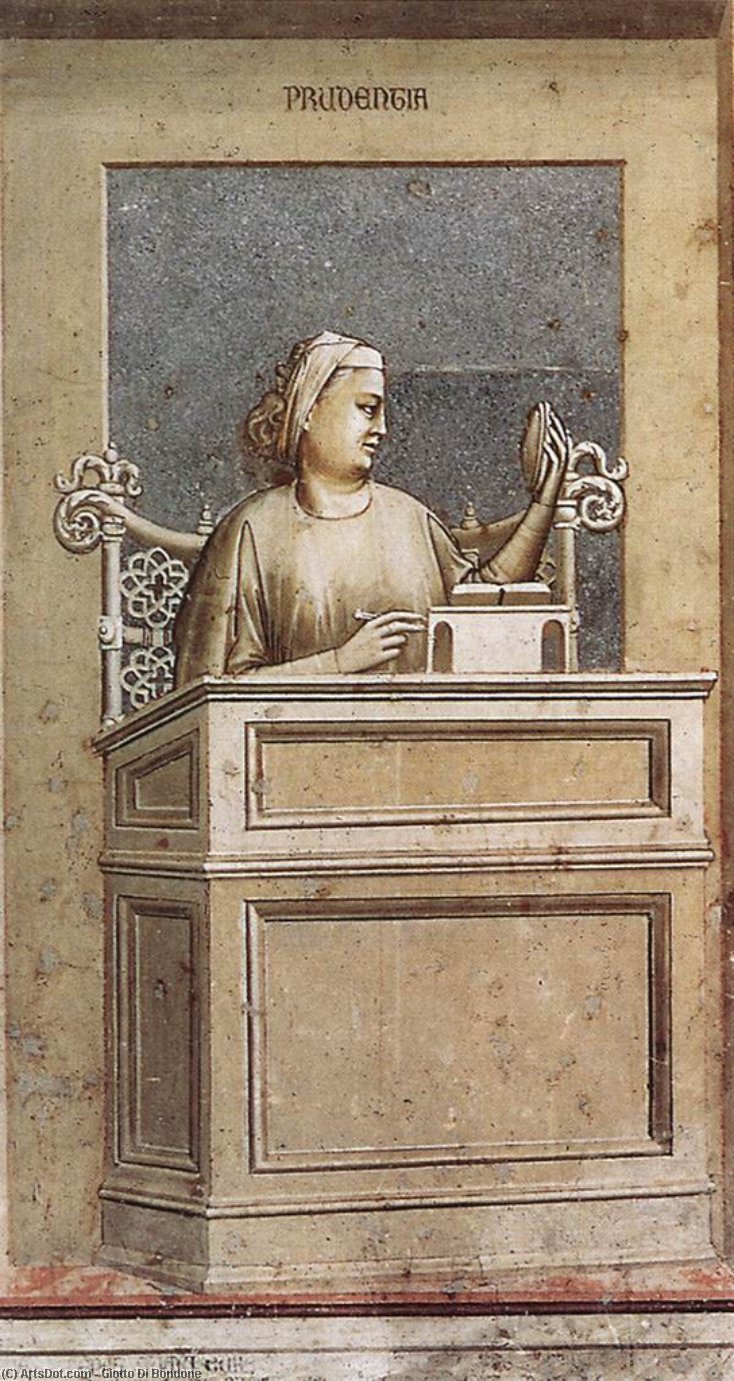
The Seven Virtues Embodied: Giotto’s Prudence
Giotto di Bondone's “No. 40 The Seven Virtues: Prudence,” created in 1306 as part of the magnificent fresco cycle adorning the Cappella Scrovegni in Padua, Italy, stands as a pivotal moment in the transition from the Byzantine artistic tradition to the burgeoning Renaissance. More than simply a depiction of a virtue, it’s a profound meditation on wisdom, discernment, and the careful consideration that underpins all good judgment – qualities desperately needed in a world grappling with moral complexities. This isn't merely a portrait; it’s an invitation into a carefully constructed dialogue between intellect and action, faith and reason.
The fresco immediately draws the eye to Prudence herself, seated at a simple wooden desk, her posture radiating quiet contemplation. She is not presented as a grand, imposing figure, but rather as a woman of measured grace – a deliberate choice by Giotto that underscores his revolutionary approach to human representation. Her attire is modest, and her gaze is directed inward, towards a small mirror reflecting her own image. This mirrored reflection isn’t about vanity; it symbolizes the process of self-examination, the crucial first step in exercising prudence. The book she holds – open but unread – suggests that true wisdom isn't found solely in knowledge itself, but in its thoughtful application.
A Revolutionary Composition and Technique
Giotto’s genius lies not just in his subject matter, but in the way he renders it. Unlike the flat, stylized figures characteristic of Byzantine art, Giotto imbues Prudence – and indeed all the virtues depicted within the chapel – with a startling sense of realism and three-dimensionality. He achieves this through masterful use of *chiaroscuro*, employing dramatic contrasts between light and shadow to sculpt the forms and create an illusion of depth. The backdrop, featuring a simple bench and wall, serves as a grounding element, anchoring the figure within a believable space. Notice how he uses atmospheric perspective – distant elements appear paler and less distinct – subtly guiding the viewer’s eye into the scene.
The fresco's execution is equally remarkable. Giotto pioneered the use of *tempera* on gesso, a technique that allowed for greater detail and luminosity than traditional fresco methods. This resulted in colors that retain their vibrancy even after centuries, a testament to his skill and the quality of the materials used. The muted palette – dominated by earthy tones and subtle blues – contributes to the painting’s contemplative mood, reflecting Prudence's association with restraint and moderation.
Context Within the Cappella Scrovegni
To fully appreciate “No. 40 The Seven Virtues: Prudence,” it’s essential to understand the chapel’s origins. Enrico Scrovegni, a wealthy merchant and moneylender, commissioned this extraordinary space in 1303 as an act of penance for his family's involvement in usury – a practice considered morally reprehensible at the time. The frescoes, therefore, represent a profound investment in spiritual redemption. Giotto’s depiction of the Seven Virtues served not merely as decoration, but as a moral guide for Scrovegni and his descendants, reminding them of the values essential to a virtuous life.
The chapel itself is a remarkable architectural achievement, built upon the foundations of an old arena. Its soaring arches and intricate detailing reflect the ambition of its patron – a man seeking not only material wealth but also spiritual salvation. The juxtaposition of the ancient arena with the newly created chapel symbolizes the transformation of Scrovegni’s life and his desire to atone for past sins.
Symbolism and Enduring Relevance
Prudence, as represented by Giotto, embodies more than just careful planning; she represents a deep understanding of one's own limitations and the importance of making wise choices. The mirror is key – it’s not about outward appearance but inward reflection. The book symbolizes knowledge, but its open state suggests that true wisdom requires contemplation and discernment, not simply accumulation of facts.
Giotto’s “No. 40 The Seven Virtues: Prudence” remains a powerful testament to the enduring relevance of these classical virtues in our modern world. In an age often characterized by impulsiveness and superficiality, Giotto's fresco offers a timeless reminder of the value of thoughtful consideration, self-awareness, and the pursuit of wisdom – qualities that continue to shape our lives and guide us towards a more fulfilling existence.
For high-quality reproductions of this masterpiece, please visit ArtsDot.com