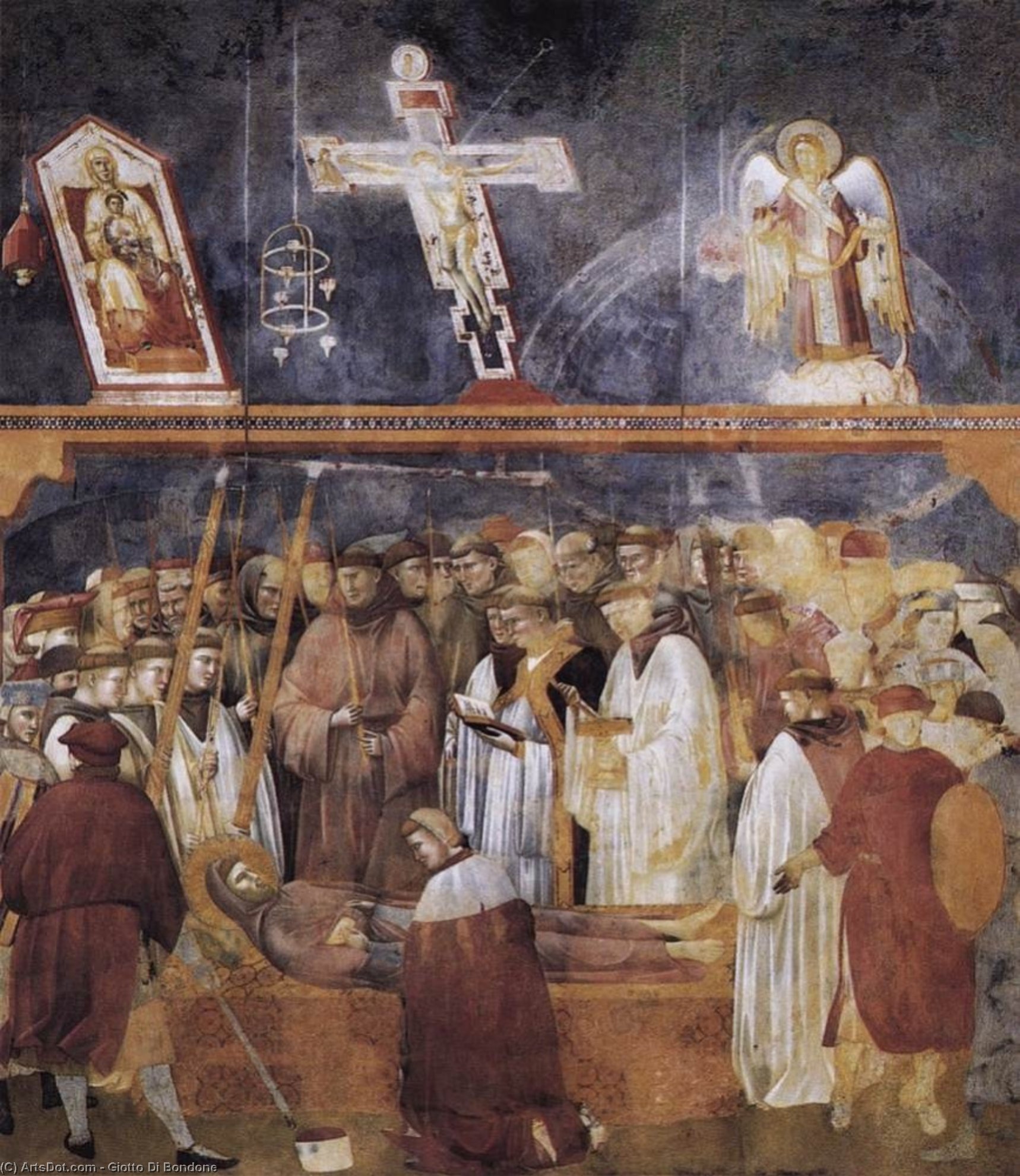
Witness Giotto's masterpiece! "St. Jerome Checking the Stigmata" (1300) captures a pivotal moment with stunning realism & emotion. A Proto-Renaissance fresco from the Cappella Scrovegni.
Explore Giotto di Bondone (1267-1337), the revolutionary Italian painter! Discover his proto-Renaissance frescoes, naturalism & emotional depth in works like the Scrovegni Chapel. A key figure in art history.
The Profound Encounter: Giotto’s “St. Jerome Checking the Stigmata on the Body of St. Francis”
Giotto di Bondone's fresco, "St. Jerome Checking the Stigmata on the Body of St. Francis," painted around 1300 and housed within the breathtaking Cappella Scrovegni in Padua, Italy, is far more than a mere depiction of religious iconography; it’s a pivotal moment in art history – a bridge between the rigid formality of Byzantine tradition and the burgeoning naturalism that would define the Renaissance. This extraordinary work, commissioned by Enrico Scrovegni as an act of penance for his family's sins, offers a deeply moving portrayal of faith, suffering, and divine grace, achieved through Giotto’s revolutionary approach to space, emotion, and human representation. The scene itself is deceptively simple: St. Jerome, the austere hermit known for his diligence in prayer and penance, gently examining the wounds on the body of St. Francis, the founder of the Franciscan order. Yet, within this quiet tableau lies a complex tapestry of theological significance and artistic innovation.
A Proto-Renaissance Breakthrough: Giotto’s Revolutionary Vision
Giotto's genius lay in his deliberate departure from the stylized, flattened figures characteristic of Byzantine art – the dominant style of the time. He wasn’t simply painting a scene; he was striving to capture *reality* as perceived by human eyes and hearts. This shift is immediately apparent in the fresco’s composition. Unlike the static, hierarchical arrangements typical of earlier religious paintings, Giotto creates a sense of depth and spatial recession through subtle variations in scale and perspective. The background wall with its cross isn't merely a backdrop; it recedes into the distance, drawing the viewer’s eye towards the central figures. Furthermore, Giotto masterfully utilizes *chiaroscuro* – the dramatic interplay of light and shadow – to sculpt the forms of St. Jerome and St. Francis, lending them a tangible presence and imbuing them with an almost sculptural quality. This innovative use of three-dimensionality was groundbreaking for its time, laying the foundation for future Renaissance artists like Masaccio and Leonardo da Vinci.
Symbolism and Spiritual Resonance: The Weight of Suffering
The painting is rich in symbolic meaning. St. Jerome, a model of ascetic devotion, represents the human capacity for self-discipline and spiritual struggle. His intense gaze, directed with compassion upon St. Francis, speaks volumes about his understanding of suffering as a path to grace. St. Francis, on the verge of death from the stigmata – the wounds inflicted by Christ during his Passion – embodies humility, charity, and the acceptance of God’s will. The act of examining the stigmata is not merely a clinical observation; it's an acknowledgment of shared suffering and a profound connection between the two saints. The red robes worn by both figures are symbolic of their martyrdom and sacrifice. The presence of the book or parchment in the lower left corner, often interpreted as representing scripture, reinforces the narrative’s theological core – the story of Christ’s sacrifice and its implications for humanity.
The Cappella Scrovegni: A Chapel of Redemption
It's crucial to understand that "St. Jerome Checking the Stigmata on the Body of St. Francis" exists within a larger context – the Cappella Scrovegni, commissioned by Enrico Scrovegni as an act of atonement for his family’s involvement in usury and other illicit activities. The entire cycle of frescoes depicts scenes from the lives of Christ and Mary, intended to inspire piety and repentance. Giotto's masterful handling of human emotion and realistic portrayal of religious figures served not only as a testament to his artistic skill but also as a powerful message of redemption and spiritual renewal. The chapel itself, with its soaring arches and vibrant colors, represents a sanctuary – a space dedicated to contemplation and divine grace.
Bringing Giotto’s Vision Home: High-Quality Reproductions
ArtsDot offers meticulously crafted hand-painted reproductions of “St. Jerome Checking the Stigmata on the Body of St. Francis,” capturing the essence of Giotto's masterpiece with unparalleled fidelity. Our artists utilize traditional oil painting techniques and archival-quality materials to create stunningly realistic reproductions that faithfully reproduce the fresco’s depth, texture, and emotional intensity. Whether you seek a large-scale statement piece for your grand salon or a smaller, more intimate artwork for your study, our reproductions provide an authentic connection to this pivotal work of art history. Explore our collection today and bring the profound beauty and spiritual resonance of Giotto's fresco into your home.