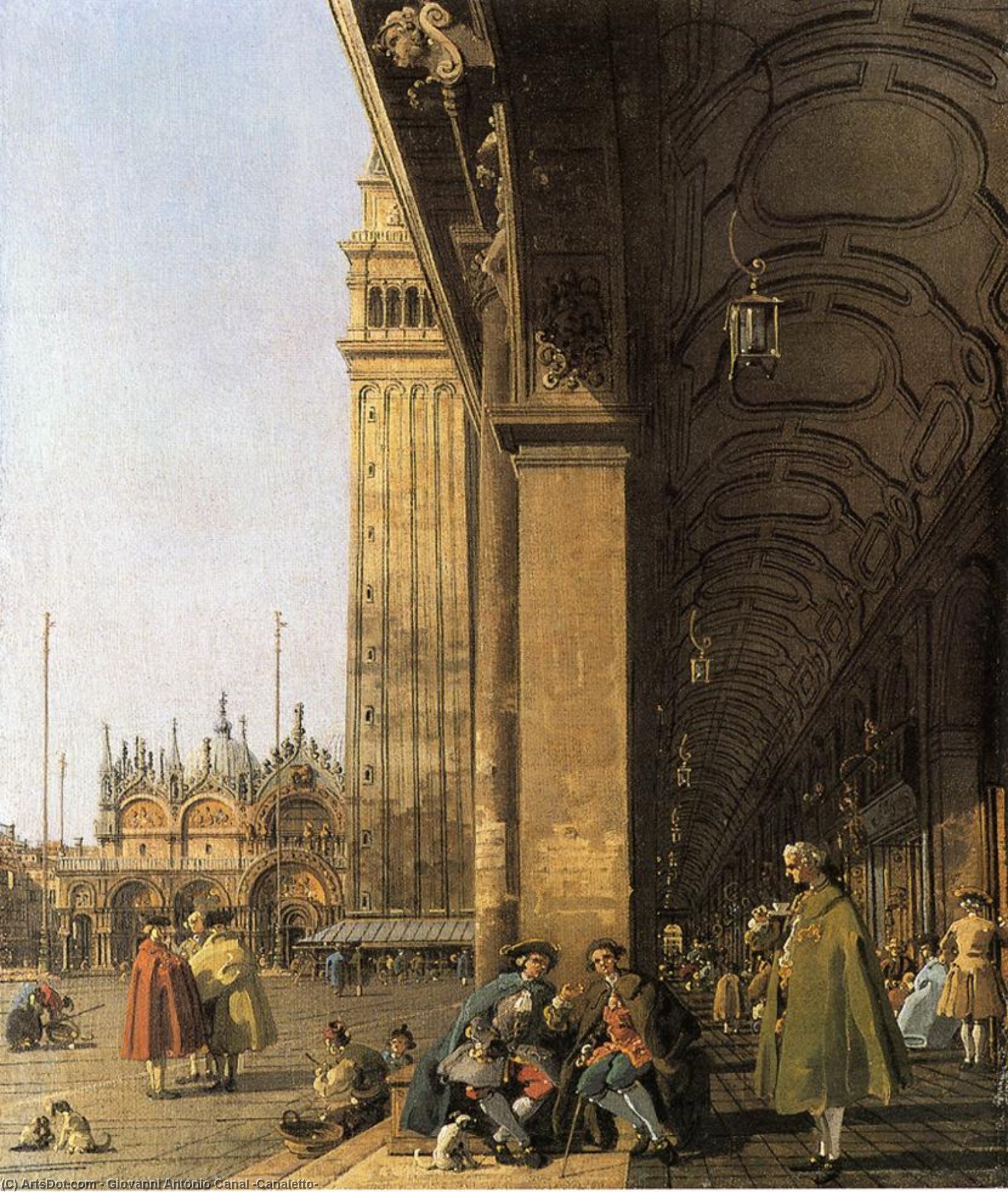
A Window into Eighteenth-Century Venice
In the heart of the Venetian Republic, where the shimmering reflections of the Adriatic meet the grandeur of imperial architecture, Giovanni Antonio Canal—known universally as Canaletto—captured a moment of eternal serenity. His masterpiece, Piazza San Marco, Looking East from the Southwest Corner, painted in 1756, serves as more than just a topographical record; it is a breathtaking portal into the soul of a vanishing era. As one gazes upon this oil on canvas, the viewer is immediately transported to the bustling yet dignified atmosphere of the Piazza San Marco. The composition masterfully guides the eye through the intricate colonnades and toward the majestic silhouette of St. Mark's Basilica, inviting an intimate encounter with the very essence of Venice.
The painting is a triumph of the Rococo style, characterized by its luminous clarity and an almost poetic lightness of touch. Canaletto’s technical prowess is most evident in his command of light and shadow, which he uses to sculpt the architectural forms with surgical precision. The way sunlight dances across the stone surfaces and creates soft, atmospheric depth allows the viewer to feel the warmth of a Venetian afternoon. This interplay of light does not merely illuminate the scene; it breathes life into the textures of the marble, the weathered brick, and the vibrant movement of the figures scattered throughout the square, creating a sense of profound spatial realism that remains unparalleled in the genre of veduta painting.
The Symphony of Urban Life and Architectural Grandeur
Beyond the monumental structures of the Doge's Palace and the Basilica, the true magic of this work lies in its ability to capture the pulse of daily existence. Canaletto populates his cityscape with a delicate choreography of figures—pedestrians engaged in quiet conversation, travelers navigating the square, and even the humble presence of animals that ground the grand architecture in reality. These small, anecdotal details provide a rhythmic energy to the composition, transforming a static architectural study into a living, breathing narrative. There is a profound sense of movement and social vitality, where the grandeur of the state meets the simple, unhurting rhythms of the common citizen.
For the discerning collector or interior designer, this painting offers an unparalleled opportunity to introduce a sense of historical elegance and sophisticated calm into a space. The balanced composition and the harmonious palette of warm ochres, soft creams, and sky blues make it a versatile centerpiece for any high-end decor. Whether placed in a sunlit gallery or a stately study, a high-quality reproduction of this work brings with it the prestige of the National Gallery’s collection and the timeless allure of the Italian Renaissance's legacy. To own such a piece is to possess a fragment of history, an enduring tribute to the artistry of Canaletto that continues to inspire awe and evoke the romantic splendor of the Serenissima.