A Glimpse into 18th-Century Venice
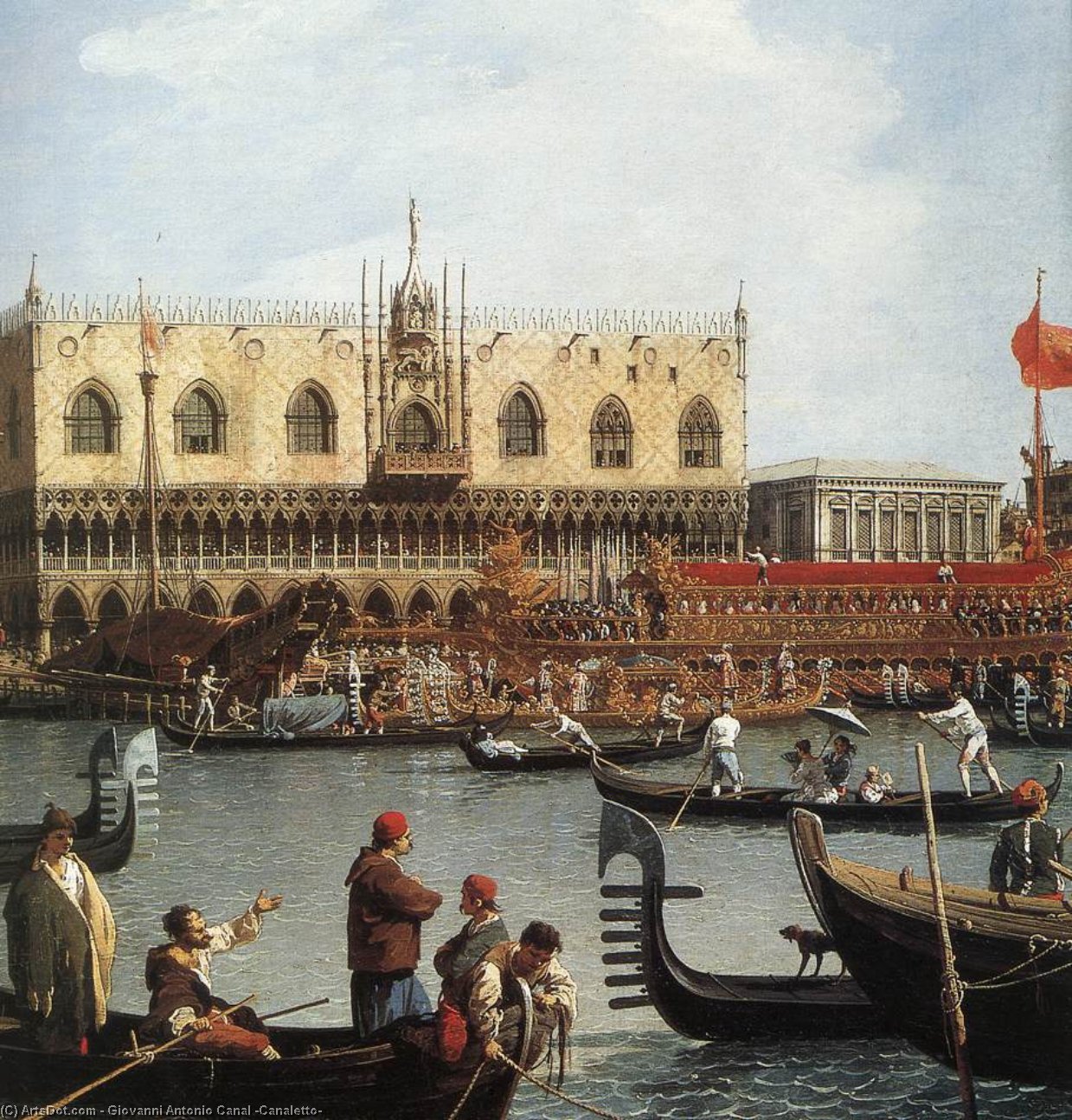
Giovanni Antonio Canal, universally known as Canaletto, possessed a singular gift – the ability to capture not just the appearance of Venice, but its very soul. His “Return of the Bucentoro to the Molo on Ascension Day” (circa 1733-4), currently residing within the Royal Collection at Buckingham Palace, is more than simply a depiction of a festive procession; it’s a vibrant snapshot of a city brimming with life, tradition, and civic pride. The scene unfolds on the bustling waterfront of the Molo, Venice's main commercial port, as the grand Bucentoro – a magnificent ceremonial boat adorned in elaborate decorations – returns after celebrating the feast of Ascension Day. This wasn’t merely a religious observance; it was a potent symbol of Venetian power and maritime dominance, a testament to their victory over Dalmatian pirates nearly a thousand years prior.
_-_Return_of_the_Bucentoro_to_the_Molo_on_Ascension_Day,_c._1733-4._Royal_Collection_Buckingham_Palace.jpg)
The Art of Canaletto: Precision and Light
Canaletto’s mastery lies in his meticulous observation and remarkably precise technique. Trained initially by his father, a stage designer, he quickly developed a distinctive style – topographical views that prioritized accuracy and realism. Unlike the looser brushstrokes of many contemporary artists, Canaletto employed a method often attributed to the use of a camera obscura, a device that projected an image onto a surface, allowing him to render distant figures with astonishing clarity and perspective. This technique, combined with his careful attention to light and shadow, creates a remarkable sense of depth and atmosphere within the painting. The interplay of sunlight on the water, reflecting off the buildings and boats, is particularly captivating – it’s not just a visual representation; it's an experience of warmth and vibrancy.
The composition itself is carefully orchestrated. The focal point is undoubtedly the Bucentoro, its richly decorated hull dominating the scene. Around it swirl a multitude of gondolas, barges, and smaller boats, each contributing to the dynamic energy of the waterfront. The figures – merchants, sailors, citizens – are rendered with remarkable detail, capturing their individual expressions and gestures. Notice how Canaletto subtly uses color to differentiate between groups and create visual interest; the bright reds and golds of the Bucentoro contrast sharply with the darker tones of the surrounding buildings.
Symbolism and Historical Context
The “Return of the Bucentoro” is deeply rooted in Venetian history. The event depicted commemorates a pivotal moment – the city’s triumph over pirates in 998, an event that cemented Venice's reputation as a powerful maritime republic. The Bucentoro itself became a symbol of this victory and continued to be used for ceremonial occasions throughout Venetian history. By painting this scene, Canaletto wasn’t simply recording a festive procession; he was celebrating the city’s enduring legacy of strength, resilience, and civic pride. The inclusion of prominent buildings like the Palazzo Ducale (Doge's Palace) and the Rialto Bridge further anchors the scene within the historical context of Venice.
A Timeless Masterpiece
Canaletto’s “Return of the Bucentoro to the Molo on Ascension Day” remains a testament to his extraordinary talent and artistic vision. It offers a rare glimpse into 18th-century Venice, capturing not only its physical beauty but also its vibrant culture and historical significance. Reproductions of this masterpiece can bring a touch of Venetian elegance and timeless charm to any interior space, evoking the spirit of a city that has captivated artists and travelers for centuries. Its meticulous detail and luminous quality make it an ideal choice for collectors seeking a truly exceptional work of art.