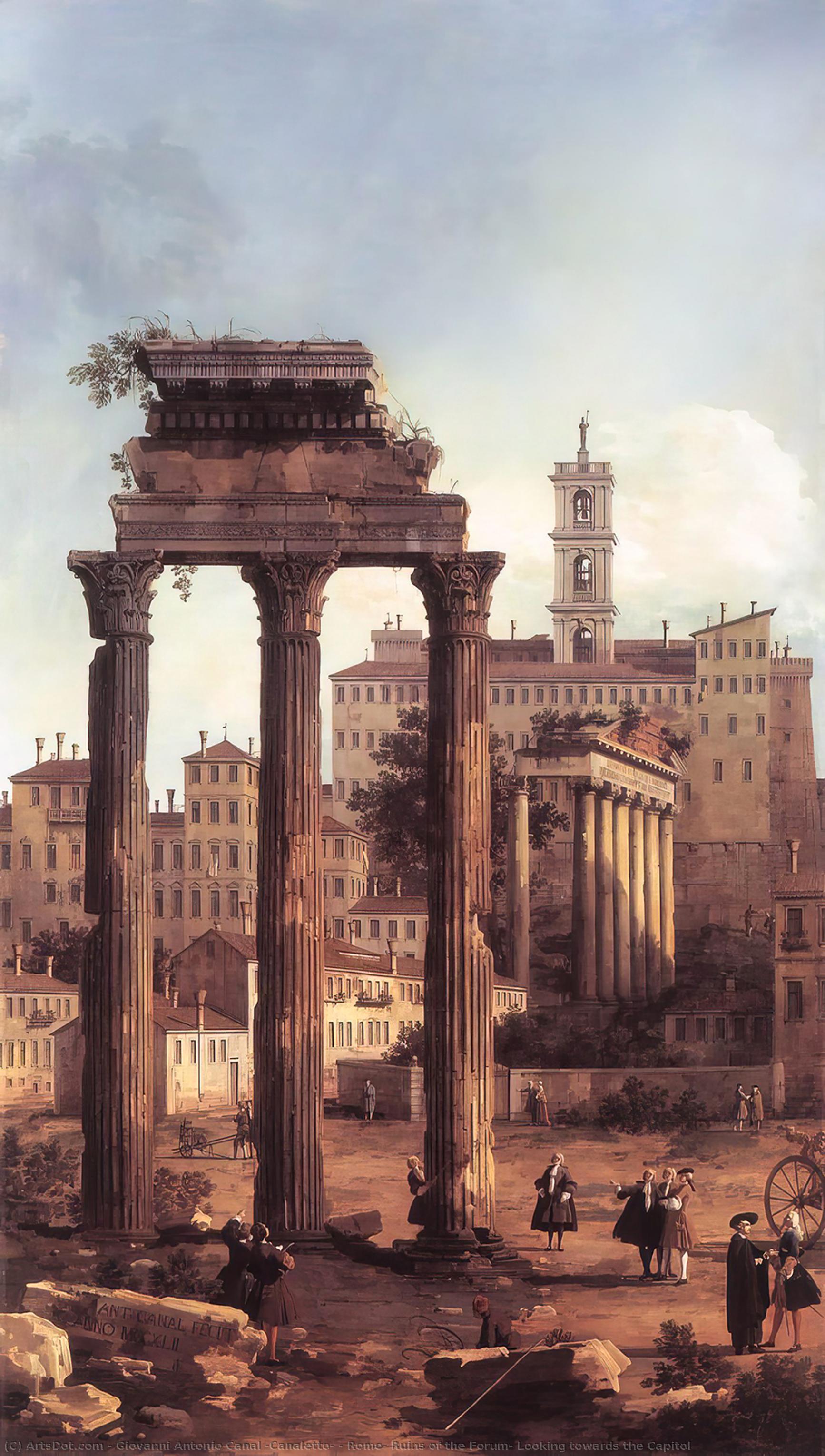
Canaletto’s 1742 masterpiece, "Rome: Ruins of the Forum, Looking towards the Capitol," captures a vibrant scene of ancient Rome with modern elements, showcasing the artist's signature topographical style and offering a timeless view.
A Window into Ancient Rome: Canaletto's "Rome: Ruins of the Forum, Looking towards the Capitol"
Canaletto’s “Rome: Ruins of the Forum, Looking towards the Capitol,” painted in 1742, is more than a simple cityscape; it’s a meticulously crafted window into a pivotal moment in Rome's history and a testament to Canaletto’s mastery of topographical art. This remarkable work captures the city’s enduring grandeur as it transitioned from ancient ruins to a burgeoning modern metropolis, offering a poignant dialogue between past and present. The painting depicts the Roman Forum, a sprawling complex of temples, basilicas, and public spaces that once formed the heart of the Roman Empire, now partially in ruin but still radiating an aura of immense historical significance. The inclusion of figures – at least twelve individuals scattered throughout the scene – adds a crucial layer of narrative, suggesting a contemporary audience engaging with this ancient space; perhaps tourists marveling at the remnants of imperial power or locals reflecting on their city’s rich heritage.
Technique and Style: The Canaletto Method
- Topographical Precision: Canaletto's signature style, honed over decades of meticulous observation, is immediately apparent. Every building, every column, every detail of the Forum’s ruins is rendered with astonishing accuracy. This wasn’t mere copying; it was a systematic process of measuring and sketching, often using a portable camera obscura to capture precise perspectives.
- Chiaroscuro Mastery: The artist skillfully employs chiaroscuro – the dramatic use of light and shadow – to create depth and volume within the scene. Light streams through the gaps in the ruins, illuminating key architectural features while casting long shadows that emphasize their scale and grandeur.
- Linear Perspective: Canaletto’s command of linear perspective is impeccable, drawing the viewer's eye into the receding depths of the Forum, creating a convincing illusion of space and distance.
Historical Context and Symbolism
Painted in 1742, this work reflects Rome’s position as a major European cultural and political center during the mid-18th century. The presence of modern elements – notably the parked carriages and figures – highlights the city's ongoing transformation. The ruins themselves are potent symbols: reminders of Rome’s imperial past, yet simultaneously offering a stage for contemporary life. The inclusion of horses further evokes classical imagery, connecting the present to the legacy of Roman power and military might. Canaletto was commissioned by various European courts, including that of King George III in England, demonstrating the widespread fascination with Italian art and architecture during this period.
Emotional Impact and Artistic Legacy
"Rome: Ruins of the Forum, Looking towards the Capitol" possesses a captivating emotional resonance. It evokes a sense of awe at the scale of ancient Rome, combined with a poignant awareness of its decline. The painting’s meticulous detail invites viewers to contemplate the passage of time and the enduring power of human endeavor. Canaletto's work profoundly influenced subsequent generations of landscape artists, particularly those interested in urban scenes and architectural representations. This reproduction offers an exceptional opportunity to own a piece of art history, bringing a touch of Roman grandeur into your home or office.