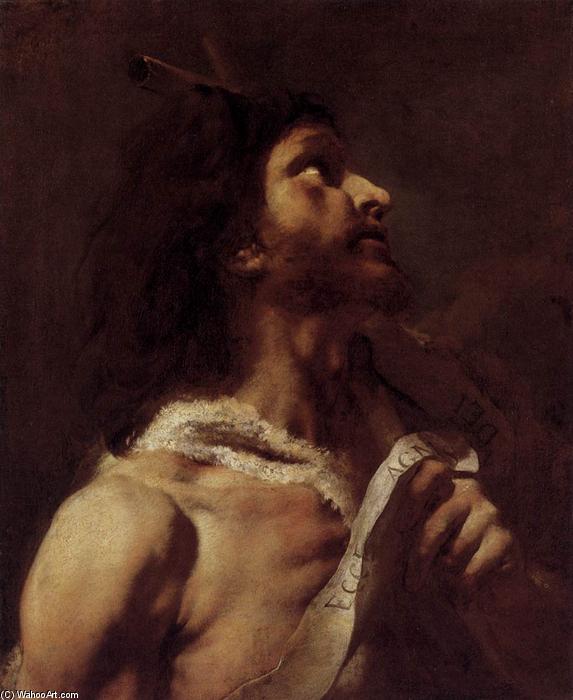
Giovanni Battista Piazzetta's 'St John the Baptist' depicts Saint John in distress, adorned with thorns and surrounded by birds symbolizing freedom. Painted in 1740, this baroque masterpiece showcases Piazzetta’s masterful use of color and dramatic composition.
A Study in Profound Piety and Suffering
Before you stands a vision steeped in dramatic emotion, Giovanni Battista Piazzetta’s depiction of St. John the Baptist. This painting is not merely a portrait; it is an immersion into a moment of profound spiritual anguish. The subject, rendered with palpable distress, bows his head as if weighed down by an invisible burden, his gaze fixed upon something unseen yet overwhelmingly significant. The immediate focal point, however, draws the eye to the crown of thorns adorning his brow—a potent and unmistakable symbol echoing the ultimate sacrifice of Christ. Piazzetta masterfully captures the physical manifestation of spiritual torment, inviting the viewer into a deeply contemplative space where piety meets palpable suffering.
The Somber Palette and Dramatic Atmosphere
Technically, the piece is executed with the dramatic flair characteristic of late Baroque sensibilities, though filtered through Piazzetta’s own evolving realism. The background itself contributes immensely to the painting's mood; a dark, brooding sky presses down upon the scene, amplifying the sense of foreboding and gravity. This somber atmosphere is punctuated by the delicate inclusion of two birds—one near the upper left quadrant and another towards the lower right. These avian elements serve as subtle counterpoints to the human drama, perhaps whispering notes of freedom or divine transcendence against the backdrop of earthly pain.
Historical Context and Artistic Resonance
Created around 1740, this work places itself within a period where religious fervor continued to fuel artistic output, even as tastes began shifting toward Neoclassicism. Piazzetta, having absorbed influences from masters like Crespi in Bologna, brought a remarkable psychological depth to his figures. Here, that training shines through; the distress on St. John’s face feels intensely personal and immediate, moving beyond mere iconography into genuine human experience. It speaks to an era grappling with intense spiritual narratives, making the piece both historically resonant and eternally relevant.
Symbolism of Sacrifice and Endurance
The symbolism woven throughout this canvas is rich for contemplation. The crown of thorns immediately directs thought toward themes of sacrifice, redemption, and suffering endured in service to a higher calling. St. John, traditionally the prophet pointing the way, here embodies that painful precursor role—the one who witnesses and bears witness to immense hardship. For the collector or designer, this piece offers more than just decoration; it offers a focal point for meditation, an object that encourages reflection on endurance, devotion, and the weight of spiritual truth.