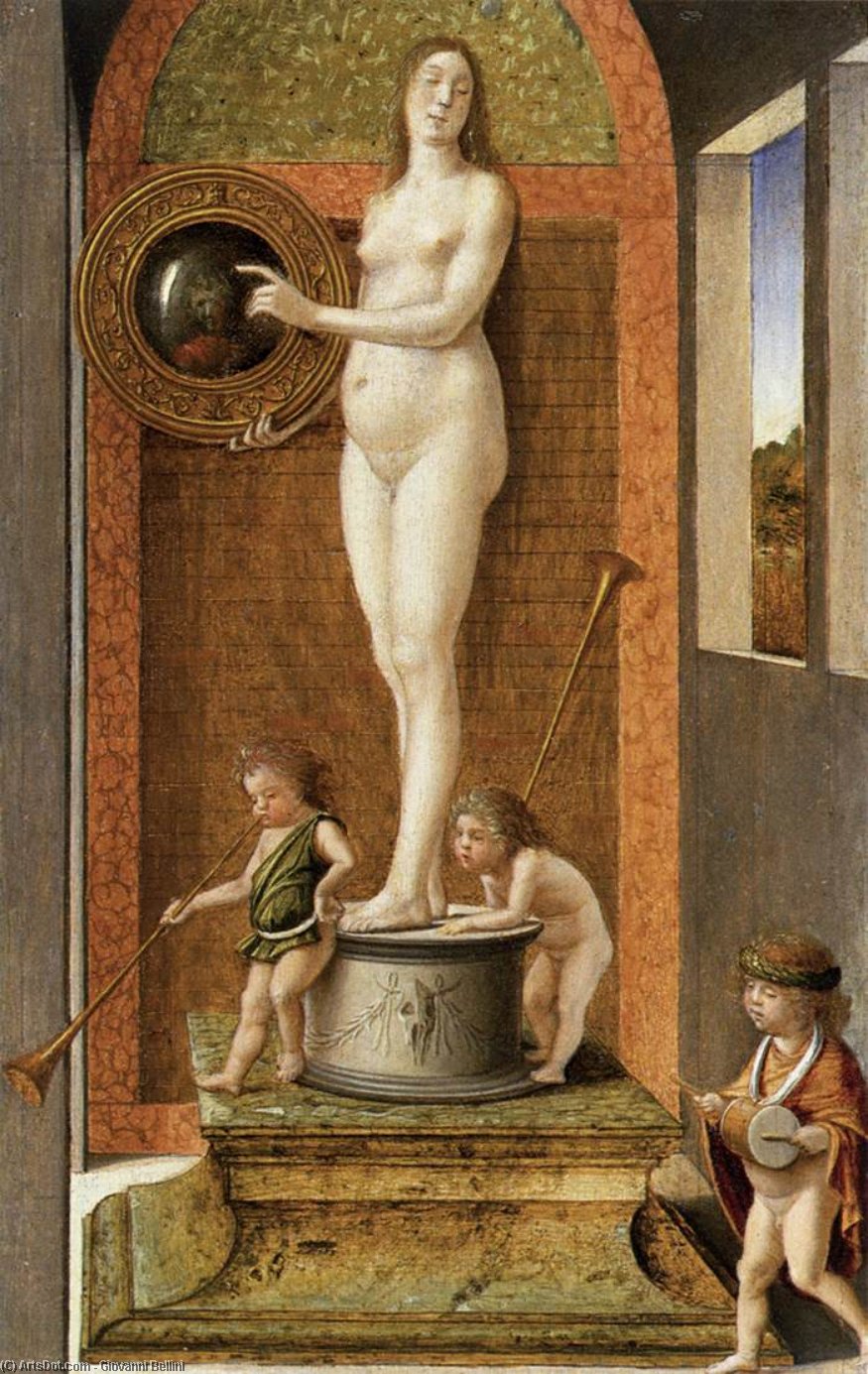
Four Allegories: Prudence (or Vanity) – A Renaissance Reflection on Virtue and Excess
Giovanni Bellini’s “Four Allegories,” painted around 1490, stands as a testament to the artistic flourishing of Venice during the High Renaissance. More than just a visually stunning depiction of classical ideals—a nude female figure bathed in diffused light—it's a complex meditation on human nature itself, exploring themes of prudence and vanity through meticulously crafted symbolism and masterful technique.
- Subject Matter & Composition: The artwork centers around a serene female nude positioned atop a pedestal, embodying Prudence (or Vanity), depending on interpretation. Surrounding her are three cherubic figures engaged in symbolic actions – trumpet fanfare representing courage, bucket signifying domesticity and nurturing, and contemplation reflecting inner reflection. A mirror reflects a portrait of a male figure, adding another layer of visual intrigue and hinting at the interplay between masculine intellect and feminine beauty.
- Style & Technique: Bellini’s style firmly anchors itself within the Renaissance tradition, prioritizing realism while retaining an ethereal quality characteristic of Byzantine influence. Executed in oil paint on panel, the technique showcases meticulous layering of colors and brushstrokes—a hallmark of Venetian painting—resulting in a rich textural surface that captures the subtle nuances of light and shadow.
- Historical Context: Created during a period of profound cultural transformation, “Four Allegories” reflects the humanist ideals championed by thinkers like Pico della Mirandola. The artwork aligns with the broader artistic movement striving to recapture classical grandeur while simultaneously exploring psychological depth and moral contemplation.
Color Palette & Visual Elements: Dominated by warm earth tones – ochre, terracotta, and brown – accented by flashes of gold and cream—the palette evokes a sense of groundedness yet hints at spiritual aspiration. Strong vertical lines delineate the architectural backdrop, contrasting with the graceful curves of the central figure’s body, creating visual harmony. Linear perspective skillfully renders depth in the landscape view beyond the window, enhancing the overall spatial illusion.
- Symbolism & Emotional Impact: The mirror symbolizes introspection and self-awareness, prompting viewers to consider their own virtues and vices. The cherubic figures embody various aspects of human experience—courage, domesticity, contemplation—representing a holistic vision of the human condition. Ultimately, “Four Allegories” inspires serenity and contemplative reflection, conveying an enduring appreciation for beauty and moral discernment.
“Four Allegories: Prudence (or Vanity)” remains a captivating masterpiece, offering invaluable insight into Renaissance artistic sensibilities and continuing to resonate with audiences today. Its meticulous detail and evocative symbolism solidify Bellini’s place as one of the foremost painters of his time.