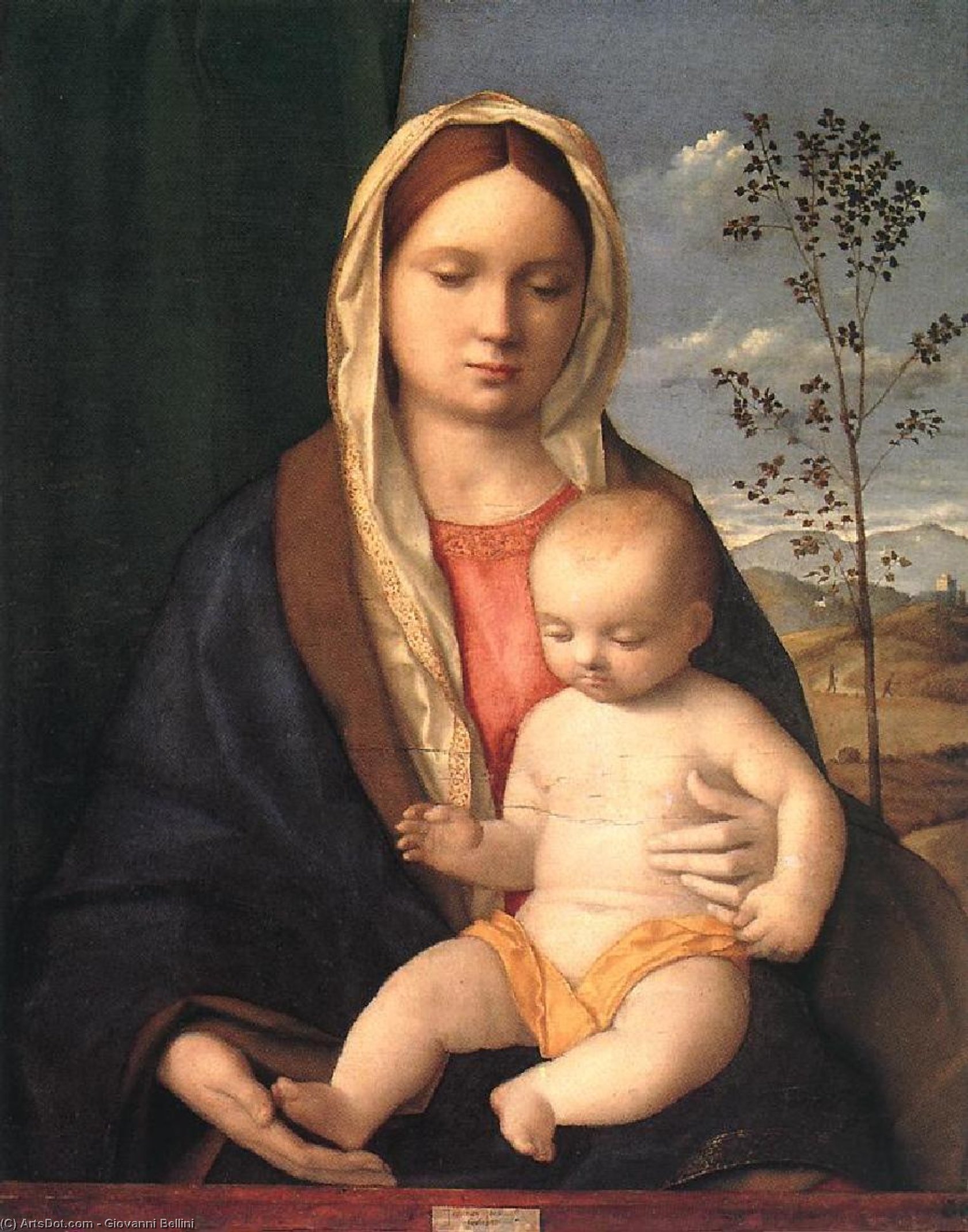
Giovanni Bellini’s "Madonna and Child" (1490) – a Renaissance masterpiece! Admire its serene beauty, chiaroscuro & vibrant colors at the Galleria Borghese. A timeless work of art.
Giovanni Bellini (1433-1516): Venetian Renaissance master renowned for luminous colors, serene Madonnas & atmospheric landscapes. Influenced Giorgione & Titian.
Explore the Galleria Borghese in Rome! Discover masterpieces by Bernini, Raphael & Caravaggio within Villa Borghese's stunning Baroque setting. Book your timed tickets now!
A Window into Venetian Renaissance Soul: Giovanni Bellini’s Madonna and Child
Giovanni Bellini's Madonna and Child, painted in 1490, stands as a cornerstone of Early Renaissance Italian art—a testament to the artistic fervor that gripped Venice during its golden age. More than just a depiction of Mary cradling Jesus, this oil on panel masterpiece embodies the humanist ideals championed by thinkers like Pico della Mirandola and reflects the profound spiritual contemplation characteristic of the period. Its current residence at the Galleria Borghese in Rome underscores its enduring significance within the canon of Western art history.
The Venetian School's Delicate Embrace of Light and Color
Bellini’s artistic vision firmly rooted him within the Venetian school, a movement distinguished by an unprecedented sensitivity to color palettes and atmospheric illumination. Unlike the cooler hues favored by Florentine artists like Piero della Francesca, Bellini embraced warmer tones—ochres, reds, and golds—creating a visual experience that feels both comforting and luminous. This deliberate choice wasn’t merely aesthetic; it mirrored the humanist preoccupation with earthly beauty and reflected the belief that God manifested himself in the natural world. The artist skillfully employed chiaroscuro – dramatic contrasts between light and shadow – to sculpt form and imbue the scene with palpable depth, drawing inspiration from Byzantine iconographic traditions while forging a distinctly Venetian path.
Compositional Harmony: A Pyramid of Grace
The painting’s pyramidal composition is remarkably balanced, positioning Mary at its base and Jesus atop—a deliberate device that conveys stability and spiritual ascendancy. This structural elegance speaks to the Renaissance desire for order and proportion, mirroring architectural principles prevalent throughout Europe. The drapery surrounding Mary flows gracefully downwards, enhancing the sense of serenity and drawing the viewer’s eye upwards towards the central figure. Careful attention was paid to detail—the folds of Mary's robe are rendered with meticulous precision, conveying a tactile quality that invites contemplation.
Symbolism Woven into Every Stroke
Beyond its formal beauty lies a rich tapestry of symbolism. The Virgin Mary embodies purity and compassion, representing divine motherhood and selfless devotion. Jesus, cradled in her arms, symbolizes Christ’s incarnation—the divine Logos made flesh—and signifies redemption through faith. The hazy landscape backdrop serves as a reminder of God's omnipresence and underscores the spiritual significance of the scene. The muted color palette contributes to an overall mood of solemn reverence, inviting viewers to engage with themes of piety and grace.
A Legacy Enduring Through Reproduction
Giovanni Bellini’s Madonna and Child continues to captivate audiences centuries after its creation. Its masterful technique—characterized by layering glazes and achieving subtle gradations of color—is faithfully reproduced in high-quality prints, allowing art enthusiasts worldwide to experience the beauty and tranquility of this iconic Renaissance artwork. Explore more reproductions at https://ArtsDot.com/.