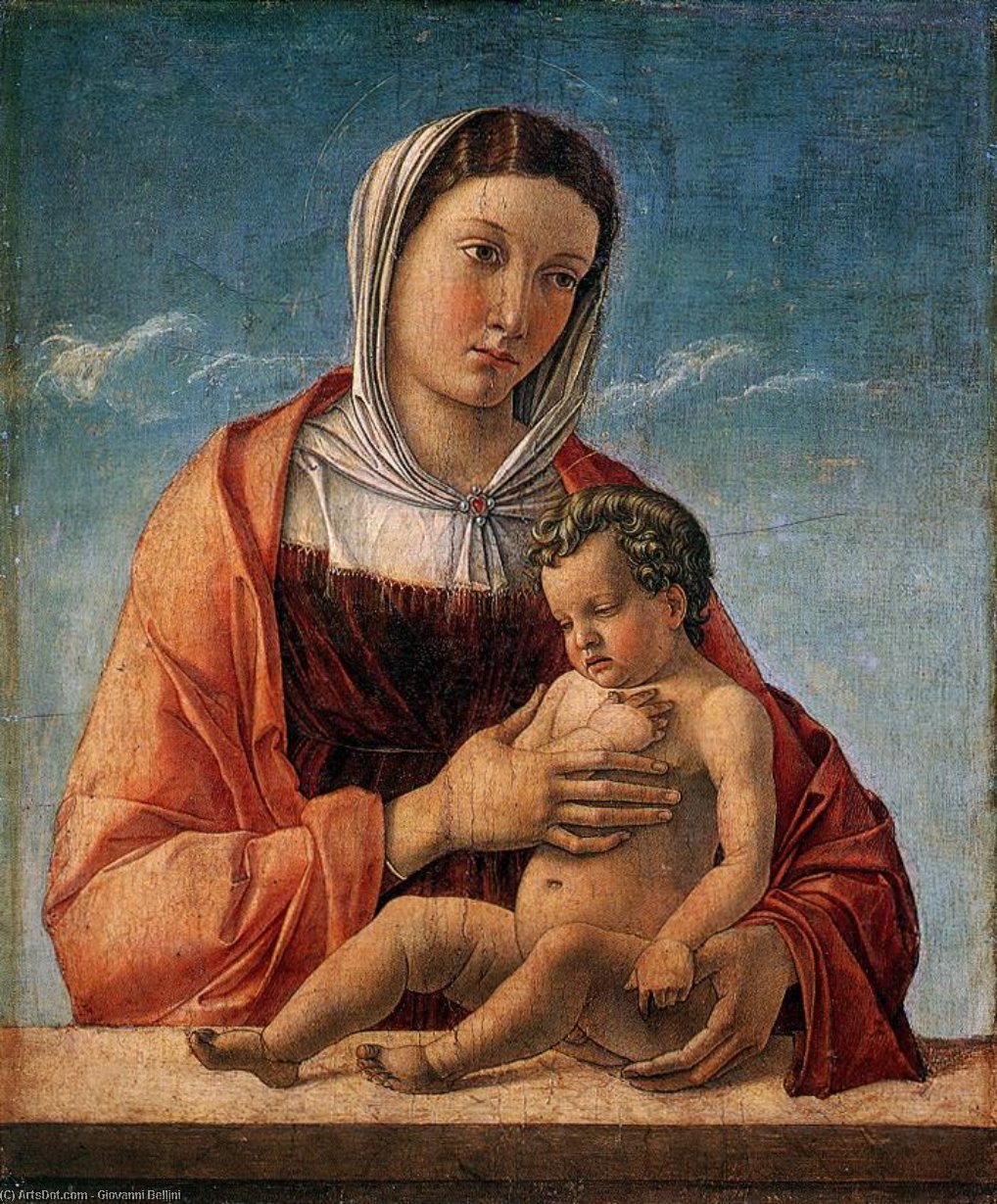
Giovanni Bellini's "Madonna and Child" (circa 1470) is a seminal work blending Venetian artistic traditions with Northern European techniques. Featuring Mary holding Jesus, it embodies the humanist spirit of the Renaissance through its expressive landscape and masterful use of oil paint—a testament to Bellini’s innovative approach.
A Venetian Vision of Maternal Grace
- Subject Matter The painting depicts Madonna and Child—a motif deeply rooted in Christian iconography—representing the Virgin Mary cradling Jesus Christ, symbolizing divine motherhood and spiritual purity. Bellini’s masterful portrayal captures a serene moment of tenderness between mother and son, reflecting the idealized image of femininity prevalent during the Renaissance.
- Style Giovanni Bellini's work exemplifies Venetian Renaissance style, characterized by its refined elegance and subtle emotional depth. Unlike earlier Byzantine art, which often prioritized spiritual grandeur over naturalistic representation, Bellini skillfully blended Byzantine influences with emerging humanist ideals, resulting in a harmonious balance between tradition and innovation.
- Technique Bellini employed oil paint on panel—a technique that allowed for luminous colors and nuanced gradations of tone—creating an ethereal atmosphere. His meticulous layering of glazes produced remarkable depth and luminosity, capturing the soft glow of candlelight illuminating Mary’s face and the infant Jesus’s skin. The artist's attention to detail extended beyond mere representation; he aimed to convey a profound sense of spirituality through carefully considered compositional choices.
- Historical Context Created around 1460, this Madonna and Child painting emerged during Venice’s golden age—a period marked by unprecedented artistic flourishing and economic prosperity. Bellini's work reflects the humanist fascination with human emotion and beauty, aligning with the broader intellectual currents of the Renaissance. The painting served as a testament to the enduring power of religious imagery and its ability to inspire contemplation.
- Symbolism Beyond its depiction of Mary and Jesus, the artwork is laden with symbolic significance. The red dress worn by Mary symbolizes royalty and divine grace—a reference to her role as Queen of Heaven. The veil signifies modesty and purity—reflecting Christian virtues considered essential for spiritual devotion. Furthermore, the nursing pose embodies compassion and nurturing—underscoring the Madonna’s role as protector and caregiver.
This reproduction captures Bellini's artistic genius with exceptional fidelity, allowing viewers to appreciate the subtle nuances of color and texture that define his masterpiece. Ideal for enhancing any interior space or serving as a cherished heirloom, it offers an opportunity to connect with one of Venice’s most celebrated artists and experience the timeless beauty of Renaissance art.