Giovanni Bellini (1433-1516): Venetian Renaissance master renowned for luminous colors, serene Madonnas & atmospheric landscapes. Influenced Giorgione & Titian.
Step into the Renaissance heart of Florence at the Uffizi Gallery! Explore masterpieces by Botticelli, Leonardo da Vinci & Michelangelo – an unforgettable art experience.
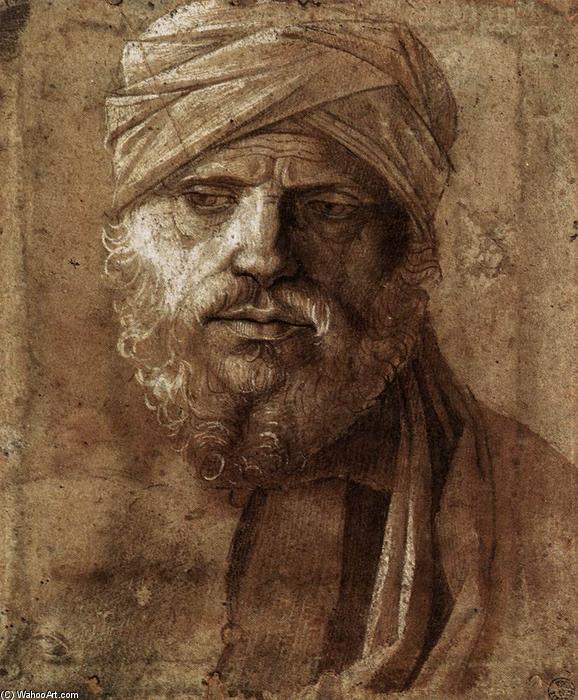
Giovanni Bellini’s ‘Man with a Turban’: A Window into Venetian Renaissance Soul
Giovanni Bellini's “Man with a Turban,” painted circa 1490, transcends mere portraiture; it embodies the burgeoning humanist ideals of Venice during its golden age and stands as a testament to Bellini’s unparalleled mastery of color and light—elements that would become hallmarks of Venetian painting. This captivating artwork resides within the Basilica dei Santi Giovanni e Paolo (San Zanipolo), offering visitors a chance to immerse themselves in the grandeur of Venetian art history alongside masterpieces by Veronese and other luminaries. Its location underscores Bellini’s influence on shaping the artistic landscape of his time, cementing his legacy as one of the foremost artists of the Renaissance.
A Portrait Steeped in Symbolism
The subject himself—a man adorned with a turban—immediately draws attention due to its deliberate choice and symbolic resonance. Turbans were frequently worn by religious figures, particularly Muslim scholars and saints, signifying piety and spiritual authority. While the precise identity of the sitter remains debated amongst historians, his gaze directly confronting the viewer establishes an intimate connection between artist and subject, inviting contemplation on themes of humility and reverence—values central to Renaissance humanism. The robe he wears speaks to nobility and status, reflecting the social hierarchy prevalent in Venetian society during Bellini’s lifetime.
Technique: Mastering Color and Light – Bellini's Signature Style
Bellini’s technique exemplifies the Venetian School’s commitment to realism achieved through masterful manipulation of color and light—a revolutionary departure from Byzantine conventions. He employed glazing, a layering process where thin translucent washes of pigment are applied over subsequent layers, creating luminous effects that capture the subtleties of skin tone and drapery folds with astonishing accuracy. Observe how Bellini utilizes chiaroscuro – dramatic contrasts between light and dark – to sculpt the man’s face and torso, emphasizing musculature and conveying depth. This technique wasn't merely aesthetically pleasing; it served a crucial purpose in simulating natural illumination, mirroring the artistic ambition of capturing the world as perceived by human senses.
Historical Context: Venice at the Crossroads
“Man with a Turban” emerged during a period of significant cultural transformation in Venice. The city was experiencing a revival of classical learning and artistic patronage thanks to wealthy merchant families like Mocenigo and Grimani, who actively commissioned artworks that celebrated humanist ideals and reflected the splendor of Venetian civilization. Bellini’s work reflects this intellectual ferment, aligning with the broader Renaissance fascination with human anatomy and psychological realism—a reaction against medieval asceticism and a celebration of earthly beauty. The Basilica dei Santi Giovanni e Paolo itself stands as a symbol of Venice's enduring faith and artistic heritage, providing an evocative backdrop for appreciating Bellini’s contribution to Venetian art.
Emotional Impact: Reverence and Contemplation
Ultimately, “Man with a Turban” succeeds in conveying a profound sense of reverence and contemplation. The artist’s careful attention to detail—the furrowed brow, the solemn gaze—captures not just physical likeness but also inner character. Bellini invites viewers to engage in a dialogue about faith, dignity, and the human condition—themes that resonate powerfully across centuries. Its enduring appeal lies in its ability to evoke empathy and inspire admiration for the artist’s skill in capturing the essence of his subject and conveying an emotional depth rarely achieved in portraiture of its time.