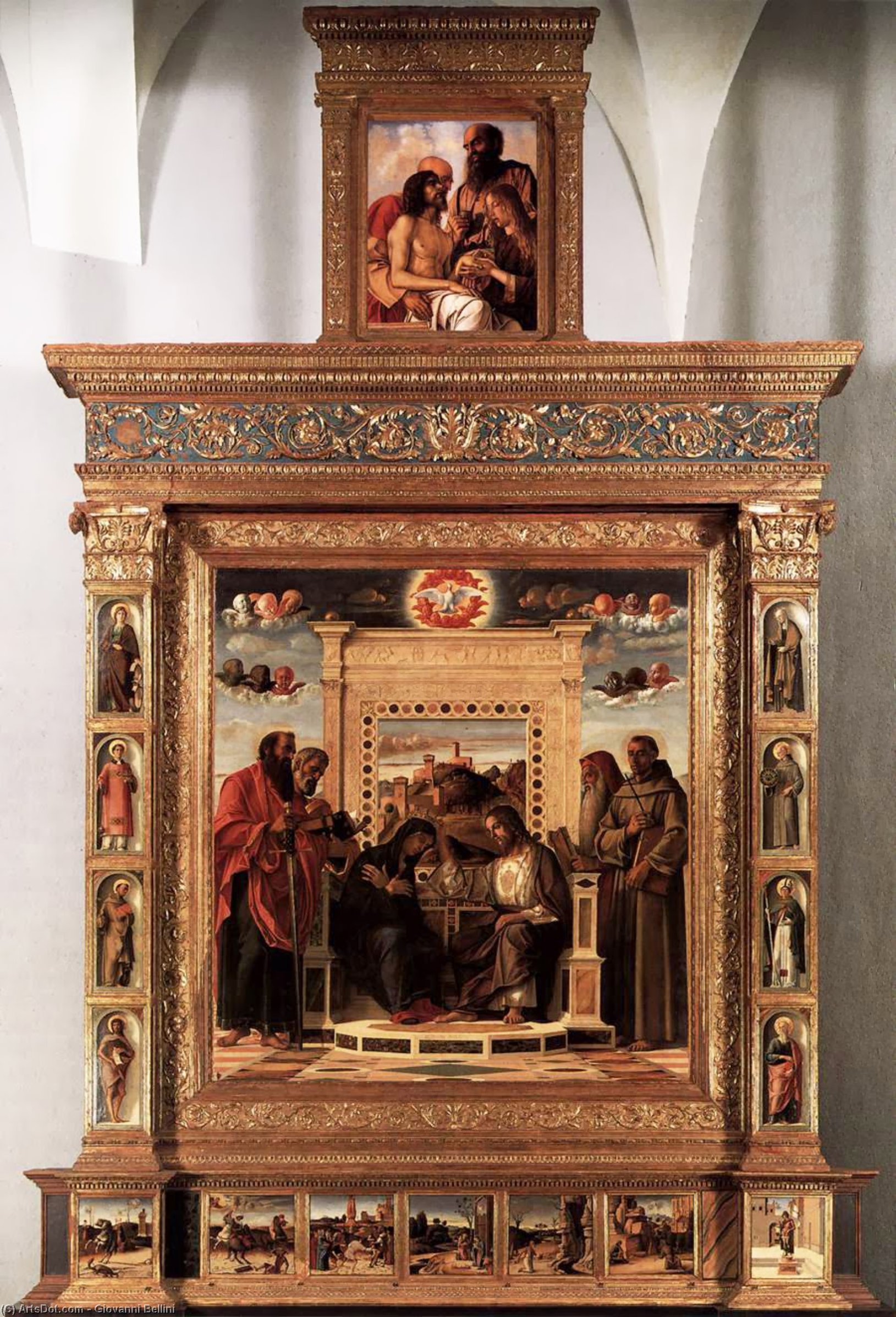
The Pesaro Altarpiece: A Window Into Renaissance Spirituality
Giovanni Bellini’s “Pesaro Altarpiece,” completed around 1471, stands as an emblem of Venetian Renaissance art—a testament to the era's fascination with both religious devotion and artistic innovation. Housed in the Musei Civici di Pesaro, Italy, this monumental oil painting transcends mere visual representation; it’s a carefully crafted narrative designed to evoke contemplation and convey profound spiritual truths.
Artistic Significance: Bellini's mastery lies in his ability to capture the ethereal beauty of faith. The altarpiece depicts a complex scene featuring Jesus Christ, Mary Magdalene, and several saints within an ornate church interior. Unlike earlier Byzantine art, which prioritized symbolic representation over naturalism, Bellini embraced a humanist perspective—albeit tempered by Christian dogma—resulting in a remarkably realistic depiction of figures and drapery. This breakthrough technique was achieved through the meticulous layering of oil paint, allowing for subtle gradations of color and texture that imbue the artwork with an unparalleled sense of atmosphere.
- Color Palette: Bellini’s use of rich pigments—deep reds, blues, golds—creates a luminous effect that dominates the composition. These colors aren't merely decorative; they symbolize divine grace and majesty, guiding the viewer’s gaze toward the central figures.
- Detail & Texture: The altarpiece is replete with intricate details – from the exquisitely rendered folds of Mary Magdalene’s robe to the sculpted frame—demonstrating Bellini’s unparalleled skill in capturing surface textures. These meticulous observations reflect a Renaissance preoccupation with observation and accuracy.
- Compositional Harmony: The arrangement of figures within the church space is carefully considered, establishing a visual hierarchy that reinforces the narrative's spiritual message. Symmetry plays a crucial role, emphasizing balance and conveying a sense of orderliness—values central to humanist thought.
Historical Context: Commissioned for San Francesco’s Church in Pesaro, the altarpiece reflects the burgeoning patronage of wealthy families like the Montefeltro dynasty. This period witnessed a revival of classical ideals alongside renewed interest in Christian iconography—a dynamic interplay that fueled artistic experimentation and produced masterpieces like this.
Symbolism: The Pesaro Altarpiece is laden with symbolic references. Mary Magdalene’s posture embodies humility and repentance, while the saints surrounding Jesus represent divine protection and guidance. The overall scene speaks to themes of redemption and salvation—concepts paramount in Renaissance spirituality.
Emotional Impact: Viewing Bellini's “Pesaro Altarpiece” inspires a feeling of serenity and reverence. Its luminous colors and masterful execution transport the viewer into a realm of contemplative beauty, reminding us of the enduring power of art to communicate profound spiritual truths.
Further Exploration: For more information about Giovanni Bellini and his artistic legacy, visit ArtsDot.com. You can also delve deeper into similar masterpieces like Jan Van Eyck’s “Madonna of Canon van der Paele” on ArtsDot.com – a remarkable example of Early Renaissance Flemish art.
Discover exquisite oil painting reproductions of the Pesaro Altarpiece and countless other iconic artworks at ArtsDot.com.