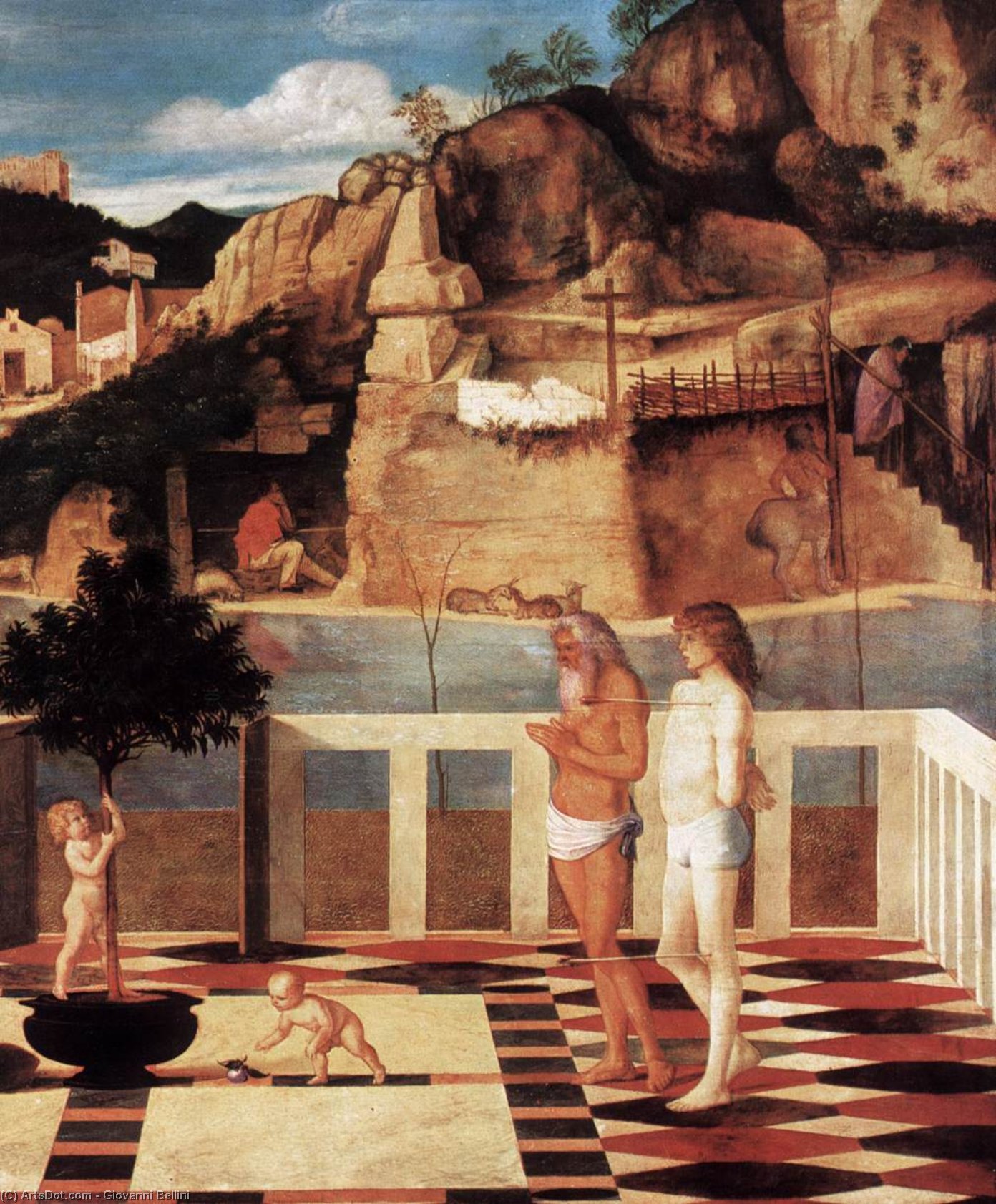
A Window into Venetian Virtue: Exploring Giovanni Bellini’s *Sacred Allegory*
Giovanni Bellini's *Sacred Allegory*, painted in 1490 and currently residing within the hallowed halls of the Uffizi Gallery in Florence, is more than simply a religious depiction; it’s a profound meditation on human nature, faith, and the delicate balance between earthly desires and spiritual aspiration. This captivating work, rendered in oil on panel, immediately draws the viewer into a meticulously constructed scene brimming with symbolic weight and an exquisite mastery of color and light – hallmarks of Bellini's evolving Venetian style. The painting’s genesis lies within the vibrant artistic milieu of late 15th-century Venice, a city undergoing a remarkable transformation as it transitioned from the Byzantine traditions of its past to embrace the burgeoning innovations of the Renaissance. Bellini, deeply influenced by his predecessors yet forging his own distinctive path, served as a crucial link between these worlds, shaping not only his own artistic legacy but also that of generations of Venetian painters who followed.
Composition and Technique: A Dance of Light and Shadow
Bellini’s genius lies in his ability to imbue seemingly simple scenes with an extraordinary sense of depth and drama. The composition of *Sacred Allegory* is carefully orchestrated, guiding the eye through a landscape that feels both familiar and otherworldly. The mountainous backdrop, rendered in muted blues and greens, establishes a sense of distance and grandeur, while the foreground figures are brought into sharp focus by the masterful use of light and shadow. Bellini’s technique demonstrates a remarkable control over color – he eschews the bright, saturated hues favored by some of his contemporaries, opting instead for a more restrained palette dominated by earthy tones and subtle gradations. This approach creates an atmosphere of quiet contemplation, allowing the symbolic elements to emerge with clarity. Notice particularly how he uses atmospheric perspective; distant features are softened and desaturated, reinforcing the illusion of depth and creating a truly immersive experience.
Decoding the Symbolism: Figures of Virtue and Vice
The figures within *Sacred Allegory* are not merely decorative elements but potent symbols representing fundamental aspects of human existence. The two women, often interpreted as embodiments of virtue and vice, stand at the heart of the composition. One woman, holding a baby, represents purity and innocence, while her counterpart embodies worldly desires and temptation. The presence of three men further enriches the symbolic landscape; their gestures and postures invite contemplation on themes of justice, wisdom, and strength. The dog, positioned in the lower left corner, is frequently associated with fidelity and loyalty – a valuable attribute in navigating the complexities of both earthly and spiritual life. Even the benches placed strategically throughout the scene contribute to the overall narrative, suggesting moments of reflection and interaction within this allegorical drama.
Historical Context and Artistic Legacy
*Sacred Allegory* is a product of its time – a period marked by both religious fervor and intellectual curiosity. Bellini’s workshop, the Studio di Giovanni Bellini, played an instrumental role in shaping the artistic landscape of Venice during the late 15th and early 16th centuries, producing works that would become cornerstones of Venetian painting. Bellini's innovative approach to color and composition, evident in this piece, paved the way for future generations of Venetian artists, including his nephew, Gentile Bellini. The painting’s enduring appeal lies not only in its technical brilliance but also in its ability to resonate with viewers across centuries, prompting reflection on timeless themes of morality, faith, and the human condition. For those seeking a tangible connection to this remarkable masterpiece, ArtsDot offers meticulously crafted hand-painted reproductions that capture the essence of Bellini’s vision.
- Key Features: Rich color palette, masterful use of light and shadow, intricate symbolism, evocative landscape.
- Historical Significance: Represents a pivotal moment in Venetian Renaissance art, bridging Byzantine traditions with emerging humanist ideals.
- Symbolic Interpretation: Offers layers of meaning through the representation of virtue, vice, faith, and human nature.