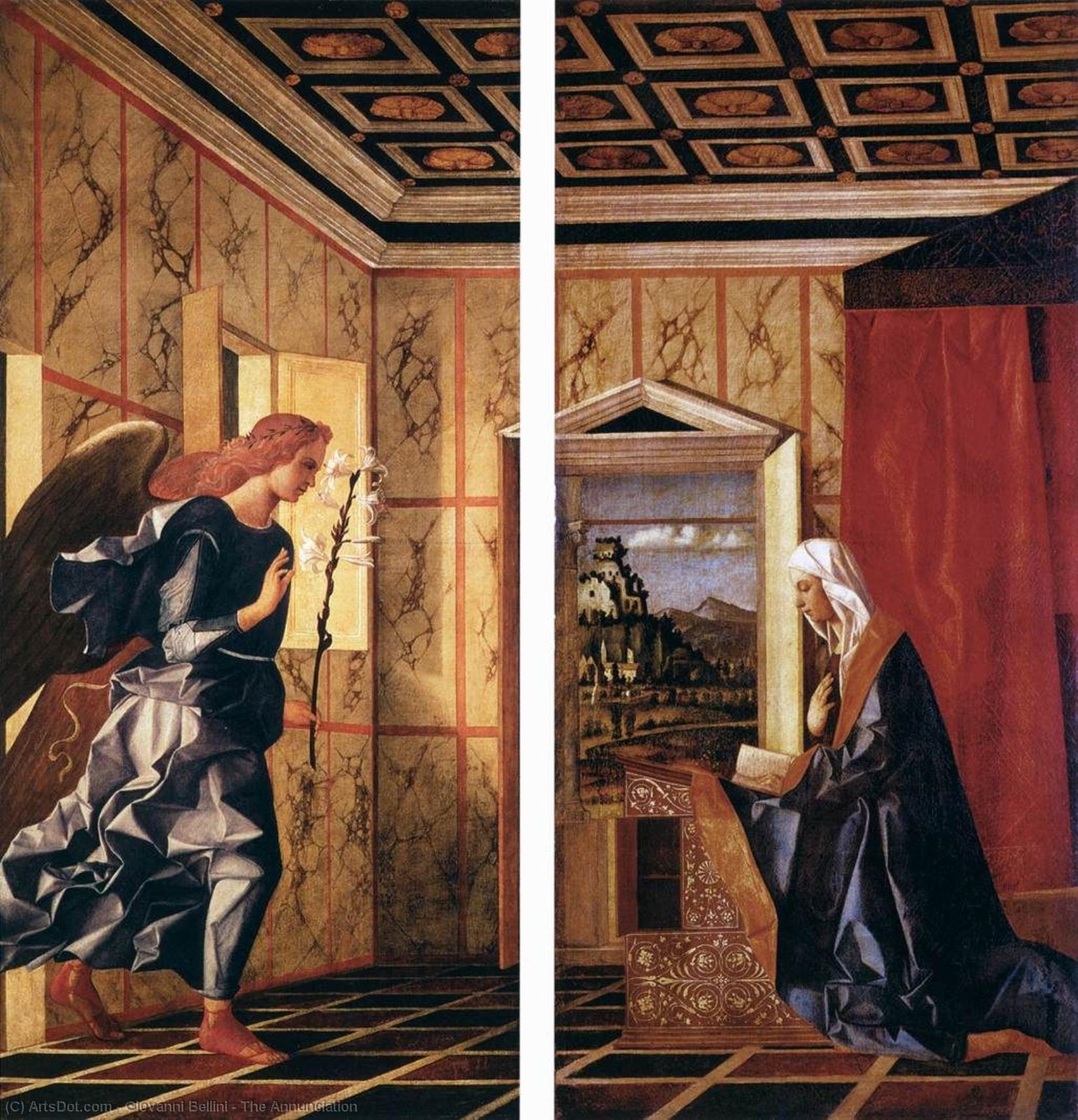
The Annunciation

Giovanni Bellini’s serene depiction of The Annunciation captures Venetian Renaissance artistry—a luminous portrayal of Mary receiving Gabriel's divine message, bathed in rich reds and imbued with contemplative stillness. Explore this masterpiece and bring timeless beauty into your home.


Giovanni Bellini (1433 - 1516)

Giovanni Bellini (1433-1516): Venetian Renaissance master renowned for luminous colors, serene Madonnas & atmospheric landscapes. Influenced Giorgione & Titian.

A Venetian Masterpiece: Exploring Giovanni Bellini’s ‘The Annunciation’

  • Subject Matter & Narrative The painting captures the iconic biblical narrative of the Annunciation – Gabriel informing Mary that she will conceive Jesus Christ. This scene is rendered with meticulous detail, portraying a serene domestic interior where Mary receives divine revelation. Bellini skillfully depicts the quiet intimacy of this momentous occasion, focusing on the palpable connection between angel and woman.
  • Style & Artistic Influences Giovanni Bellini’s ‘The Annunciation’ exemplifies Venetian Renaissance painting at its finest. Drawing heavily from Byzantine iconography—particularly the use of luminous tesserae—Bellini introduces a subtle radiance that elevates the composition beyond mere realism. The artist's approach prioritizes expressive color and atmospheric perspective, hallmarks of Venetian artistic tradition.
  • Technique & Materials Bellini’s mastery lies in his innovative glazing technique, achieved through layering thin washes of pigment over preparatory underdrawings. This method allows for unparalleled control over tonal variations and creates a velvety surface texture that enhances the painting's luminosity. The artist employed oil paints mixed with egg tempera—a combination favored by Venetian artists—resulting in vibrant colors and remarkable durability.
  • Historical Context & Patronage Created around 1500, ‘The Annunciation’ reflects the humanist ideals prevalent during the Renaissance, emphasizing human dignity and spiritual contemplation. Commissioned likely for a private chapel, it speaks to the burgeoning interest in religious symbolism and artistic excellence within Venetian aristocratic circles. Bellini's work stands as testament to Venice’s position at the forefront of European cultural innovation.
  • Symbolism & Emotional Resonance The painting is replete with symbolic elements that underscore its theological significance. The red curtain symbolizes divine grace, while the vase represents purity and contemplation. Mary’s posture conveys humility and receptiveness to God's will—a gesture embodying Christian piety. Bellini’s masterful depiction evokes a profound sense of serenity and spiritual wonder, inviting viewers to contemplate the miracle of salvation.