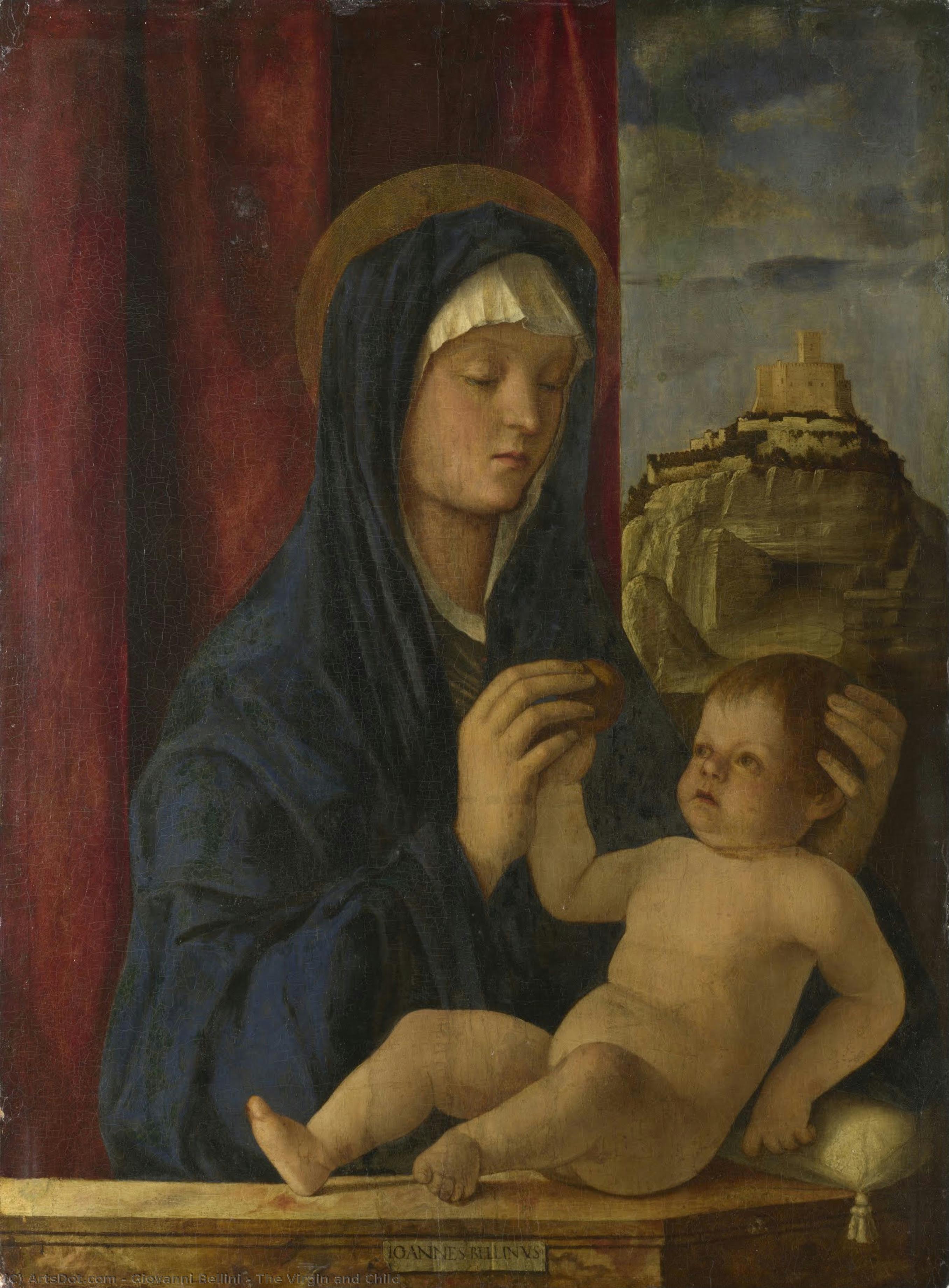
Giovanni Bellini’s “The Virgin and Child”: A Venetian Renaissance Embrace
Within the hallowed halls of art history resides Giovanni Bellini's "The Virgin and Child," a painting that transcends mere representation to embody the very essence of Venetian Renaissance spirituality. Completed around 1490, this masterpiece isn’t simply a portrait; it’s an intimate tableau brimming with serene grace, subtle emotion, and a profound connection between mother and child – a visual poem reflecting the burgeoning humanism of its time. Bellini, a pivotal figure bridging the Byzantine traditions he inherited with the innovative spirit of the 16th century, masterfully employed oil paints to achieve a luminosity and depth previously unseen in Venetian art, laying the groundwork for the High Renaissance masters who would follow.
The painting’s composition immediately draws the eye to the central figures: Mary, depicted as a youthful woman radiating gentle authority, cradles the infant Christ. The pose is remarkably naturalistic, yet imbued with an almost otherworldly serenity. Notice how Bellini avoids overly dramatic gestures; instead, he favors subtle shifts in posture and expression – a slight tilt of Mary’s head, a delicate curve of her hand – that convey a wealth of emotion without resorting to overt theatricality. The background, far from being merely decorative, is meticulously rendered with a landscape that feels both familiar and dreamlike. It's not a specific location but rather an idealized representation of the Venetian countryside—rolling hills, distant castles, and a hazy sky – creating a sense of timelessness and spiritual refuge.
Technique and Materials: A Masterclass in Color and Light
Bellini’s genius lies not just in his subject matter but also in his masterful technique. He was one of the first Venetian painters to fully embrace the properties of oil paint, allowing him to achieve a level of detail and luminosity previously unattainable with tempera. The rich, layered colors—deep blues, vibrant greens, warm browns—are applied with remarkable subtlety, creating an illusion of depth and volume. Observe how he uses *chiaroscuro* – the dramatic contrast between light and shadow – to sculpt the figures and define their forms. This technique not only adds visual interest but also imbues the painting with a sense of drama and emotional intensity.
The use of gold leaf, particularly in the halos surrounding Mary and Christ, further elevates the work’s spiritual significance. Gold, representing divine light and grace, serves as a focal point, drawing the viewer's eye to the central figures and reinforcing their sacred status. Bellini’s meticulous attention to detail—from the delicate folds of Mary’s garments to the tiny details in the landscape—demonstrates his unparalleled skill and artistic vision.
Historical Context: Venice at the Dawn of a New Era
"The Virgin and Child" was painted during a period of immense cultural and intellectual ferment in Venice. The city, a thriving center of trade and commerce, was also a hub of artistic innovation. Bellini’s work reflects this dynamic environment, blending Byzantine traditions with emerging Renaissance ideals. The painting's emphasis on human emotion and naturalism aligns with the humanist philosophy that was gaining traction during this period, while its serene spirituality echoes the enduring power of Christian faith.
Furthermore, Bellini’s patronage by prominent Venetian families—including the Mocenigo family—provided him with access to wealth and resources, allowing him to experiment with new techniques and materials. The painting's creation coincided with a period of intense artistic activity in Venice, as artists like Titian and Giorgione were pushing the boundaries of painting and establishing new visual languages. Bellini’s work served as an important bridge between these earlier traditions and the innovations that would define the High Renaissance.
Symbolism and Emotional Resonance: A Window into the Soul
Beyond its technical brilliance, “The Virgin and Child” is rich in symbolism. The image of Mary nursing Christ is a timeless representation of motherhood, compassion, and sacrifice. The landscape serves as a metaphor for paradise—a place of peace, beauty, and spiritual fulfillment. The inclusion of the castle-like structure in the background may allude to the divine realm or perhaps represent the stability and protection that Mary provides for her son.
Ultimately, “The Virgin and Child” is more than just a painting; it’s an invitation to contemplate the profound mysteries of faith, family, and human existence. It evokes a sense of serenity, warmth, and spiritual connection—a testament to Bellini's extraordinary artistic talent and his ability to capture the essence of the human soul.