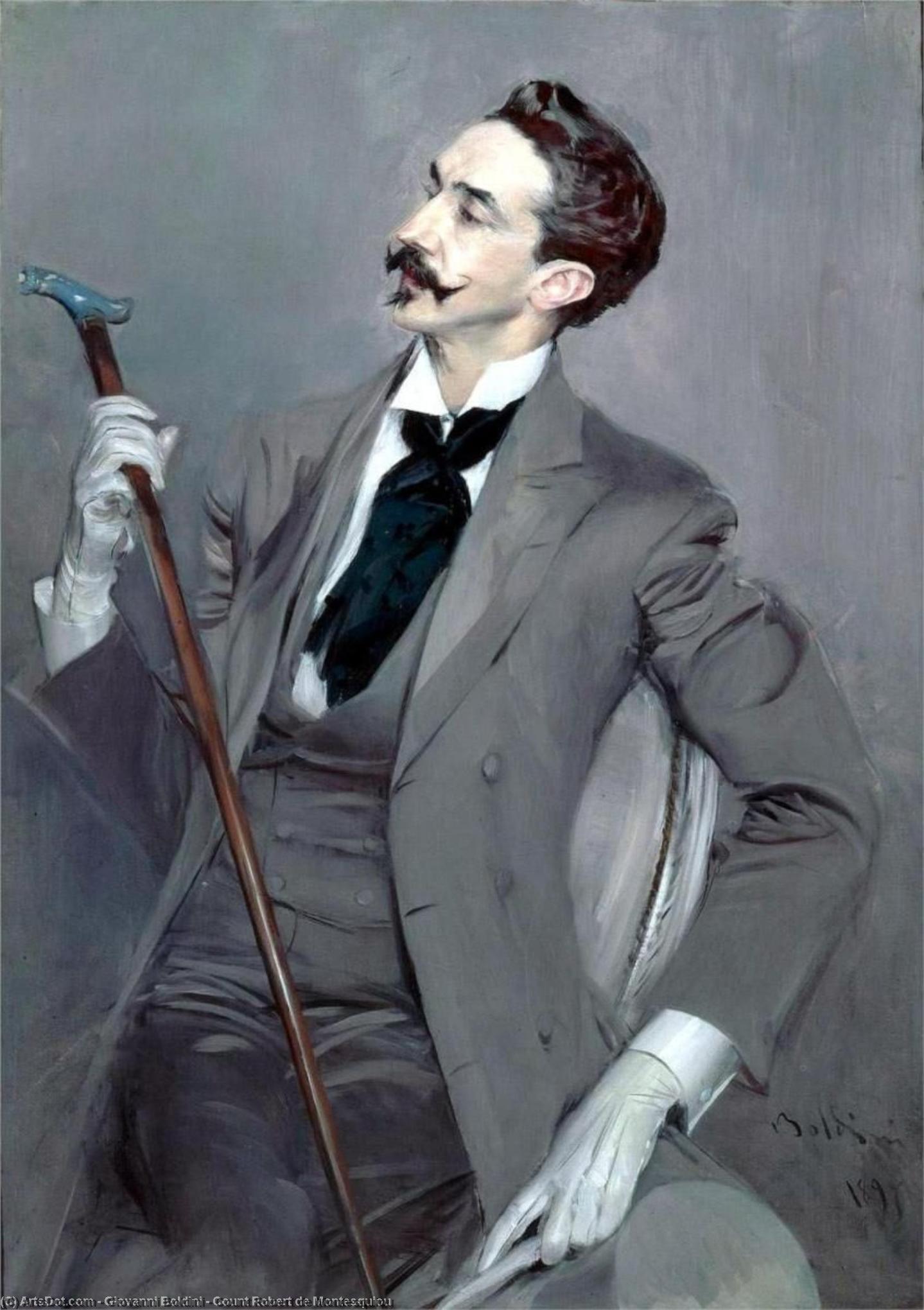
Giovanni Boldini’s Count Robert de Montesquiou: A Portrait of Parisian Elegance
Giovanni Boldini’s “Count Robert de Montesquiou” stands as a quintessential emblem of the Belle Époque, encapsulating the opulent sensibilities and refined tastes that defined late 19th-century Paris. Painted in 1897, this portrait transcends mere representation; it's an immersive experience into a world of aristocratic refinement and subtle psychological observation.
Subject Matter & Composition
The painting depicts Robert Montesquiou, a prominent French aristocrat known for his literary pursuits and involvement in Parisian society. Boldini skillfully captures Montesquiou’s dignified posture seated comfortably on a chair—a deliberate choice that anchors the figure within a space of repose and contemplation. Alongside Montesquiou are two additional individuals, positioned strategically to create a dynamic interplay of visual interest. While their identities remain deliberately ambiguous, their presence underscores the importance of social context within Boldini's artistic vision.
Style & Technique: Impressionistic Realism
Boldini’s approach defies easy categorization, blending elements of Impressionism with a grounding in realist observation. Unlike purely abstract Impressionists who prioritized capturing fleeting moments of light and color, Boldini meticulously renders Montesquiou's features—the textured skin, the expressive eyes—with remarkable accuracy. However, he achieves this realism not through photographic precision but rather by employing loose brushstrokes and layering colors to imbue the portrait with a luminous quality reminiscent of Impressionistic ideals. The artist’s masterful use of chiaroscuro – contrasting light and shadow – enhances the dramatic effect and contributes to the overall sense of depth.
Historical Context & Artistic Influences
“Count Robert de Montesquiou” emerged during a period of significant artistic innovation, coinciding with the burgeoning influence of Impressionism on European art. Boldini’s engagement with the Macchiaioli movement—a group advocating for plein air painting and prioritizing color and light—clearly informs his stylistic choices. This commitment to capturing the immediacy of observation aligns perfectly with the broader artistic currents shaping the Belle Époque, reflecting a fascination with portraying human subjects within their natural surroundings.
Symbolism & Emotional Impact
Beyond its technical brilliance, “Count Robert de Montesquiou” resonates with subtle symbolic undertones. The chair itself represents stability and comfort—a visual metaphor for Montesquiou’s position within Parisian society and his inner tranquility. Boldini's gaze directs the viewer's attention to Montesquiou's eyes, conveying a profound sense of introspection and hinting at unspoken emotions. The painting invites contemplation on themes of identity, social status, and the complexities of human experience—elements that continue to captivate audiences today.
Conclusion
Giovanni Boldini’s “Count Robert de Montesquiou” remains an enduring testament to the power of Impressionistic realism. Its meticulous depiction of a Parisian gentleman combined with Boldini's masterful manipulation of light and color elevates it beyond a simple portrait into a captivating exploration of human psychology and artistic innovation—a timeless masterpiece that continues to inspire admiration for its beauty and intellectual depth.