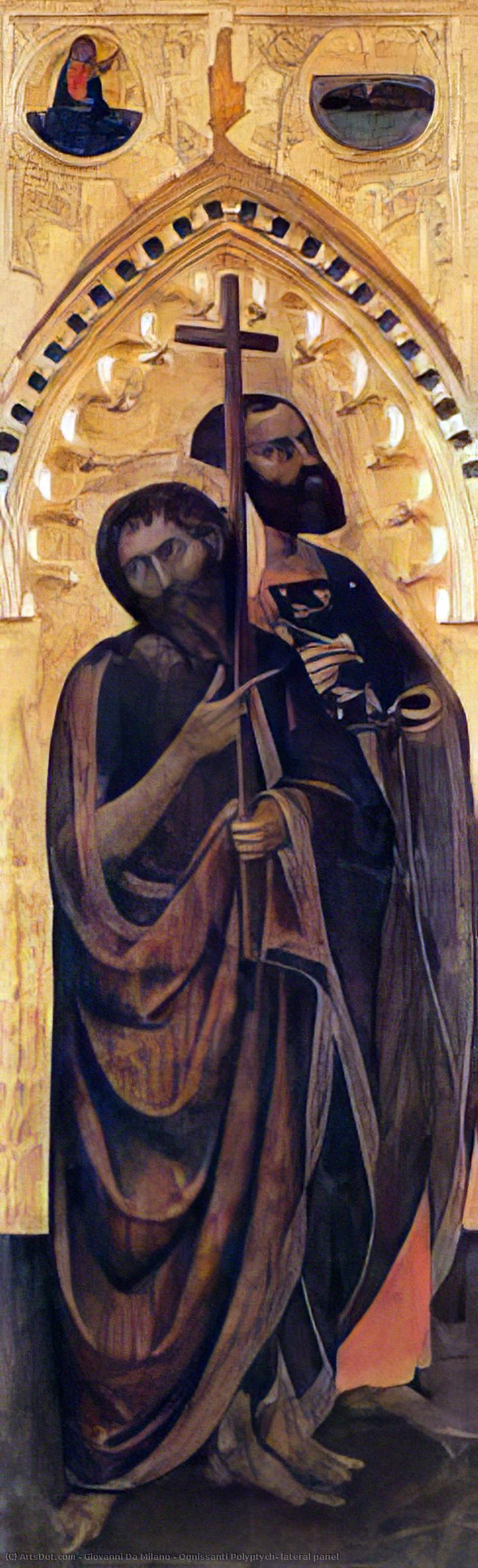
Own a stunning replica of Giovanni da Milano’s Ognissanti Polyptych lateral panel! This 14th-century Sienese masterpiece, featuring two figures & religious symbolism, is now available as a handmade oil painting reproduction.
Explore Giovanni da Milano (1346-1369), an Italian Proto-Renaissance painter influenced by Giotto. Discover his emotive religious scenes, including the Ognissanti Polyptych & Madonna and Child.
Step into the Renaissance heart of Florence at the Uffizi Gallery! Explore masterpieces by Botticelli, Leonardo da Vinci & Michelangelo – an unforgettable art experience.
Giovanni da Milano’s Ognissanti Polyptych: A Window into Medieval Spirituality
The Ognissanti Polyptych, created by Giovanni da Milano around 1360, stands as a remarkable testament to the burgeoning artistic fervor of the Proto-Renaissance—a period poised on the cusp of transformative change in European art. Currently residing within the hallowed halls of Florence’s Galleria degli Uffizi, this tempera painting on wood panel transcends mere visual representation; it embodies a profound engagement with religious symbolism and offers an invaluable glimpse into the spiritual sensibilities of its time. As a connoisseur of art history and experienced seller at https://ArtsDot.com, I can confidently attest to its enduring beauty and scholarly significance.
Composition and Style: Echoes of Giotto’s Influence
Giovanni da Milano's approach to painting reflects the profound impact of Giotto di Bondone—the Florentine artist who revolutionized art by introducing naturalism into frescoes. Like Giotto, Giovanni skillfully employs flattened perspective and simplified forms, prioritizing emotional expression over meticulous anatomical accuracy. The central panel depicts two figures standing close together, their arms entwined in a gesture of compassion and support. Crowned heads signify nobility or divine authority—a deliberate choice designed to elevate the scene’s spiritual stature. Surrounding them is an arched doorway framing a radiant crucifix, symbolizing Christ's sacrifice and serving as focal point for contemplation. The muted palette—dominated by earthy tones—contributes to the painting’s solemn atmosphere.
Technique: Tempera on Wood – A Durable Medium
The medium of tempera—pigments bound together with egg yolk—was favored during this era due to its ability to produce vibrant colors and achieve exceptional durability. Giovanni da Milano meticulously applied thin layers of pigment onto prepared wooden panels, achieving remarkable textural detail despite the limitations imposed by the technique. Careful blending and glazing techniques further enhance the luminosity of the colors, creating an illusion of depth that belies the flatness of the surface. This painstaking process underscores the artist’s dedication to capturing not only visual appearance but also conveying a sense of spiritual solemnity.
Historical Context: Siena's Artistic Legacy
The Ognissanti Polyptych belongs to Siena—a city renowned for its artistic heritage and unwavering devotion to religious iconography. Giovanni da Milano’s work aligns seamlessly with the broader stylistic trends of Sienese painting, which prioritized expressive color palettes and emotionally resonant compositions. Such altarpieces were commonplace during the fourteenth century, serving as central elements in liturgical celebrations and communicating theological concepts to a devout audience. The Polyptych reflects the prevailing preoccupation with portraying biblical narratives—particularly the Virgin Mary—with dignity and compassion.
Symbolism: Faith Illuminated
Beyond its formal beauty, the Ognissanti Polyptych is laden with symbolic meaning. The intertwined figures represent unity and divine grace, while the crucifix embodies Christ’s sacrificial love—a cornerstone of Christian faith. The arched doorway symbolizes heaven's entrance, guiding viewers toward spiritual enlightenment. Giovanni da Milano skillfully employs visual cues to elevate the viewer’s consciousness and inspire contemplation on themes of piety and redemption.
Emotional Impact: A Moment Frozen in Time
Looking upon this masterpiece evokes a palpable sense of serenity and reverence. Giovanni da Milano’s masterful execution captures not only the visual splendor of Siena's artistic tradition but also its profound spiritual ethos. It invites us to pause, reflect, and contemplate the enduring power of faith—a timeless message conveyed with exquisite artistry. Explore a stunning handmade oil painting reproduction of this iconic artwork at https://ArtsDot.com. Learn more about Giovanni da Milano’s legacy and the Galleria degli Uffizi's collection: /art/list/?Filter=8XZFUX/$File/Giovanni-Da-Milano-Ognissanti-Polyptych-lateral-panel.jpg & /art/list/?Filter=A@D3BJ6B-The-Museum-San-Giovanni-(Siena-Italy).