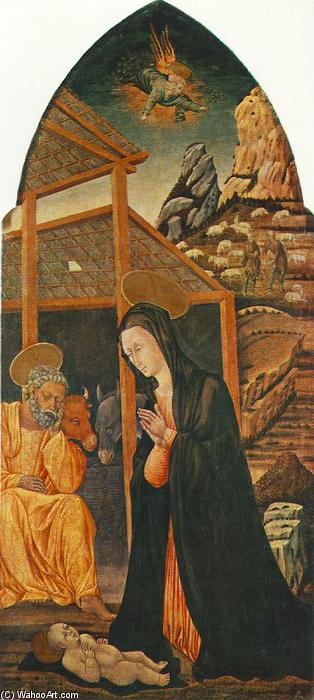
The Nativity by
Giovanni Di Paolo is a stunning example of Renaissance art, showcasing the artist's skill and attention to detail. This tempera on wood panel painting, dated to 1460, is housed in the
Christian Museum in Esztergom, Hungary. The scene depicts the traditional religious theme of the Nativity, with the Virgin Mary kneeling beside the infant Jesus, surrounded by angels and St. Joseph.
Artistic Style and Influences
Giovanni Di Paolo's style is characterized by his use of
tempera and
gold leaf, which gives his paintings a unique and captivating quality. His work was influenced by the
Sienese tradition of decorative and precious painting, as well as
Northern European art. The Nativity is a prime example of this style, with its intricate details and use of symbolism.
Symbolism and Composition
The painting is rich in symbolism, with the
lily held by one of the angels representing purity and the Virgin Mary. The composition of the scene is also noteworthy, with the figures arranged in a harmonious and balanced manner. The use of
light and shadow creates a sense of depth and three-dimensionality, drawing the viewer into the scene.
The Nativity by
Giovanni Di Paolo is a masterpiece of Renaissance art that continues to captivate audiences today. Its intricate details, symbolism, and beautiful composition make it a must-see for anyone interested in art history. Whether you are an art enthusiast or simply looking to appreciate the beauty of Renaissance art, the Nativity is sure to impress.