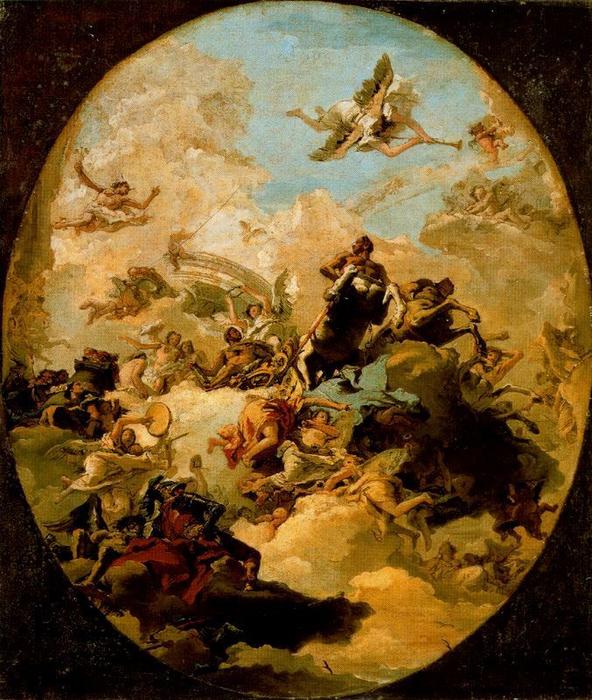
The
Apotheosis of Hercules is a stunning oil on canvas painting created by the renowned Italian artist
Giovanni Domenico Tiepolo in 1765. This magnificent work of art measures 102 x 85 cm and is a prime example of the Rococo style, characterized by its dynamic composition, vivid colors, and intricate details.
The Painting's Composition
The scene depicts the apotheosis of Hercules, with numerous figures, including angels, gods, and mythical creatures, surrounding the central figure. The painting is filled with action and energy, showcasing the power and majesty of Hercules as he ascends into the heavens. The use of
chiaroscuro creates a sense of depth and volume, drawing the viewer's eye to the central figures.
Artist's Style and Influences
Giovanni Domenico Tiepolo's style is reminiscent of his father,
Giovanni Battista Tiepolo, who was also a prominent artist of the Rococo period. The younger Tiepolo's work is characterized by its sense of movement and energy, as seen in paintings like
The Promenade, available on
ArtsDot.com. The artist's use of
color and
light creates a sense of drama and tension, drawing the viewer into the scene.
Other Notable Works and Artists
Other notable artists of the Rococo period include
Georg Friedrich Schmidt, a German engraver and pastel painter, whose work can be found on
ArtsDot.com. The
Museo de Arte Moderno in Barcelona, Spain, is also home to an impressive collection of modern and contemporary art, including works by artists like
Eugene Louis Lami and
Francis Wheatley, whose paintings can be viewed on
ArtsDot.com and
ArtsDot.com, respectively.
The
Apotheosis of Hercules is a testament to the artistic skill and creativity of
Giovanni Domenico Tiepolo, and its beauty and significance continue to inspire art lovers to this day. For those interested in learning more about this painting and other works by the artist,