A Moment of Philosophical Rebellion: Giovanni Paolo Panini's "The Philosopher Diogenes Throwing Down His Bowl"
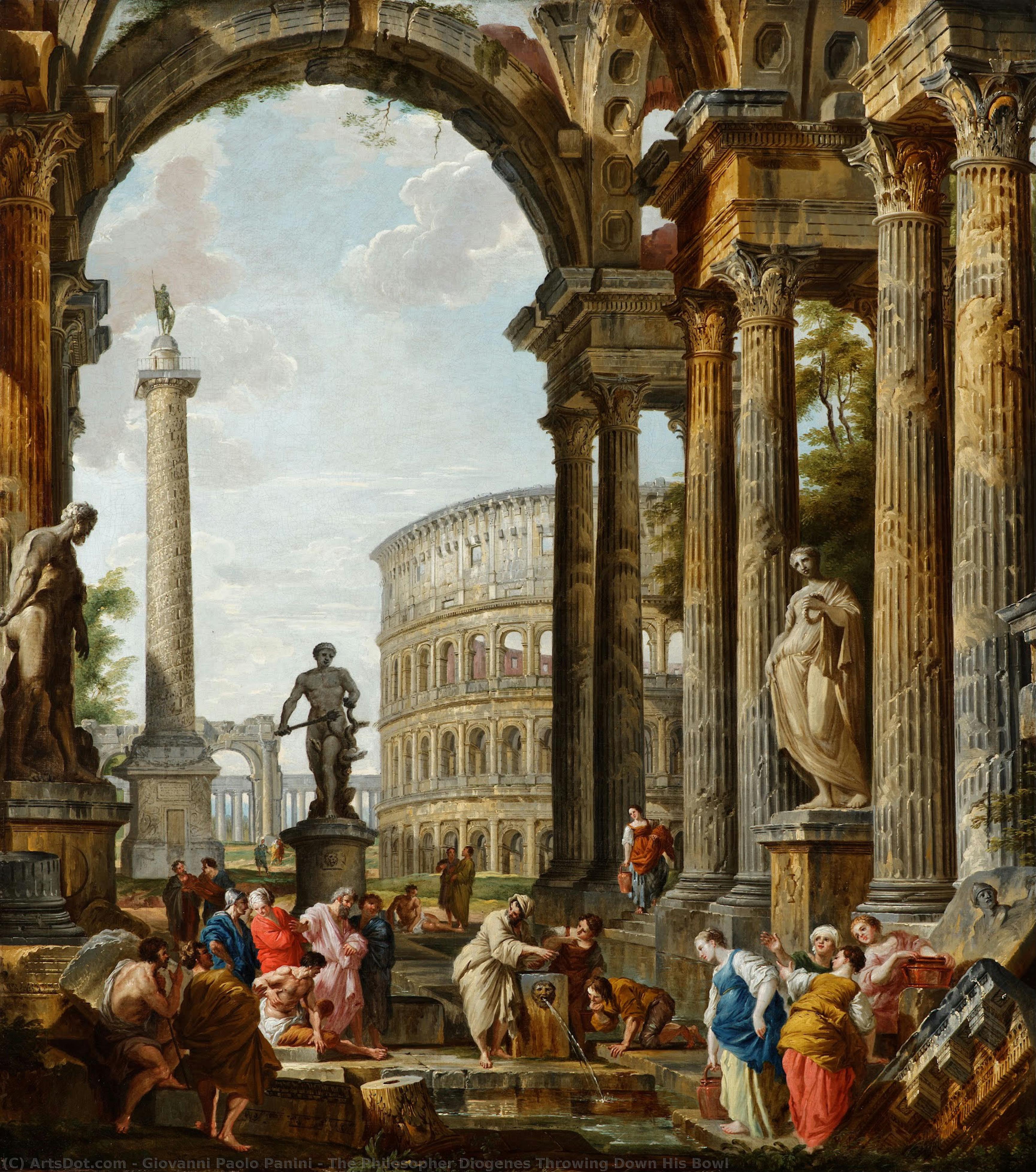
Giovanni Paolo Panini’s “The Philosopher Diogenes Throwing Down His Bowl,” painted in 1570, is a captivating tableau that transcends mere historical representation. It’s a vibrant snapshot of ancient Greek life, imbued with the dramatic flair and illusionistic mastery that defined Panini's remarkable career. This large oil on panel offers a glimpse into a pivotal moment – Diogenes, the iconoclastic philosopher, rejecting societal norms by discarding his bowl, a potent symbol of material excess and intellectual freedom.
- Subject Matter: The painting centers around Diogenes, instantly recognizable from his posture with hands behind his back. His act of defiance is mirrored by the surrounding figures, some engaged in conversation, others observing with curiosity or perhaps disapproval.
- Setting and Composition: Panini meticulously constructs a Roman courtyard scene, complete with imposing columns that lend an air of grandeur and authority. The inclusion of two classical statues – one on the left, the other on the right – adds layers of visual complexity and reinforces the painting’s engagement with ancient Greek ideals. A horse introduces an unexpected element, perhaps representing power or the untamed spirit of nature.
The Genius of Panini: Technique and Illusionism
Panini was a master of *veduta*, a genre that flourished in 18th-century Rome – scenes of cityscapes rendered with remarkable accuracy and illusionistic depth. His technique involved extensive use of aerial perspective, subtly shifting colors and details to create the impression of distance and atmospheric haze. The figures are not simply painted; they are sculpted into space, contributing to the painting’s convincing sense of realism. Note the careful rendering of textures – the rough stone of the columns, the folds in the clothing, the sheen on the horse's coat – all hallmarks of Panini’s meticulous approach.
- Perspective and Space: The artist skillfully employs linear perspective to draw the viewer into the scene, creating a believable three-dimensional space.
- Color Palette: A rich, warm palette dominated by earth tones – ochres, browns, and reds – evokes the sun-drenched atmosphere of ancient Rome and enhances the dramatic effect.
Symbolism and Historical Context
“The Philosopher Diogenes Throwing Down His Bowl” is more than just a portrait; it’s a carefully constructed allegory. Diogenes, a follower of Socrates, represented radical individualism and rejection of conventional wisdom. The bowl he throws down symbolizes the abandonment of material possessions and societal expectations in pursuit of truth and virtue. Painted in 1570, during a period of significant intellectual ferment – the Renaissance – the work reflects the growing interest in classical philosophy and humanism. Panini’s choice to depict this scene underscores the enduring relevance of Diogenes' message centuries later.
- Classical Influence: The painting draws heavily on classical Greek mythology and philosophy, reflecting the artistic trends of the time.
- Social Commentary: The image subtly critiques societal values and encourages viewers to question established norms.
Emotional Impact and Artistic Legacy
Panini’s “The Philosopher Diogenes Throwing Down His Bowl” possesses a remarkable emotional resonance, capturing a moment of intellectual defiance and human drama. Its vibrant colors, dynamic composition, and masterful technique combine to create a visually arresting work that continues to captivate viewers today. This painting stands as a testament to Panini's genius – a visual architect who not only documented the beauty of Rome but also captured the spirit of an era.