A Glimpse into Medieval Devotion: Psalm 118:81
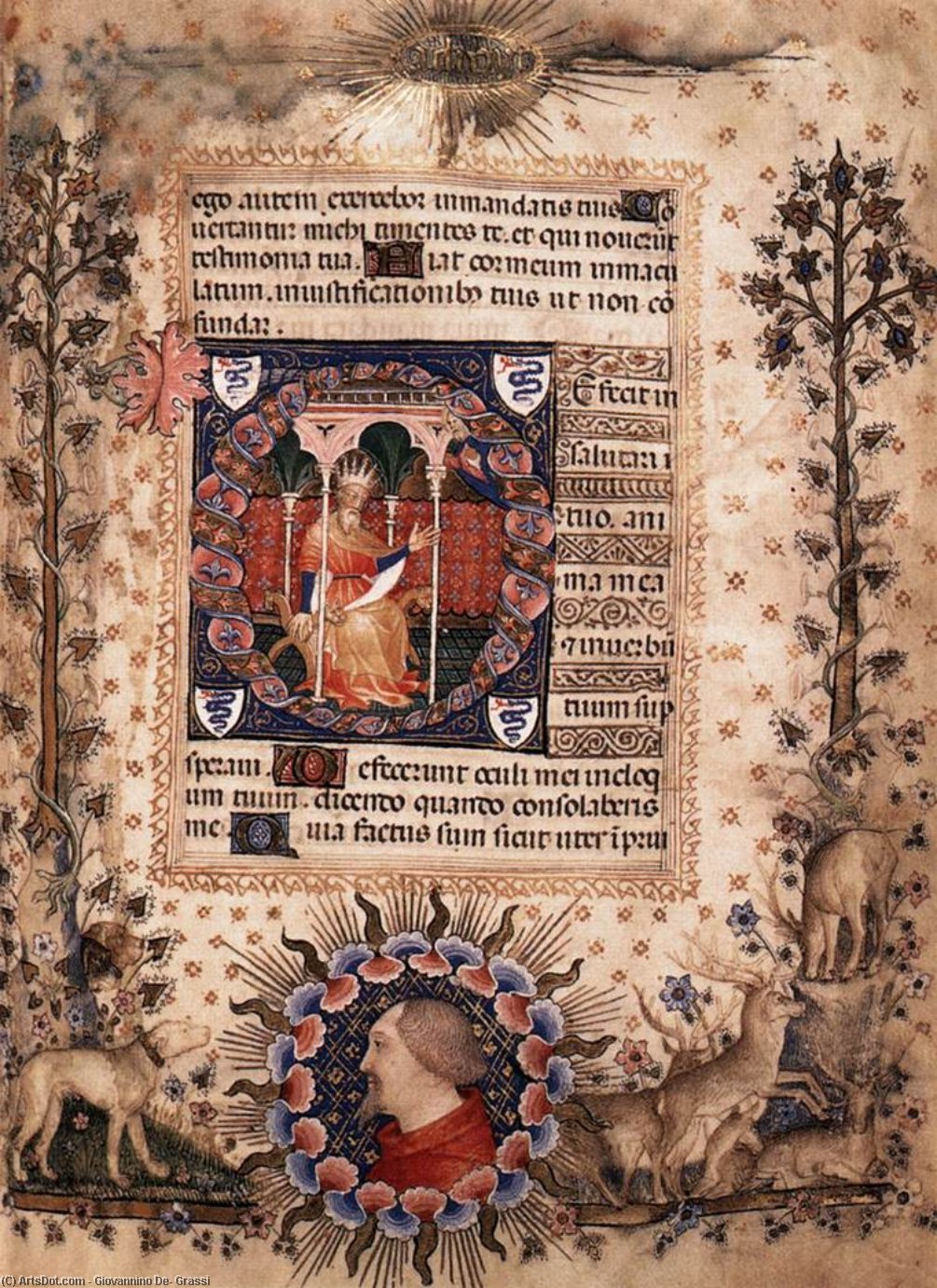
To gaze upon Psalm 118:81 by Giovannino De' Grassi is to step across the threshold of five centuries, directly into the hushed, sacred atmosphere of a late medieval scriptorium. This illuminated manuscript page is far more than mere decoration; it is a tangible prayer rendered in pigment and gold leaf, a breathtaking testament to the devotion and unparalleled skill of its creators. Dating from 1395, this work captures the very essence of Gothic artistry—a period where the sacred word was given visual splendor.
The eye is immediately drawn to the magnificent initial "E," which serves as both structural anchor and artistic explosion. It is a microcosm of nature itself, intricately woven with motifs of blooming flowers, curling leaves, and perhaps even the suggestion of mythical life forms. These decorative elements do not merely fill space; they breathe life into the parchment, transforming a functional piece of religious text into an object of profound beauty.
The Craftsmanship of the Scriptorium
Technically speaking, the mastery displayed here is astounding. Executed in tempera on fine parchment, the pigments adhere with a delicate permanence that speaks to the meticulous hand guiding the brush. The surrounding Latin text, rendered in the characteristic Gothic script, anchors the spiritual weight of the piece. One can almost hear the scratch of the quill and the soft rustle of vellum as the artisan worked. Giovannino De' Grassi, a Lombard Master, channeled the sophisticated aesthetic of the Visconti school, imbuing every curve and every stroke with an academic precision married to heartfelt artistry.
The inclusion of the central figure—a saintly or religious personage holding what appears to be a book—lends narrative depth. This illustration is framed by the textual devotion, suggesting that the written word and the visual representation of faith were inseparable acts of worship for those who commissioned such treasures.
Symbolism and Spiritual Resonance
The symbolism embedded within this manuscript page is rich and multilayered. The flora adorning the initial "E" often symbolizes paradise or divine flourishing, while the figure itself serves as a conduit between the earthly reader and the heavenly narrative contained within the psalm. For the modern viewer, these symbols invite contemplation on themes of enduring faith, the beauty found in sacred texts, and the continuity of human spiritual yearning across the ages.
Owning or displaying a reproduction of this work is not simply acquiring art; it is curating an atmosphere steeped in history and reverence. It transforms a room into a sanctuary of contemplation.
Bringing History Home: Reproduction for the Modern Collector
While the original resides within the hallowed halls of the Biblioteca Nazionale Centrale, ArtsDot.com offers the remarkable opportunity to bring this historical grandeur into your own space through hand-painted oil reproductions. These modern interpretations are executed by talented oil painters who have studied the nuances of tempera and parchment, meticulously capturing the spirit, detail, and breathtaking luminosity of De' Grassi’s original vision. For art lovers, collectors seeking authentic historical resonance, or designers aiming to infuse a space with Old World gravitas, this reproduction offers an unparalleled connection to the zenith of medieval illumination.