A Quadrant of Elegance: The Intimacy of Parmigianino’s Portraits
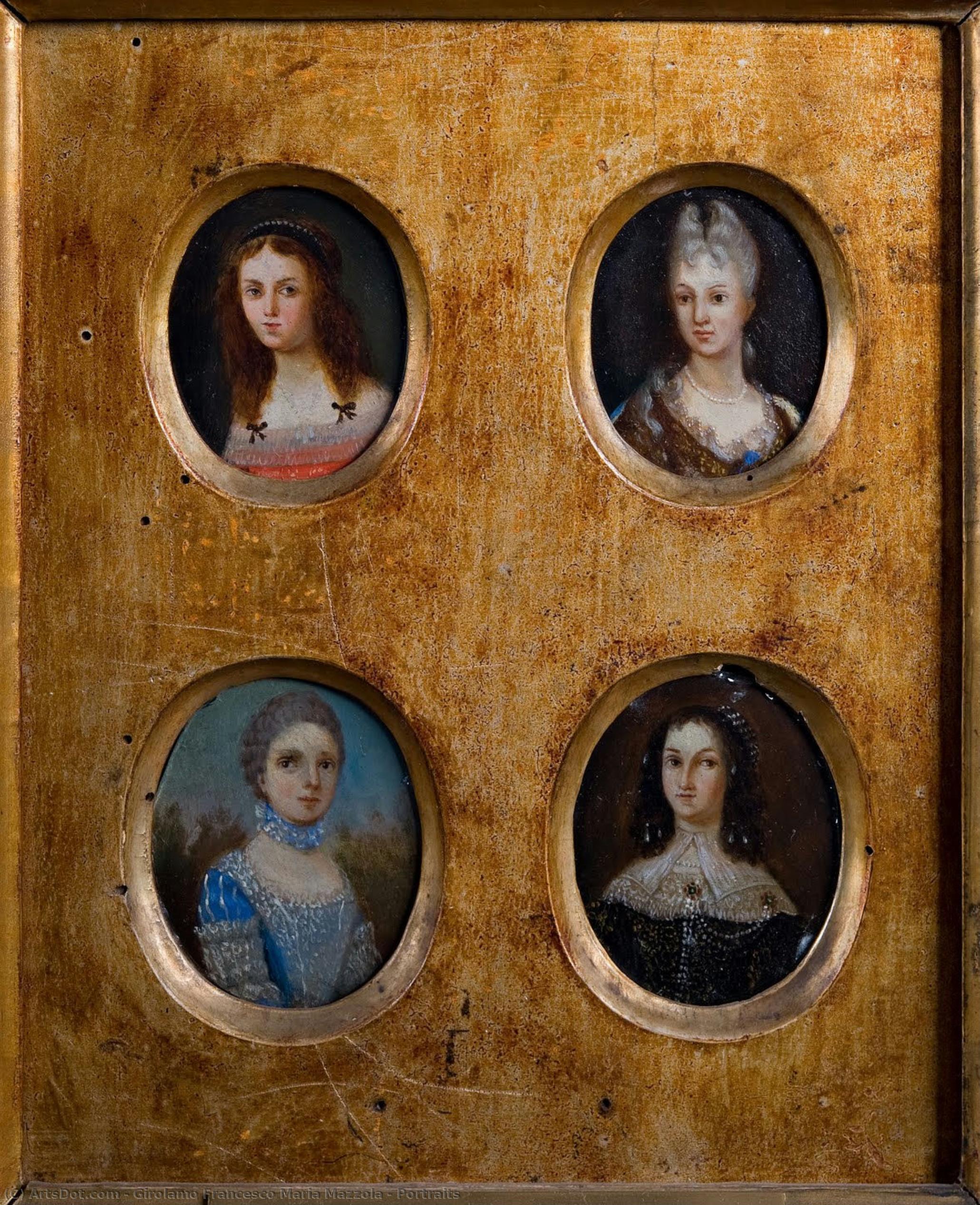
In the quiet corridors of the Pinacoteca Stuard in Parma, there exists a captivating window into the soul of the Italian Renaissance and the burgeoning grace of Mannerism. The work known simply as Portraits is not merely a single image, but a delicate arrangement of four distinct feminine identities, captured within a structured wooden frame that acts as both a boundary and a stage. Each portrait, rendered with the masterful touch of Girolamo Francesco Maria Mazzola—the enigmatic Parmigianino—offers a glimpse into a bygone era of aristocratic poise. The composition is divided into a rhythmic quadrant, where each woman occupies her own space, yet they are united by a shared sense of ethereal beauty and the artist's signature fluid line. To behold this piece is to witness a conversation between light and shadow, where the soft textures of silk and the subtle warmth of skin tones create an atmosphere of profound intimacy.
The technique employed in this oil on copper masterpiece speaks to the extraordinary technical prowess that defined Parmigianino’s short but brilliant career. Painting on copper allows for a luminous, jewel-like finish, as the smooth surface permits the artist to layer glazes that catch the light with an almost supernatural glow. This luminosity is essential to the Mannerist style, which sought to move beyond the mere imitation of nature toward a more stylized, idealized elegance. One can observe the meticulous attention to the varying colors and styles of the women's dresses, where every fold of fabric and every delicate lace detail serves to elevate the subjects from mere sitters to icons of timeless fashion. The artist’s ability to manipulate light across these different sections creates a sense of depth and movement, guiding the viewer's eye in a graceful dance from one face to the next.
Beyond the technical brilliance, there is a deep emotional resonance found within these four faces. While the historical context of 1700 marks a later period for this specific display, the essence of Parmigianino’s 16th-century vision remains palpable. There is a certain melancholy, a quiet introspection, that permeates each gaze; it is as if these women are caught in a moment of eternal reflection. For the discerning collector or the interior designer, this work offers more than just aesthetic pleasure; it provides a focal point of historical gravity and sophisticated charm. A high-quality reproduction of such a piece brings with it an air of Old World nobility, making it an ideal centerpiece for a room designed to inspire contemplation and evoke the grandeur of Italian art history. It is a testament to the enduring power of the portrait—a way to invite the elegance of the past into the modern sanctuary.