A Divine Encounter Captured in Color
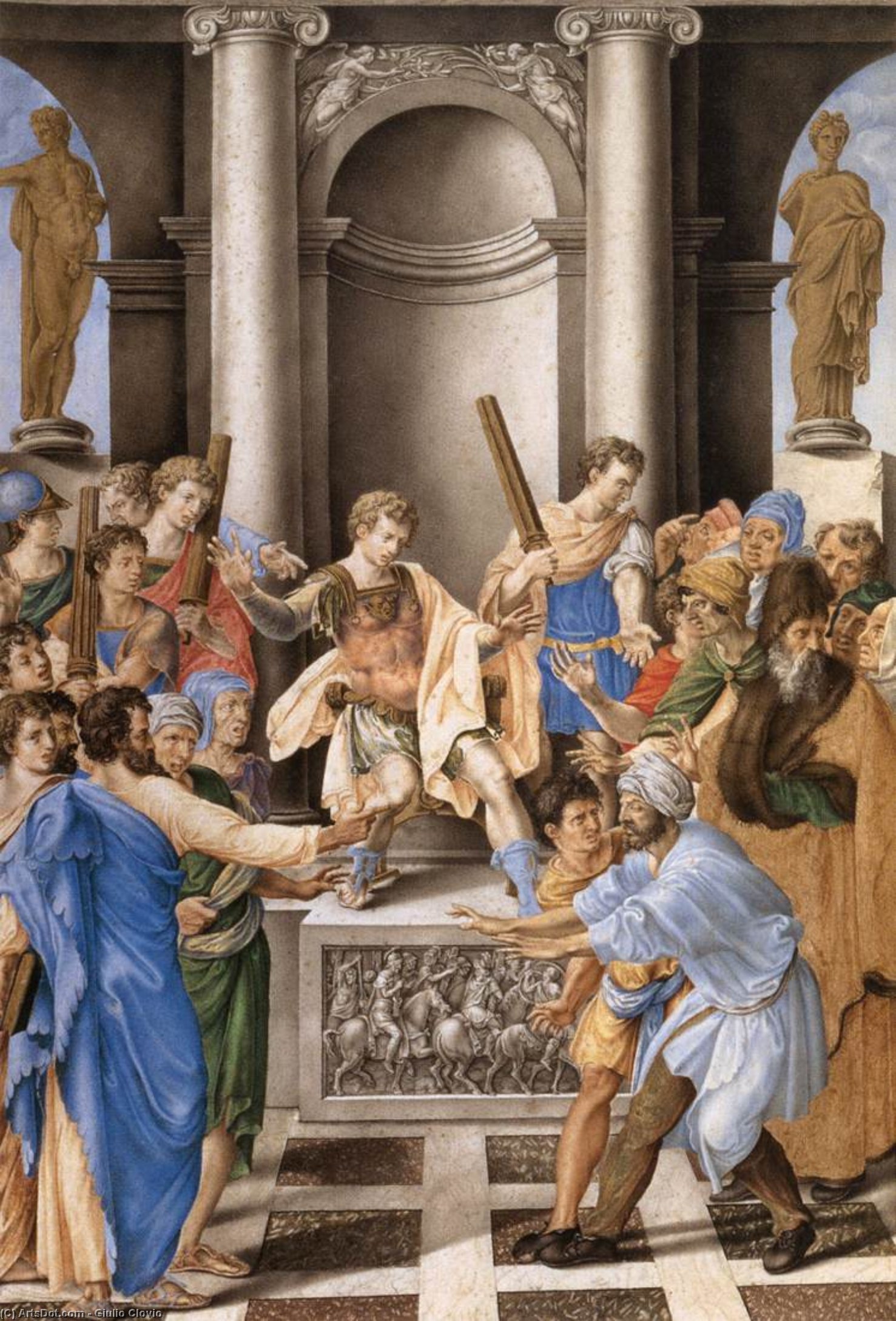
In the grand tapestry of the Italian High Renaissance, few moments possess the visceral tension found in Giulio Clovio’s Elymas Struck Blind by St Paul before the Proconsul Sergius Paulus. This masterpiece serves as a breathtaking window into a moment of profound spiritual upheaval, where the earthly and the divine collide with startling clarity. The scene captures the precise instant of a miracle: the sorcerer Elymas is overcome by sudden darkness, his sight stolen by the righteous authority of Saint Paul. Clovio does not merely illustrate a biblical passage; he orchestrates a drama of light and shadow, positioning the viewer directly within the crowded, breathless atmosphere of Paphos. The composition is alive with movement, as figures react to the divine intervention—some recoiling in awe, others leaning in with suspicion or curiosity—creating a rhythmic energy that pulls the eye across the canvas.
The emotional weight of the piece lies in its ability to convey both terror and transcendence. As St Paul performs his divine act, there is an unmistakable sense of gravity; the air seems thick with the weight of judgment. For the modern collector or lover of classical art, this painting offers more than just a historical narrative; it provides a profound meditation on the power of faith and the vulnerability of human perception. The dramatic interplay between the central figures and the surrounding onlookers creates a psychological depth that makes the scene feel perpetually present, as if the miracle is unfolding for the very first time before our eyes.
Mastery of the Renaissance Line and Composition
Giulio Clovio, often celebrated as the "Michelangelo of the miniature," brought a level of sophistication to this larger-scale work that bridged the delicate precision of manuscript illumination with the monumental grandeur of High Renaissance painting. His technique is characterized by an extraordinary command of detail, where every fold of heavy drapery and every expressive gesture is rendered with meticulous care. Clovical influence is evident in the way he handles light; it does not merely illuminate the scene but acts as a narrative tool, highlighting the divine authority of Paul while casting the shadows of confusion over those caught in the wake of the miracle.
Interestingly, Clovio’s approach to this composition was a brilliant act of artistic dialogue. Drawing inspiration from the monumental tapestry cartoons of Raphael, Clovio chose to deliberately invert the composition. This was not a mere stylistic whim but a calculated move to enhance the immediacy and impact of the biblical story. By reconfiguring the spatial relationships between the Proconsul, the Saint, and the sorcerer, he achieved a sense of arresting intimacy. For interior designers seeking to anchor a room with a piece of significant historical weight, this painting offers a sophisticated balance of complex detail and powerful, singular focus, making it an ideal centerpiece for a gallery-style collection or a stately study.
A Legacy of Light and Devotion
To behold this work is to understand the zenith of Clovio’s career. Born in Croatia but flourishing under the patronage of Italian cardinals, Clovio infused his works with a unique blend of Gothic intricacy and Renaissance humanism. In Elymas Struck Blind, we see the culmination of this journey—a painting that uses the physical medium of pigment and light to explore the metaphysical concept of spiritual sight. The symbolism is layered; the blinding of Elymas represents the stripping away of worldly deception to reveal a higher truth, a theme that resonates deeply across centuries.
Owning or displaying a high-quality reproduction of this work allows one to bring this era of intense devotion and artistic innovation into a contemporary space. It serves as a conversation starter, an object of contemplation, and a tribute to the enduring power of the Renaissance spirit. Whether placed in a sunlit salon or a quiet library, Clovio’s dramatic depiction continues to command attention, reminding us of the moments in history when the veil between the seen and the unseen was momentarily torn asunder.