Giuseppe Amisani (1881-1941) was an Italian Belle Époque portrait painter renowned for his elegant style & international acclaim. Explore portraits of prominent figures and landscapes from Italy, Argentina & beyond.
Delve into Milan's artistic and medical heritage at Ca’ Granda – Ospedale Maggiore Policlinico! Admire Renaissance art & masterpieces by Segantini, Hayez & Carrà alongside historic instruments.
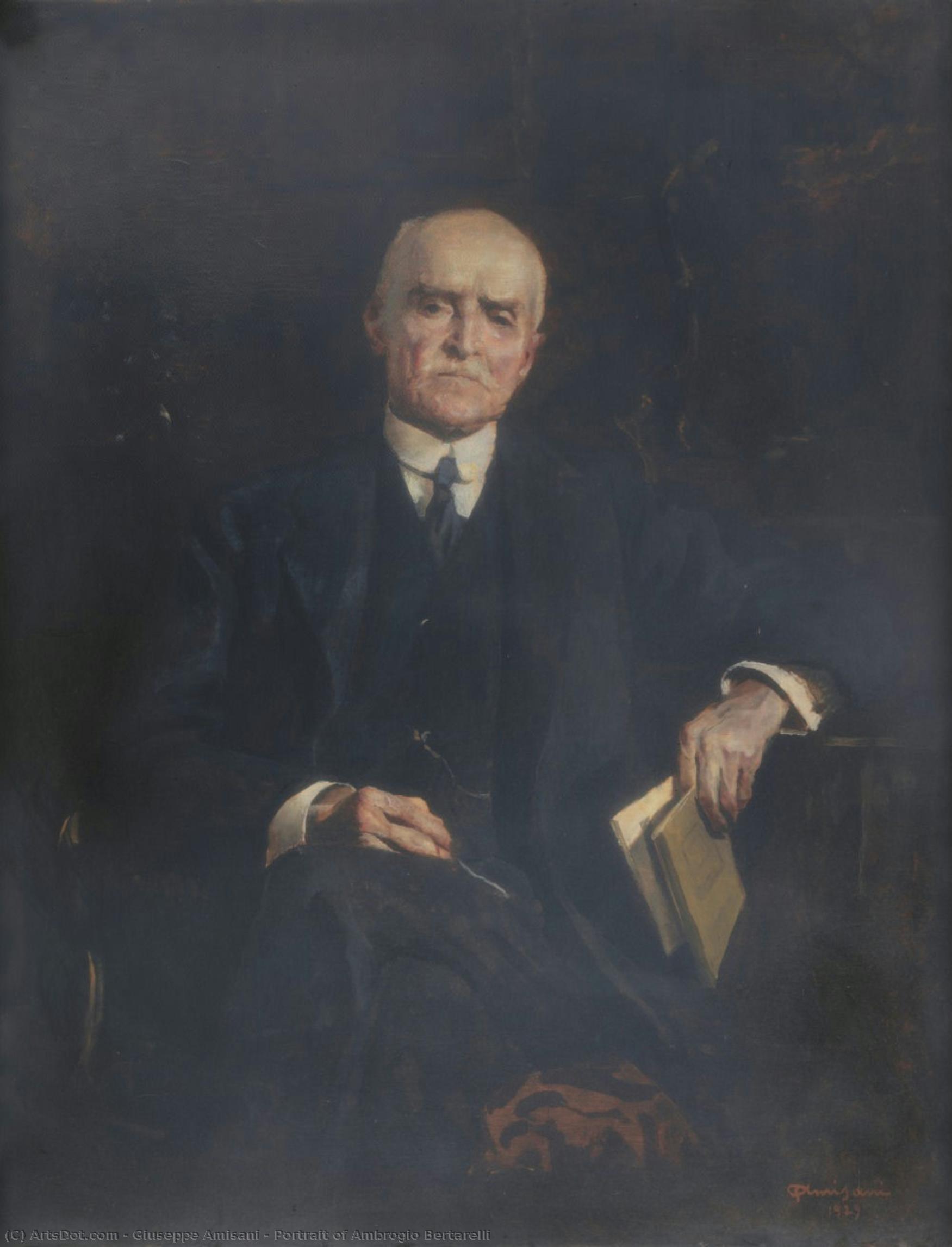
Giuseppe Amisani’s Portrait of Ambrogio Bertarelli: A Window Into Milanese Elegance
A forgotten maestro of the Belle Époque, Giuseppe Amisani deserves renewed recognition for his masterful depiction of Ambrogio Bertarelli—a portrait that transcends mere likeness and embodies the spirit of its time. Born in Medello Lomellina in 1881, Amisani’s artistic journey began with a brief foray into formal studies before discovering his true vocation within the prestigious Accademia di Brera, where he honed his skills under luminaries like Cesare Tallone and Vespasiano Bignami. This grounding in academic tradition profoundly influenced his oeuvre, resulting in canvases characterized by meticulous observation and an unwavering commitment to capturing nuanced detail—a dedication that distinguishes him from many of his contemporaries.
The painting itself presents a striking example of realism infused with stylistic refinement. Bertarelli, seated comfortably within a plush chair, exudes an aura of authority tempered by quiet dignity. The artist’s gaze is directed squarely at the viewer, establishing an immediate connection and conveying a sense of solemn contemplation. Amisani skillfully employs a muted color palette dominated by grayscale tones—a deliberate choice that underscores the seriousness of the subject matter and aligns with the aesthetic sensibilities prevalent during the early 20th century. Subtle gradations in gray build up tonal values and create texture, particularly evident in the fabric of Bertarelli’s suit and the chair upholstery.
Compositionally, the portrait adheres to a classic three-quarter pose—a technique favored by artists seeking to portray their subjects with grace and precision. Two figures are faintly visible in the background, providing context without distracting from Bertarelli's central presence. The artist’s masterful use of hatching and crosshatching techniques contributes significantly to the overall textural quality of the artwork, capturing the subtle nuances of skin tone and surface detail. Lines define the contours of Bertarelli’s face and clothing with remarkable accuracy—a testament to Amisani’s meticulous attention to form.
Beyond its technical prowess, “Portrait of Ambrogio Bertarelli” resonates with symbolic significance. The posture and expression of Bertarelli convey a profound respect for intellect and tradition—values deeply cherished during the Belle Époque. Furthermore, the setting—likely executed in Amisani's studio—suggests a deliberate effort to create an environment conducive to contemplation and artistic reflection. It’s a piece that speaks volumes about its subject and era, inviting viewers to consider not only Bertarelli’s physical appearance but also his inner character and intellectual pursuits.
The artwork’s enduring appeal lies in its ability to transport us back to Milanese society at the height of its cultural flourishing—a period marked by opulent patronage and a fervent embrace of artistic innovation. Giuseppe Amisani's "Portrait of Ambrogio Bertarelli" remains an exceptional achievement, embodying both technical mastery and profound aesthetic sensitivity—a treasure trove for collectors and connoisseurs alike who appreciate the beauty of understated elegance and intellectual contemplation.