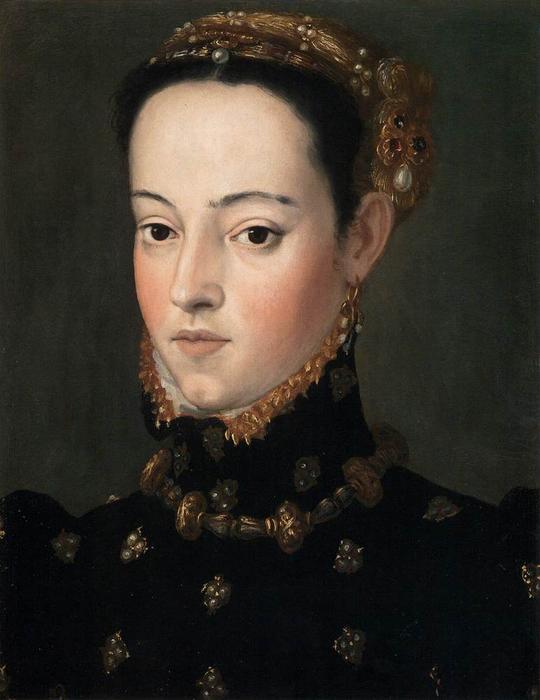
A Masterpiece of Illusion: Exploring Giuseppe Arcimboldo’s “Bust of a Daughter of Ferdinand I”
Giuseppe Arcimboldo’s “Bust of a Daughter of Ferdinand I,” completed in 1563, stands as an extraordinary testament to Renaissance artistic innovation—a visual paradox that continues to intrigue scholars and captivate viewers centuries later. More than just a portrait, it's a meticulously crafted illusion, a triumph of trompe l’oeil technique that elevates the mundane objects of his composition into a singular representation of femininity and regal authority.
- Subject Matter: The painting depicts a woman’s face rendered entirely from fruits, vegetables, flowers, books, and musical instruments. This unconventional approach immediately distinguishes Arcimboldo's work from the prevailing conventions of portraiture during his time.
- Style & Technique: Arcimboldo employed a technique known as “paranoia pictorica,” characterized by its obsessive attention to detail and its deliberate distortion of perspective. He painstakingly arranged these disparate elements—a quince blossom, a lemon peel, a violin, parchment scrolls—to create the illusion of skin texture, hair strands, and facial features.
- Historical Context: Created during Ferdinand I’s reign in Austria, “Bust of a Daughter” reflects the broader humanist spirit of the Renaissance, where artists sought to explore new ways of conveying ideas and emotions beyond mere likeness. It aligns with the fascination for natural symbolism prevalent in the era, mirroring intellectual currents that championed observation and categorization of the natural world.
Symbolism: Layers of Meaning Beyond Appearance
The choice of materials wasn’t arbitrary; each element carried significant symbolic weight. Fruits like quince and lemon represented virtue and purity—qualities deemed essential for portraying a noblewoman. Flowers symbolized beauty and grace, while musical instruments alluded to intellect and refinement. The inclusion of books underscored the importance of education and knowledge within humanist ideals.
- Fruit & Vegetables: Represented innocence and fertility, aligning with traditional iconography associated with female figures.
- Flowers: Embodied elegance and beauty, reflecting Arcimboldo’s artistic sensibilities and the Renaissance appreciation for floral motifs.
- Musical Instruments: Symbolized intellect, learning, and sophistication—attributes considered desirable in a royal consort.
Emotional Impact & Artistic Legacy
"Bust of a Daughter of Ferdinand I" transcends mere visual spectacle; it evokes contemplation about the relationship between artifice and reality. Arcimboldo compels us to reconsider our perceptions, prompting viewers to actively engage in deciphering the hidden layers of meaning embedded within his astonishing creation. Its enduring popularity testifies to its ability to resonate across time periods, cementing Arcimboldo’s place as a pioneer of visual illusion and a visionary artist who redefined the boundaries of portraiture.
- Visual Illusion: The masterful trompe l'oeil technique creates an immersive experience for the viewer, blurring the lines between representation and reality.
- Intellectual Engagement: Encourages contemplation on themes of symbolism, perception, and artistic innovation.
- Timeless Appeal: Continues to inspire artists and designers today with its inventive approach to portraiture and its profound exploration of humanist ideals.