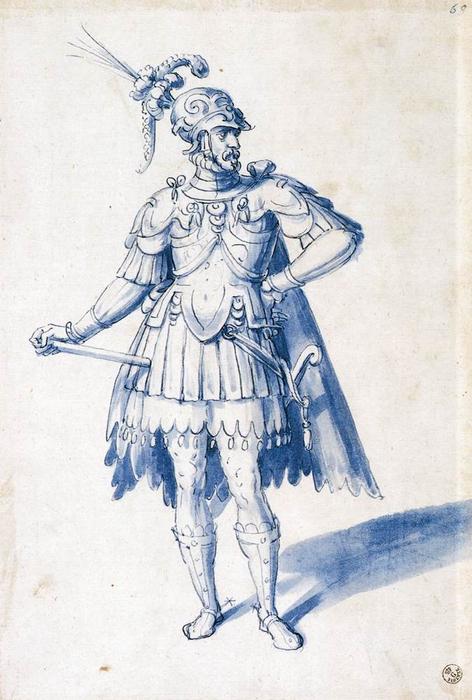
A Renaissance Warrior Frozen in Time: Arcimboldo’s “Costume Drawing for Man-at-Arms”
This exceptional drawing, dating from 1585 and attributed to the visionary Giuseppe Arcimboldo, offers a rare glimpse into the meticulous artistry and symbolic thinking that defined the Northern Renaissance. More than just a depiction of military attire, it’s a carefully constructed meditation on power, status, and the very nature of representation itself. The image portrays a man-at-arms – a soldier equipped for battle – rendered with an astonishing level of detail, capturing not only the physical form but also the implied authority and readiness inherent in his stance. The drawing's aged paper, bearing subtle discoloration and creases, speaks to its history, hinting at years spent within private collections or perhaps even the artist’s studio, adding another layer of intrigue to its story.
Technical Mastery: Arcimboldo’s Unique Approach
- Realistic Detail: Arcimboldo's skill is immediately apparent in the rendering of the armor. He employs hatching and cross-hatching with masterful precision, creating a convincing illusion of texture and volume within the metalwork. The intricate detailing – straps, buckles, rivets – speaks to a deep understanding of materials and construction techniques.
- Perspective and Shading: The artist’s command of perspective is evident in the figure's three-dimensional form, lending depth and realism to the composition. Careful shading further enhances this effect, creating a sense of solidity and weight.
- Hatching and Cross-Hatching: These techniques are not merely decorative; they are fundamental to Arcimboldo’s style, allowing him to build up tonal values and create a dramatic interplay of light and shadow that brings the armor to life.
Symbolism Within the Armor: A Renaissance Allegory
The man-at-arms depicted is not simply a soldier; he’s a carefully constructed symbol within the context of 16th-century Europe. The helmet, with its pointed visor and crest, signifies status and allegiance – likely to a specific noble house or military order. The full plate armor itself represents protection, both physical and spiritual, reflecting the era's preoccupation with defense against external threats and internal anxieties. The cape draped over his shoulder adds an element of regal authority, further emphasizing the figure’s importance.
Arcimboldo’s Legacy: A Master of Composite Portraiture
Created by a master of his time, Giuseppe Arcimboldo was known for his innovative approach to portraiture. His work reflects the intellectual climate of the Renaissance, where artists sought to challenge conventional norms and explore new ways of representing reality. This “Costume Drawing” exemplifies his unique style – a fusion of realism and symbolism that continues to captivate viewers centuries later. It’s a testament to Arcimboldo's genius, demonstrating not just artistic skill but also a profound understanding of human psychology and the power of visual communication.