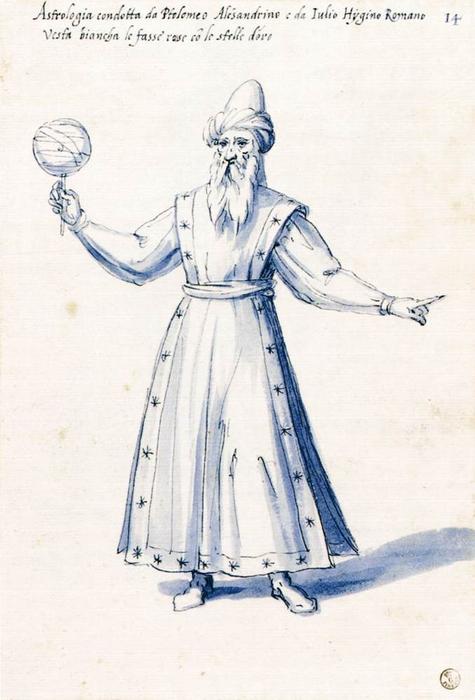
A World Reimagined: Unveiling Arcimboldo's 'Astrology'
Giuseppe Arcimboldo, a name synonymous with audacious creativity and intellectual depth, remains one of the most singular figures in Renaissance art. Born in Milan in 1527, his career unfolded during an era defined by profound shifts – religious upheaval, burgeoning scientific inquiry, and a relentless fascination with the natural world. While initially recognized for his masterful frescoes adorning grand cathedrals and portraits adhering to established courtly conventions, Arcimboldo’s enduring legacy rests upon a revolutionary approach: constructing elaborate composite heads entirely from meticulously arranged objects. These weren't mere whimsical parlor tricks; they were complex allegories, imbued with layers of symbolism that resonated deeply within the Renaissance worldview and continue to captivate audiences today. His father, Biagio Arcimboldo, an artist in his own right, provided a fertile ground for young Giuseppe’s artistic development, nurturing a keen eye for detail and a willingness to challenge conventional boundaries.
The artwork before us – “Costume of the Allegorical Figure ‘Astrology’” – offers a particularly compelling glimpse into Arcimboldo's inventive genius. Executed in 1585, this preparatory drawing, rendered in ink and charcoal on paper, anticipates the grandeur of his later, fully realized portraits. It’s not a finished masterpiece, but rather a vital stage in the creation process, revealing the artist’s meticulous planning and considered execution. The piece immediately draws the eye with its monochromatic palette – primarily shades of blue and grey—a deliberate choice that lends an air of solemnity and intellectual gravitas to the subject matter. Subtle variations in tone create a remarkable sense of depth and form, suggesting the textures of the figure's beard, the folds of his garment, and the polished surfaces of the celestial objects he holds.
The Language of Objects: Symbolism and Allegory
At its core, “Astrology” is a potent allegory, representing the study of the stars and their perceived influence on human affairs. The figure, presented from the waist up against a simple background, embodies wisdom and authority – an aged countenance framed by a meticulously crafted beard that speaks to experience and contemplation. In each hand, he holds symbolic objects: a globe representing earthly realms and a staff topped with a radiant star signifying celestial dominion. These aren’t merely decorative elements; they are carefully chosen visual metaphors, reflecting the Renaissance fascination with astrology, astronomy, and the interconnectedness of all things. The inclusion of a book hints at the importance of knowledge and scholarship in understanding the cosmos.
The deliberate asymmetry of the composition—the figure slightly off-center—allows for annotations, suggesting that Arcimboldo intended this work to be part of a larger series or perhaps even a theatrical design. The precise lines defining the figure’s features, clothing details, and accessories are executed with remarkable control, contributing to a sense of order and formality. Hatching and cross-hatching techniques skillfully render shading and texture, particularly in the beard and folds of the robe, creating a tactile quality that invites close examination. The overall impression is one of intellectual pursuit—a dignified representation of a scholar immersed in the mysteries of the universe.
Craftsmanship and Technique: A Renaissance Draftsman’s Vision
“Costume of the Allegorical Figure ‘Astrology’” exemplifies Arcimboldo's mastery of Renaissance draftsmanship. The medium – ink on paper—allowed for a level of detail and precision that would have been difficult to achieve with oil paint, particularly in preparatory sketches. The artist’s use of fine lines, combined with hatching and cross-hatching, creates a remarkable illusion of depth and texture. The deliberate flatness of the image, typical of preparatory drawings, emphasizes the meticulous planning behind the final composition. It's a testament to Arcimboldo’s ability to transform humble materials—ink and paper—into a visually arresting and intellectually stimulating work of art.
Considering the historical context, this piece offers a fascinating insight into the artistic practices of the late 16th century. The meticulous attention to detail, the emphasis on observation and rendering texture, and the integration of symbolic elements are all hallmarks of Renaissance draftsmanship. The work’s connection to Arcimboldo's later composite portraits—particularly “Vertumnus”—demonstrates a clear evolution in his style, building upon established techniques while pushing the boundaries of artistic representation.