A Royal Portrait of Layers: Unveiling Arcimboldo’s ‘Maximilian II’
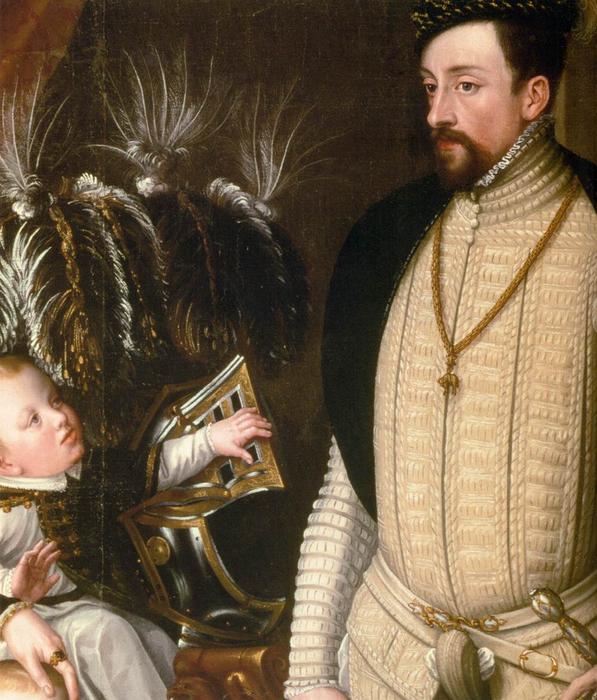
Giuseppe Arcimboldo's “Maximilian II, His Wife and Three Children (detail)” isn’t merely a portrait; it’s an elaborate, meticulously constructed allegory—a vibrant snapshot of power, lineage, and the intellectual currents of 16th-century Europe. Painted in 1563 for Holy Roman Emperor Maximilian II, this remarkable work transcends the conventional boundaries of portraiture, transforming into a rich tapestry woven from fruits, vegetables, books, and architectural fragments. It’s a testament to Arcimboldo's unparalleled skill and his profound understanding of symbolism, inviting viewers to decipher its layers of meaning long after the initial visual impact fades.
The painting immediately captivates with its audacious composition. The Emperor, rendered in regal attire, is positioned slightly off-center, flanked by his wife, Maria of Spain, and their three young children. However, it’s not the figures themselves that dominate; rather, they are enveloped within a dense, almost claustrophobic arrangement of meticulously chosen objects. A cascade of pomegranates forms the Emperor's beard, while books—representing scholarship and governance—overflow from shelves built into his robes. Grapes hang like jewels, and delicate flowers peek out from amongst the architectural elements, creating an astonishing illusion of depth and volume. The background is deliberately dark, serving to amplify the brilliance and complexity of the foreground.
The Renaissance Mind: Symbolism in a Fruitful Arrangement
Arcimboldo’s work is deeply rooted in the intellectual climate of the High Renaissance, particularly the influence of Neo-Platonism. This philosophical movement sought to reconcile classical philosophy with Christian theology by interpreting material objects as symbols of spiritual truths. In “Maximilian II,” each element carries a specific weight: fruits represent fertility and abundance, books signify knowledge and power, architectural fragments evoke the grandeur of imperial authority, and the overall composition suggests a harmonious balance between earthly and divine realms. The inclusion of the young children reinforces the theme of succession and the continuation of the Habsburg dynasty—a potent symbol of stability and legitimacy.
Furthermore, the painting can be interpreted as a commentary on the excesses of the courtly world. Arcimboldo’s use of seemingly mundane objects – fruits and vegetables – elevates them to the status of royal regalia, subtly critiquing the lavish displays of wealth and power that characterized the era. The meticulous arrangement also reflects the Renaissance fascination with perspective and illusionism, mirroring the artistic techniques employed by masters like Leonardo da Vinci. The painting is not simply a representation of a family; it’s an intricate puzzle designed to engage the viewer's intellect and imagination.
A Masterful Technique: Layers of Oil Paint
Arcimboldo’s extraordinary achievement lies in his masterful manipulation of oil paint. He employed a technique known as “glazing,” applying thin, translucent layers of color over each other to build up depth, luminosity, and texture. This painstaking process allowed him to create the illusion of three-dimensionality—the velvety softness of fruit skins, the intricate folds of fabric, and the solidity of architectural elements. The use of chiaroscuro – contrasting light and shadow – further enhances the sense of volume and drama, drawing the viewer’s eye into the heart of the composition.
The painting's remarkable detail is a testament to Arcimboldo’s patience and precision. Each fruit, each leaf, each book is rendered with astonishing accuracy, contributing to the overall illusionistic effect. The subtle variations in color and tone create a sense of movement and vitality, as if the objects are truly alive within the frame. The painting's longevity speaks volumes about Arcimboldo’s skill and the enduring appeal of his unique artistic vision.