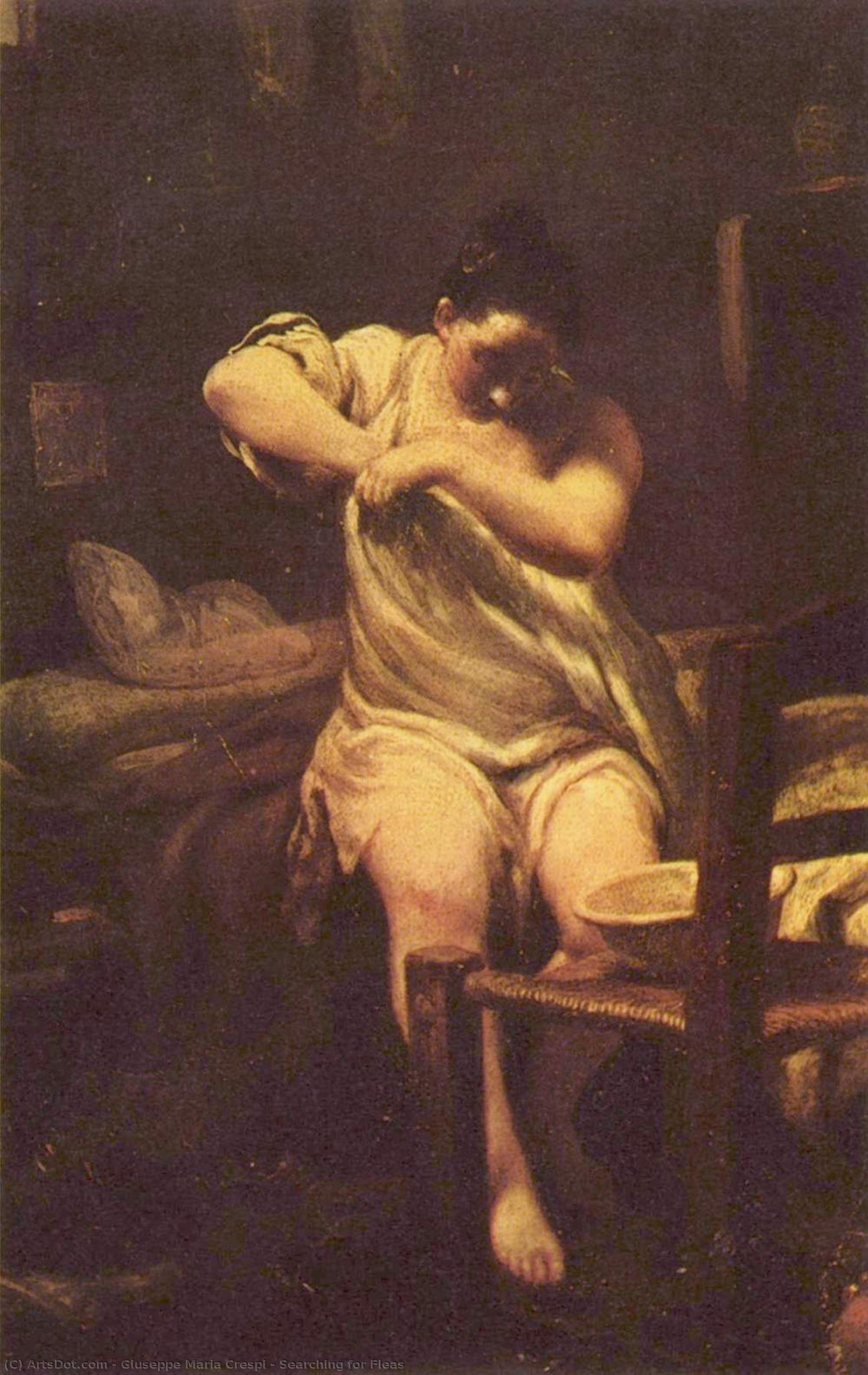
‘Searching for Fleas’ (1709) by Giuseppe Maria Crespi is a captivating Baroque genre scene depicting a woman's quiet contemplation, showcasing rich detail and earthy tones.
Explore Giuseppe Maria Crespi (1665-1747), a leading Bolognese Baroque painter celebrated for his genre scenes, portraits & religious works. Known as 'Lo Spagnuolo', he blended realism with captivating detail.
Step into the Renaissance heart of Florence at the Uffizi Gallery! Explore masterpieces by Botticelli, Leonardo da Vinci & Michelangelo – an unforgettable art experience.
Searching for Fleas: A Glimpse into Bolognese Baroque Life
Giuseppe Maria Crespi’s “Searching for Fleas,” painted in 1709, isn't merely a depiction of a mundane domestic scene; it’s a carefully constructed window into the realities – and perhaps the anxieties – of 18th-century Italian life. This remarkable work, now residing within the Uffizi Gallery in Florence, transcends its seemingly simple subject matter to offer a profound meditation on poverty, labor, and the quiet dignity of everyday existence. Crespi, nicknamed “Lo Spagnuolo” for his penchant for flamboyant attire, was a master of genre painting, a relatively new movement that sought to capture scenes from ordinary life with unprecedented realism and psychological depth – a departure from the grand narratives favored by earlier artistic traditions.
A Portrait of Poverty and Perseverance
The central figure is a young woman, seated on a simple chair within a modestly furnished interior. Her posture, slightly slumped and her gaze averted, immediately conveys a sense of weariness or perhaps even melancholy. She’s engaged in the task of searching for fleas – a detail that, at first glance, seems almost absurd. However, upon closer examination, it becomes clear that this isn't a frivolous activity; it represents a vital, if unglamorous, means of survival. The act of meticulously examining cloth for parasites speaks volumes about the economic hardships faced by many families during this period. Crespi doesn’t shy away from depicting poverty; instead, he presents it with unflinching honesty and a subtle respect for those who endure it. The bed in the background, draped with a bundle of cloth, reinforces the impression of a humble dwelling, further emphasizing the woman's circumstances.
Technique and Style: A Masterful Blend of Realism and Mannerism
Crespi’s artistic approach is characterized by a remarkable blend of realism and subtle mannerist influences. He employs a loose, expressive brushstroke – evident in the slightly blurred forms and the visible texture of the fabrics – that contributes to the painting's intimate feel. The use of muted earth tones—ochre, brown, and pale yellow—creates a somber yet evocative atmosphere. The lighting, originating from an unseen source on the left, casts dramatic shadows across the scene, highlighting the woman’s face and adding depth to the composition. Crespi was known for his meticulous attention to detail, particularly in rendering fabrics and textures, which is beautifully showcased here. The way he captures the folds of the cloth, the roughness of the chair, and the subtle nuances of the woman's clothing demonstrates a remarkable command of technique. Interestingly, Crespi’s style evolved over time, moving away from the rigid conventions of academic painting towards a more personal and expressive approach.
Symbolism and Emotional Resonance
The seemingly trivial act of searching for fleas carries significant symbolic weight. It can be interpreted as a metaphor for the relentless struggle against adversity – a constant effort to maintain one’s dignity and well-being in the face of hardship. The woman's averted gaze suggests introspection, perhaps a quiet contemplation on her circumstances or a yearning for something more. Crespi was fascinated by human psychology and often imbued his genre scenes with subtle emotional undertones. “Searching for Fleas” is no exception; it invites viewers to empathize with the subject’s plight and to consider the broader social context of 18th-century Italy. The painting's enduring power lies in its ability to evoke a sense of quiet dignity and resilience amidst challenging circumstances, reminding us that even in the most humble settings, profound human experiences can unfold.
A Window into a Lost World
“Searching for Fleas” offers a rare and poignant glimpse into the lives of ordinary people during the Baroque period. It’s a testament to Giuseppe Maria Crespi's artistic genius – his ability to capture not just the outward appearance of reality, but also the underlying emotions and social dynamics that shaped it. Reproductions of this captivating work can bring this intimate scene into any space, serving as a reminder of the enduring human spirit and the importance of appreciating the beauty found in everyday life.