The
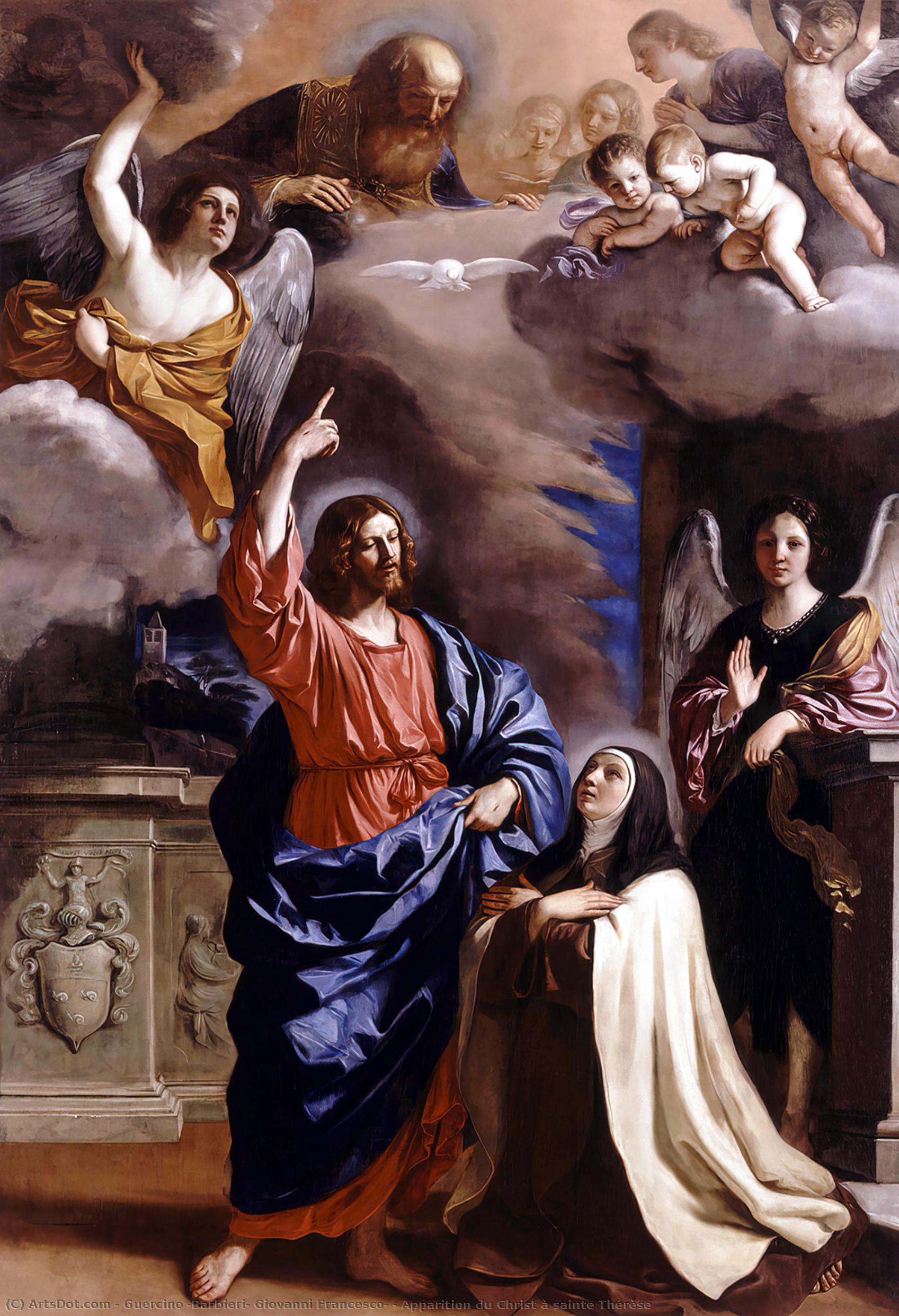
Apparition of Christ to Saint Therese is a stunning oil painting by the renowned Italian Baroque painter
Guercino (Barbieri, Giovanni Francesco). This beautiful artwork is a testament to Guercino's skill in capturing the essence of religious scenes with serenity and contemplation.
The painting features Jesus Christ standing next to
Saint Therese of Lisieux, with several other figures in the background, including angels and possibly other saints. The scene is set against a backdrop of clouds, adding an element of drama and grandeur to the composition. Guercino's use of light and shadow creates a sense of depth and dimensionality, drawing the viewer into the scene.
Artistic Style and Influences
Guercino's style is characterized by a vigorous naturalism, which is evident in this painting. His early works show a classical equilibrium, while his later works, such as the
Apparition of Christ to Saint Therese, demonstrate a more refined and nuanced approach to composition and color.
Some of Guercino's other notable works include
The Vocation of Saint Aloysius (Luigi) Gonzaga and
Apparition of Christ to Saint Therese. These paintings showcase Guercino's mastery of the Baroque style and his ability to convey complex emotions and themes through his art.
Conservation and Display
The
Apparition of Christ to Saint Therese is a significant work in the collection of the
Museo della Città in Rimini, Italy. This museum is home to an impressive array of artworks from various periods, including the Middle Ages, Renaissance, and Baroque eras. For more information on Guercino and his works, visit
Guercino (Barbieri, Giovanni Francesco) on ArtsDot.
Some key features of the painting include:
- Oil on canvas composition
- Baroque style and influences
- Religious theme and symbolism
The
Apparition of Christ to Saint Therese is a remarkable example of Guercino's skill as a painter and his ability to create beautiful, emotionally charged artworks. For more information on this painting and other works by Guercino, visit
ArtsDot.