Discover Gustav Klimt (1862-1918), the Austrian Symbolist master of Art Nouveau! Explore his iconic 'Golden Phase,' sensual portraits, and masterpieces like *The Kiss*. Learn about his life, influences & legacy.
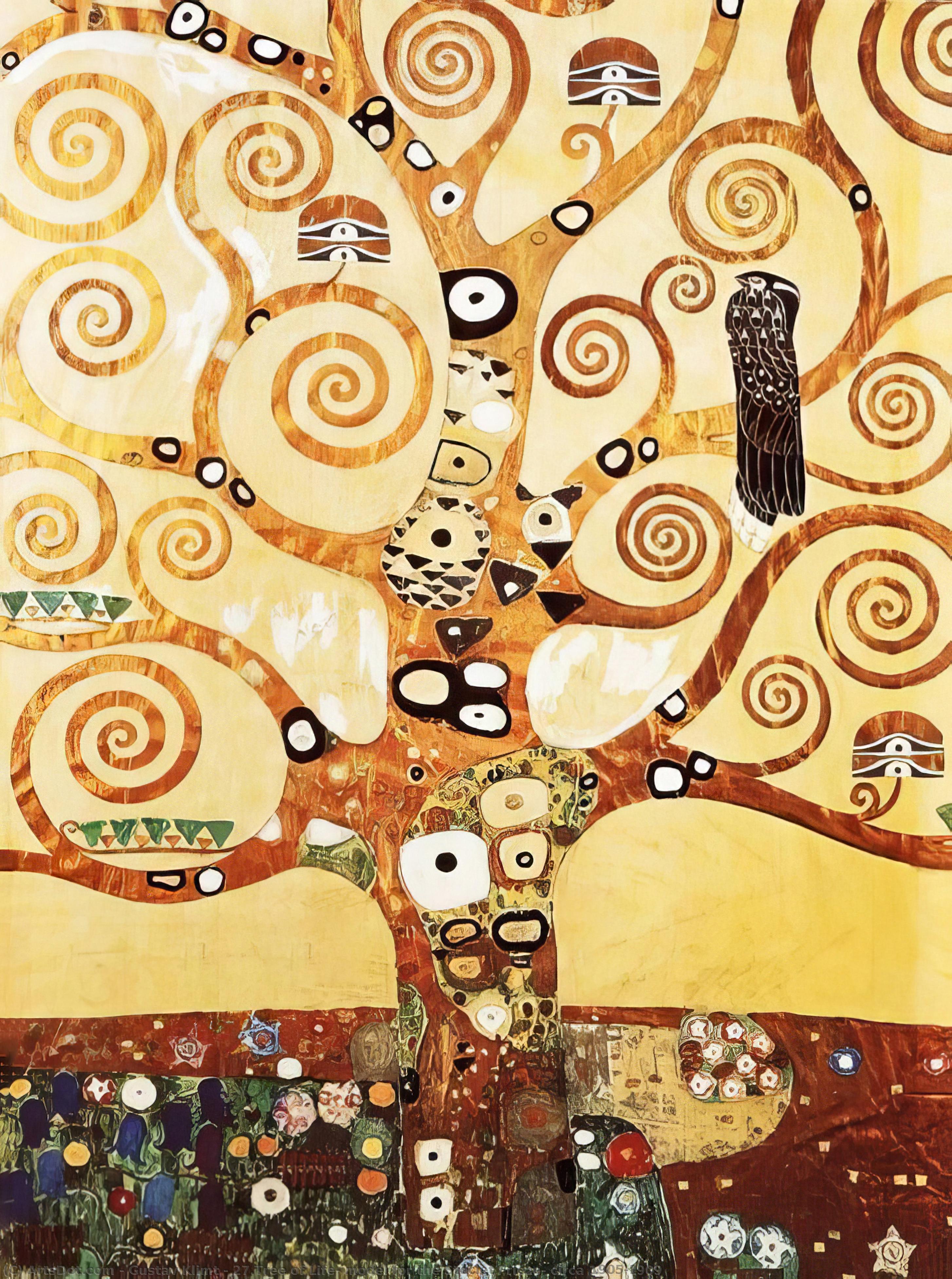
27.Tree of Life, model for the Stoclet Frieze – A Symphony of Symbolism and Gold
Gustave Klimt’s *27. Tree of Life*, conceived as a centerpiece for the opulent Stoclet Frieze commissioned by Baron Ludwig Beckmesser in 1905-1909, stands as an unparalleled testament to the zenith of Viennese Symbolism and Art Nouveau. More than just a decorative element adorning the Baron’s magnificent mansion, this monumental artwork embodies Klimt's profound engagement with esoteric thought and his masterful manipulation of visual language—a language steeped in gold leaf and pulsating with intricate patterns that continue to mesmerize viewers today.
The Vienna Secession and Klimt’s Artistic Vision
Klimt’s artistic trajectory was irrevocably shaped by the Vienna Secession, a rebellious movement spearheaded by artists like Emil Nolde and Oskar Kokoschka who vehemently rejected the conservative academic traditions dominating Viennese art circles at the turn of the century. Seeking to forge a new path for Austrian painting, Secessionists championed expressive abstraction and explored themes rooted in mythology, folklore, and psychoanalysis—areas Klimt expertly navigated. His canvases frequently depicted female figures rendered with sensual grace and adorned with shimmering ornamentation, reflecting his fascination with feminine beauty and spiritual symbolism. This preoccupation aligns perfectly with the broader Secessionist ethos of challenging societal norms and celebrating artistic freedom.
A Detailed Examination of Composition and Technique
The painting itself presents a breathtaking panorama of interwoven spirals—a motif recurrent throughout Klimt’s oeuvre—that dominate the central composition. These spiraling lines ascend from the base of the tree, mirroring the upward trajectory of human aspiration and embodying the cyclical nature of life itself. The artist skillfully employs oil paint on canvas, layering textures and hues to achieve remarkable depth and luminosity. Klimt's meticulous technique involves painstaking application of gold leaf—a hallmark of his “Golden Phase”—creating a dazzling surface that captures and refracts light with captivating brilliance. Furthermore, the incorporation of vibrant colors – ochre, crimson, emerald green – contributes to an emotionally resonant visual experience.
Symbolism Rooted in Ancient Wisdom
Beyond its formal beauty lies a rich tapestry of symbolic references. The tree itself is universally recognized as representing fertility, growth, and immortality—concepts central to pagan religions and deeply ingrained in Western consciousness. Surrounding the trunk are stylized birds – doves symbolizing peace and harmony – alongside fruits like oranges and apples, emblems of abundance and prosperity. These elements coalesce into a powerful visual narrative that speaks to fundamental human concerns about existence, spirituality, and the interconnectedness of nature and humanity. Klimt’s deliberate use of symbolism elevates *27. Tree of Life* beyond mere decoration; it invites contemplation on profound philosophical ideas.
Legacy and Influence Beyond Viennese Boundaries
Klimt's influence extended far beyond Vienna, impacting subsequent artistic movements such as Surrealism and Expressionism. His pioneering exploration of texture, color, and pattern paved the way for innovative approaches to visual art—a legacy that persists in contemporary design and decorative arts. Reproductions of *27. Tree of Life*, meticulously crafted by ArtsDot.com, allow collectors and enthusiasts alike to appreciate the enduring power of Klimt’s artistic vision and immerse themselves in the splendor of Art Nouveau's golden age.