Introduction
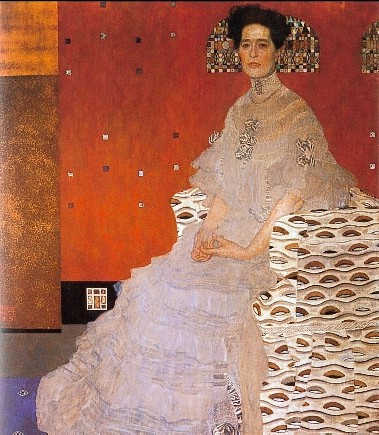
Gustav Klimt (1862-1918), a key figure in the Vienna Secession movement, profoundly impacted art with his focus on the female body and his distinct, often erotically charged style. One of his most notable works is '28. Retrato de Fritza Riedler, 1906' (
Gustav Klimt: 28. Retrato de Fritza Riedler, 1906), which exemplifies his unique approach to portraiture and symbolism.
Background on Gustav Klimt
Born in Baumgarten near Vienna in Austria, Klimt struggled with poverty while studying architectural painting at the Vienna School of Arts and Crafts until 1883. He began work painting interior murals and ceilings in large public buildings, such as the Burgtheater in Vienna. During this time, he developed his signature style, which combined elements from Art Nouveau, Symbolism, and Japanese prints (
Gustav Klimt).
The Painting: '28. Retrato de Fritza Riedler, 1906'
In this painting, Klimt portrayed Fritza Riedler, a wealthy patron of the arts and wife of a prominent industrialist. The portrait is characterized by its flattened perspective, decorative background, and emphasis on the female form (
Gustav Klimt: 28. Retrato de Fritza Riedler, 1906). Klimt's use of color and pattern in this painting is striking. The muted tones of the background contrast with the vibrant hues of Riedler's dress, drawing attention to her face and upper body. This juxtaposition highlights Klimt's mastery of symbolism, as he uses color and form to convey a sense of elegance and sophistication.
Klimt's Legacy
Today, Gustav Klimt is regarded as one of the most influential artists of the early 20th century. His work continues to inspire contemporary artists and collectors alike. At ArtsDot.com, we offer high-quality hand-painted reproductions of Klimt's paintings, including '28. Retrato de Fritza Riedler, 1906', allowing art enthusiasts to appreciate his work in their own homes (
Painting by 'Gustave Klimt' | Gustav Klimt: 28. Retrato de Fritza Riedler, 1906).
Conclusion
'28. Retrato de Fritza Riedler, 1906' is a testament to Gustav Klimt's mastery of portraiture and symbolism. By combining elements from Art Nouveau, Symbolism, and Japanese prints, Klimt created a unique style that continues to inspire artists and collectors today. At ArtsDot.com, we are proud to offer high-quality reproductions of this iconic painting, allowing art lovers to appreciate Klimt's work in their own homes.