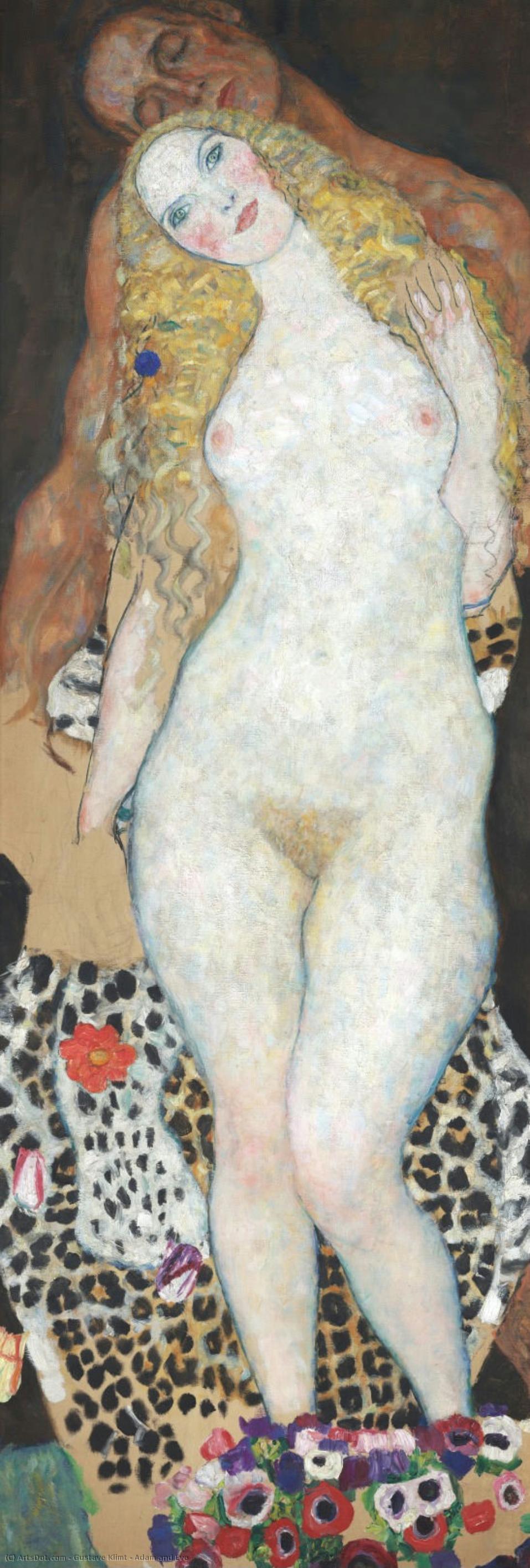
Admire Gustav Klimt's unfinished masterpiece, 'Adam and Eve,' a sensual depiction of intimacy within the Garden of Eden. Explore this iconic painting’s rich symbolism and Klimt’s masterful use of gold leaf.
Discover Gustav Klimt (1862-1918), the Austrian Symbolist master of Art Nouveau! Explore his iconic 'Golden Phase,' sensual portraits, and masterpieces like *The Kiss*. Learn about his life, influences & legacy.
A Fragmented Eden: Exploring Gustav Klimt’s Adam and Eve
The painting “Adam and Eve,” completed in 1917 by Austrian Symbolist painter Gustav Klimt, stands as a poignant testament to artistic ambition thwarted by circumstance – a hauntingly beautiful echo of paradise lost. Finished just before Klimt's untimely death at the age of 56, this monumental canvas embodies the artist’s signature style and delves into profound themes of duality, desire, and the precariousness of innocence amidst encroaching darkness. It’s more than merely a depiction of biblical figures; it’s an exploration of human psychology rendered in shimmering gold leaf and intricate ornamentation.
Style and Technique: The Golden Embrace
Klimt's distinctive style is instantly recognizable – a masterful blend of Art Nouveau influences with Expressionist sensibilities. He eschewed traditional realism, prioritizing instead evocative symbolism and textural richness. The painting’s surface is dominated by lavish application of gold leaf, meticulously crafted to create an ethereal glow that envelops the figures of Adam and Eve. This technique wasn't simply decorative; it served as a deliberate visual metaphor for divine grace and spiritual illumination – qualities Klimt sought to convey despite his own personal struggles with illness and depression. Alongside the gold, Klimt employed meticulous detail in portraying the human anatomy, particularly the intertwined bodies of Adam and Eve, emphasizing their vulnerability and intimacy. The artist’s painstaking brushwork contributes to a palpable sense of movement and texture, capturing the subtle nuances of emotion and physicality.
Historical Context: Vienna at the Precipice
“Adam and Eve” emerged during a turbulent period in Viennese art history – the waning years of Austro-Hungarian Empire and the burgeoning anxieties surrounding the First World War. Klimt’s artistic vision reflected the broader cultural currents of his time, grappling with questions of morality, sexuality, and the disintegration of established social norms. The Symbolist movement, which championed subjective experience and psychological exploration, provided Klimt with a framework for confronting these concerns. Furthermore, Klimt's work engaged directly with Nietzschean philosophy – specifically Nietzsche’s concept of the Übermensch (Superman) – questioning traditional notions of heroism and advocating for an affirmation of life amidst suffering. The painting can be seen as a visual meditation on these intellectual debates, presenting a stylized Eden that anticipates the impending doom of humanity.
Symbolism: Layers of Meaning Beneath the Gold
The symbolism woven into “Adam and Eve” is multilayered and deliberately ambiguous. The intertwined figures represent not only physical intimacy but also spiritual unity – an idealized vision of harmonious existence threatened by temptation. The serpent, subtly rendered in darker hues against the radiant gold, embodies evil and deceit, symbolizing the intrusion of darkness into paradise. Klimt’s use of geometric patterns—particularly spirals—suggests cyclical time and the eternal struggle between opposing forces. Notably, the stylized depiction of Eve's breasts symbolizes fertility and nurturing – a poignant reminder of humanity’s primal connection to nature and its vulnerability to loss. The artist deliberately avoids explicit representation, inviting viewers to contemplate the deeper psychological implications of the biblical narrative.
Emotional Impact: A Vision of Fragility
Ultimately, “Adam and Eve” transcends mere visual spectacle; it communicates profound emotional resonance. Klimt's masterful manipulation of color and texture evokes a sense of melancholy beauty – capturing the bittersweet awareness that perfection is unattainable and that innocence inevitably fades. The painting’s luminous gold leaf imparts an aura of grandeur and solemnity, underscoring the gravity of the depicted scene. Yet, beneath this veneer of opulence lies a palpable vulnerability—a reflection of Klimt's own anxieties about mortality and his yearning for transcendence. Viewing “Adam and Eve” is akin to encountering a fragment of paradise itself – a haunting reminder of beauty lost and the enduring quest for spiritual fulfillment. It remains an unforgettable masterpiece that continues to captivate audiences with its evocative imagery and psychological depth.