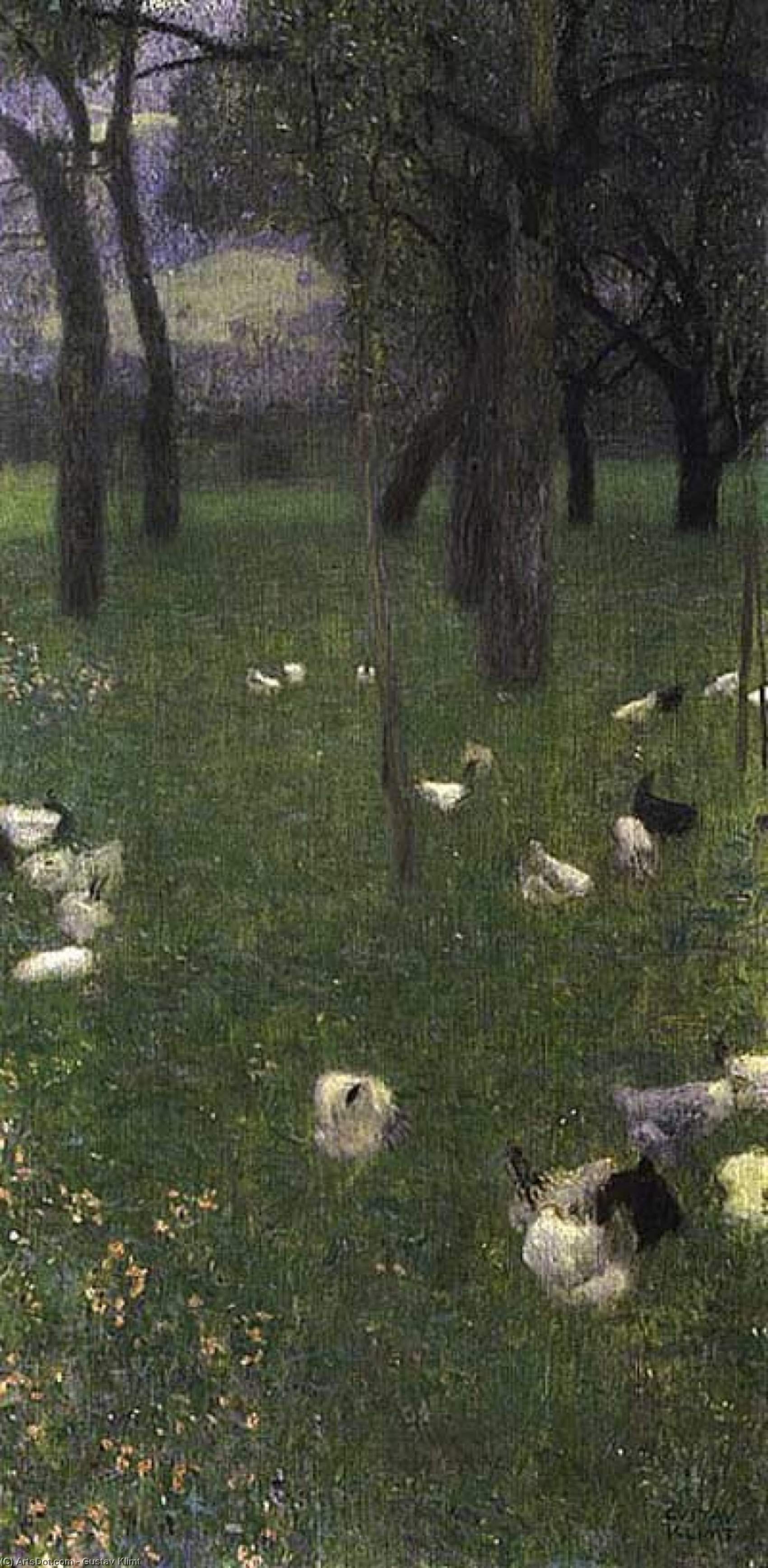
After the Rain
Gustav Klimt, born in Baumgarten near Vienna in 1862, stands as a monumental figure within the Symbolist movement and Art Nouveau—a testament to Viennese artistic brilliance. His oeuvre transcends mere visual representation; it delves into profound emotional landscapes and explores intricate layers of symbolism, cementing his legacy as one of the most influential artists of his era. Klimt’s distinctive approach centered on portraying the female body with unabashed sensuality, reflecting a bold defiance against academic conventions and establishing him as a pioneer of modern artistic expression.
The Painting Style: Symbolism
“After the Rain” exemplifies Klimt's mastery of Symbolist aesthetics. The artwork depicts two women standing gracefully upon a balcony overlooking a cityscape bathed in the soft glow of post-rainfall light. Klimt’s deliberate use of symbolism permeates every element of the composition—the women themselves, embodying idealized femininity and representing hope; the cityscape, rendered in muted tones and subtly textured, symbolizing the complexities and uncertainties inherent in life's journey. The painting’s dreamlike quality is achieved through delicate brushstrokes and a harmonious color palette, mirroring the ethereal atmosphere characteristic of Symbolist art. Klimt skillfully employs flattened perspective—a technique favored by Impressionists—to heighten the emotional impact of the scene and prioritize expressive gesture over realistic depiction.
Interpretation of “After the Rain”
The interpretation of “After the Rain” remains subjective, mirroring the core tenets of Symbolism itself. Art historians have posited that Klimt’s masterpiece represents duality – joy juxtaposed with sorrow—a recurring motif in his artistic explorations. The rain-soaked cityscape serves as a visual metaphor for life's tribulations and the passage of time, prompting contemplation on themes of resilience and acceptance. Klimt’s meticulous attention to detail—particularly in rendering the textures of fabric and skin—further enhances the painting’s evocative power. Consider the interplay between light and shadow; Klimt uses chiaroscuro—the dramatic contrast between light and dark—to sculpt form and imbue the scene with emotional depth.
Discover the beauty of symbolist art with Gustav Klimt's “After the Rain” and explore the world of hand-made oil painting reproductions at ArtsDot.com. Experience the magic of Klimt’s artwork, and learn more about the symbolist movement that shaped the art world.
To delve deeper into Klimt’s artistic vision and the broader context of Symbolism, visit Symbolist painting - Wikipedia.