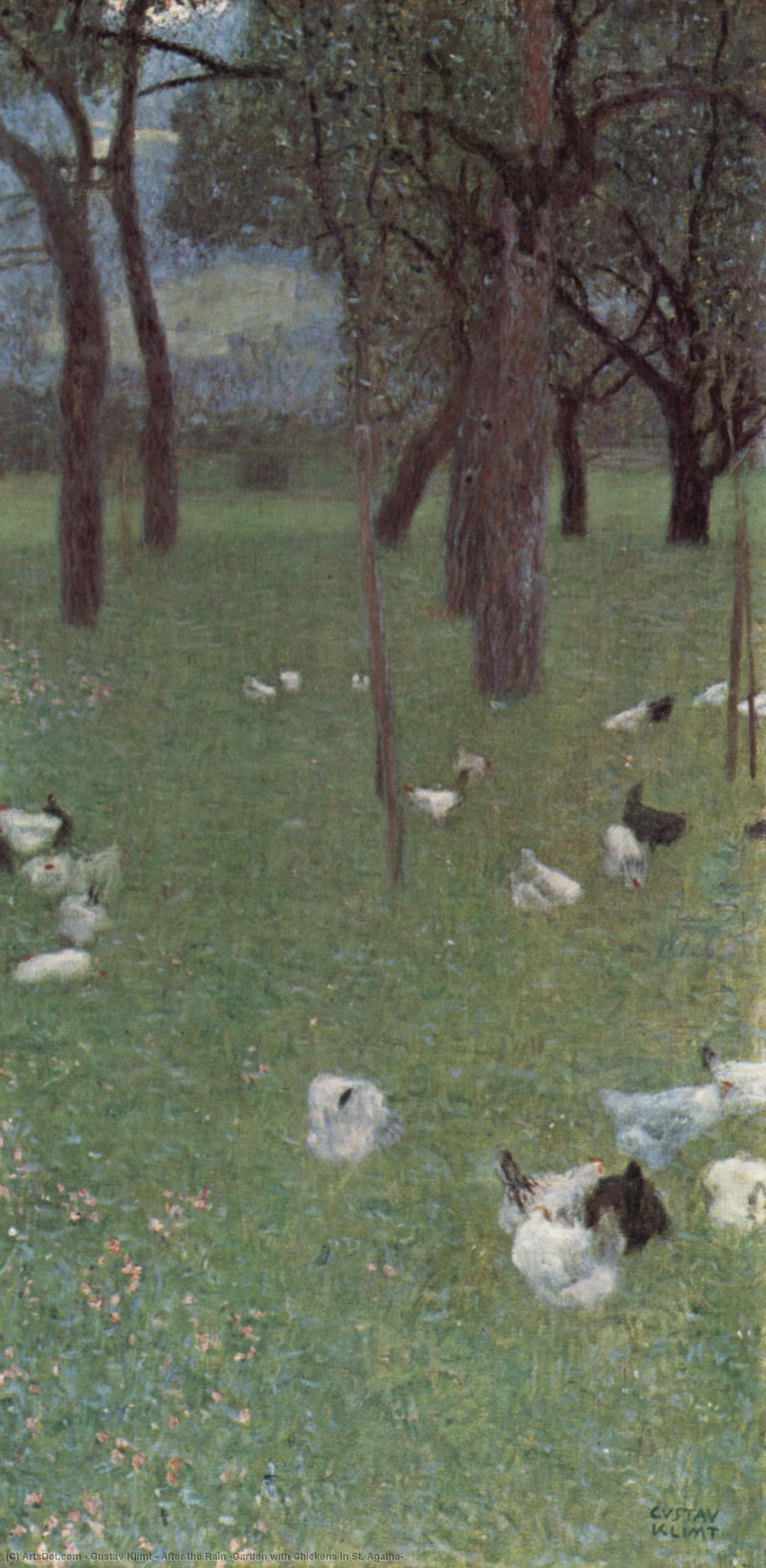
After the Rain (Garden with Chickens in St. Agatha)
Gustav Klimt, a renowned Austrian symbolist painter and prominent member of the Vienna Secession movement, captivated audiences with his unique blend of symbolism and realism. One such painting is
After the Rain (Garden with Chickens in St. Agatha), which showcases his ability to capture serene natural scenes.
The Painting
Completed in 1899,
After the Rain (Garden with Chickens in St. Agatha) is a beautiful depiction of a garden scene with chickens scattered throughout. The painting measures 80 x 40 cm and is executed in oil on canvas, reflecting Klimt’s mastery of Art Nouveau style. The garden is lush and vibrant, filled with trees and bushes that create a peaceful atmosphere. A person stands near the center, possibly observing or tending to the chickens, adding a sense of human presence to the idyllic scene.
Artistic Style
Klimt's work during this period was influenced by Japanese art and its methods, which is evident in the composition and use of natural motifs. The painting also reflects his ability to blend realism with symbolic elements, creating a unique visual experience for the viewer. He skillfully employed Art Nouveau principles—characterized by flowing lines, organic forms, and decorative ornamentation—to elevate the garden landscape beyond mere representation. This stylistic choice underscores Klimt’s intention to communicate deeper meanings about life, love, and spirituality.
Context and Significance
Gustav Klimt was known for his controversial works that often sparked debate due to their frank eroticism and symbolism. However,
After the Rain (Garden with Chickens in St. Agatha) stands out as a serene and peaceful work, showcasing his versatility as an artist. It represents a deliberate departure from Klimt’s more provocative explorations of sexuality, presenting instead a contemplative image rooted in natural beauty—a conscious effort to balance artistic ambition with emotional resonance.
Relevance Today
Today, Klimt's paintings are highly valued for their artistic significance and historical importance. His influence can be seen in many contemporary artists, particularly those interested in decorative arts and exploring themes of intimacy and mythology.
Painting by 'Gustav Klimt' | Gustave Klimt:After the Rain (Garden with Chickens in St. Agatha) continues to inspire collectors and designers alike, offering a glimpse into the artistic sensibilities of a pivotal figure in Viennese Modernism. For further reading and to explore more of Klimt’s works, visit
Gustav Klimt on Wikipedia.
Photo Description: The painting is a beautiful depiction of a garden scene with chickens in it. The chickens are scattered throughout the garden, some standing close to each other while others are more spread out. There are at least 12 chickens visible in the image, all of which appear to be enjoying their time in the garden. The garden is filled with trees and bushes, creating a lush and vibrant atmosphere. The painting also features a person standing near the center of the scene, possibly observing or tending to the chickens. Overall, it's an idyllic and peaceful image that captures the essence of nature and the simple pleasures in life.
Size: 80 x 40 cm
Date: 1899