A Glimpse into Klimt’s Pastoral Realm
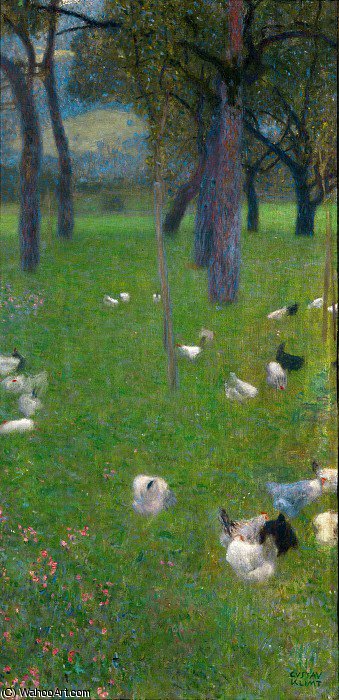
After the Rain (Garden with Chickens in St. Agatha) reveals a softer, more intimate side of Gustav Klimt, diverging from his celebrated portraits and venturing into a tranquil depiction of rural life. This charming scene features at least thirteen chickens peacefully inhabiting a lush garden – a seemingly simple subject imbued with the artist’s characteristic sensitivity.
Style & Technique: Bridging Realism and Symbolism
While lacking the overt gold leaf and decorative patterns of Klimt's “Golden Phase,” this work demonstrates his evolving stylistic tendencies. The painting showcases a keen observation of nature, with attention to the textures of feathers, foliage, and earth. The brushwork appears fluid and expressive, hinting at an plein air influence – a technique gaining prominence in late 19th-century art where artists paint outdoors directly from life. However, it’s not purely impressionistic; there's a deliberate structuring of the composition and a subtle symbolic weight to the scene.
Klimt’s early training at the Vienna School of Applied Arts instilled in him a strong foundation in draftsmanship and decorative elements. Though less pronounced here than in his later works, this influence is visible in the careful arrangement of forms and harmonious color palette. The painting's atmosphere evokes a sense of quiet contemplation, characteristic of Symbolist art – a movement Klimt would become central to.
Historical Context: Vienna at the Turn of the Century
Created likely between 1890-1900, *After the Rain* reflects the artistic ferment of Vienna during a pivotal period. The city was experiencing a cultural shift, moving away from rigid academic traditions towards more progressive and experimental forms of expression. Klimt’s involvement in founding the "Vienna Secession" signaled this break with the past. This work predates his most radical stylistic departures but demonstrates his growing independence and willingness to explore new subject matter beyond commissioned portraits.
Symbolism & Interpretation
The choice of chickens as a central motif is intriguing. Chickens often symbolize domesticity, fertility, and everyday life – themes Klimt occasionally explored alongside more overtly sensual or allegorical subjects. The setting in St. Agatha suggests a rural location, offering a respite from bustling city life.
The “after the rain” title itself is significant, hinting at renewal, freshness, and a moment of quiet beauty following a cleansing storm. Beyond its surface charm, the painting can be interpreted as a metaphor for life’s cyclical rhythms – growth, decay, and rebirth. Klimt often imbued his works with layers of meaning, inviting multiple interpretations.
Emotional Impact & Display Recommendations
The painting exudes peacefulness and tranquility. The chickens appear content and undisturbed, creating an idyllic atmosphere. It’s a scene that invites viewers to pause and appreciate the simple pleasures of nature.
Consider these recommendations when displaying this artwork:
- Setting: Ideal for a breakfast room, sunroom, or study – spaces evoking warmth and tranquility.
- Color Palette: The painting’s muted greens, browns, and earthy tones harmonize well with natural materials like wood, linen, and stone.
- Framing: A simple, understated frame in a warm wood tone will enhance the artwork's natural beauty without overpowering it. Avoid overly ornate or gilded frames.
- Lighting: Soft, diffused lighting will best showcase the painting’s delicate brushwork and color nuances.
After the Rain (Garden with Chickens in St. Agatha) offers a unique opportunity to own a piece of Klimt's artistic journey – a testament to his versatility and enduring appeal. It is a work that invites quiet contemplation and adds a touch of serene beauty to any space.