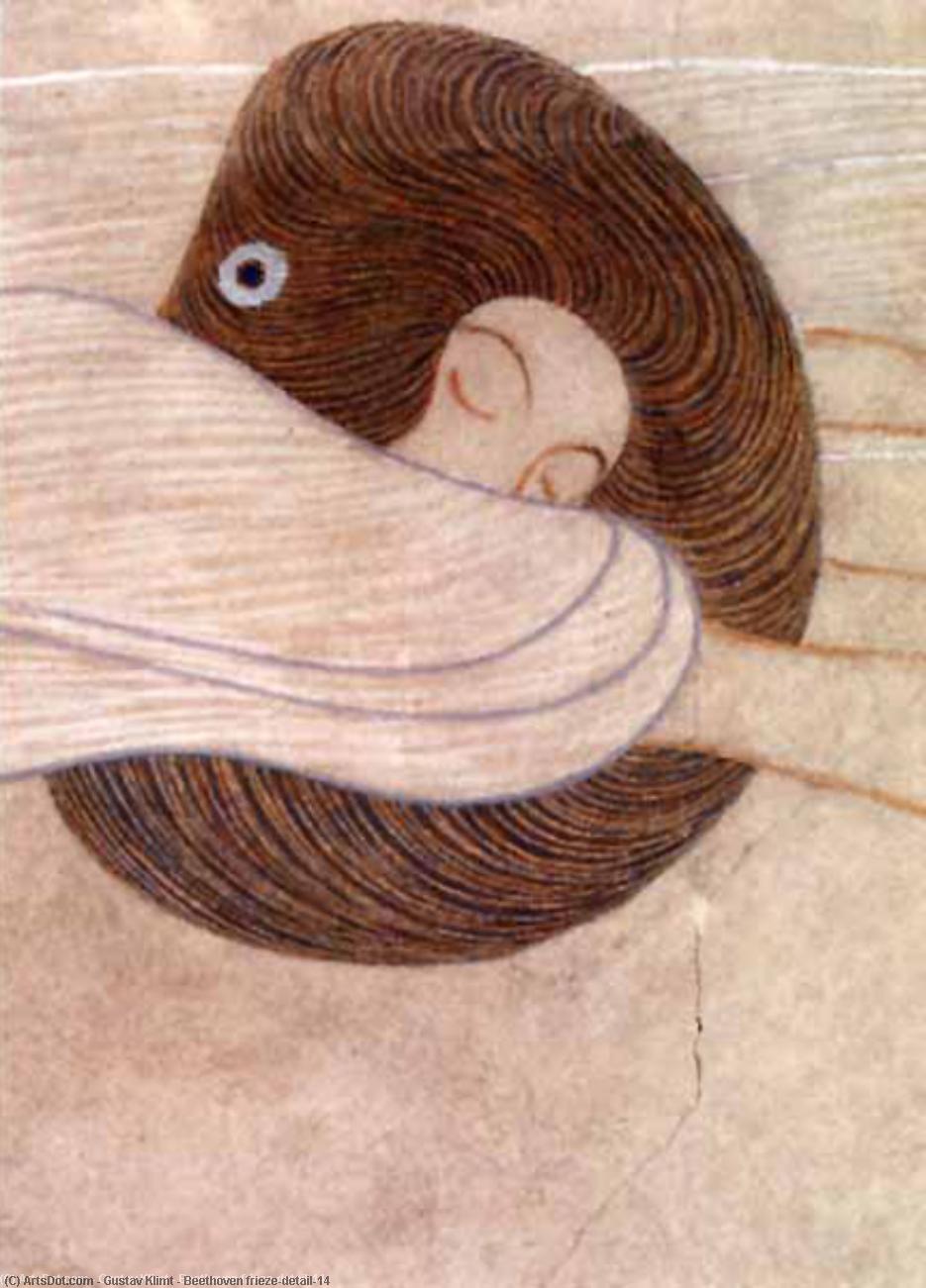
Beethoven Frieze (Detail) 14 by Gustav Klimt: A Symphony in Paint
- Artist: Gustav Klimt
- Year: 1902
- Movement: Austrian Symbolism, Art Nouveau (Vienna Secession)
- Medium: Charcoal, graphite, black, red and coloured chalk, pastel, casein colours, gold, silver, gilt stucco, applications (mother-of-pearl buttons, brass uniform buttons, mirror fragments, ground glass, brass curtain rings, upholstering nails, semi-precious stones) on mortar render over reed matting
- Dimensions: Unknown
Historical Context and Creation
The Beethoven Frieze (Detail) 14 is a fragment of Gustav Klimt's larger masterpiece, the Beethoven Frieze, commissioned for the 14th Vienna Secession exhibition in 1902. This exhibition was conceived as a tribute to Ludwig van Beethoven and his Ninth Symphony, celebrating its themes of human suffering, longing, and ultimate redemption through art and joy. The Secession movement itself represented a rebellion against traditional artistic conventions in Austria, seeking new forms of expression that reflected the changing times. Klimt's work embodied this spirit, blending decorative elements with profound psychological depth.
Style and Technique: A Fusion of Ornamentation and Emotion
Klimt’s style is instantly recognizable for its opulent use of gold leaf, intricate patterns, and elongated figures. The Beethoven Frieze (Detail) 14 exemplifies these characteristics. The technique involved applying various materials directly onto the walls – charcoal, graphite, chalk, pastel, casein colours, and a dazzling array of metallic elements like gold, silver, stucco, buttons, mirror fragments, and semi-precious stones embedded in mortar over reed matting. This created a textured surface that shimmered under light, enhancing the visual impact. The detail within this fragment showcases Klimt’s mastery of line and form, creating a sense of movement and dynamism despite the static nature of a mural.
Symbolism and Interpretation
This particular detail depicts a crucial moment in the frieze's narrative, representing the struggle for happiness amidst adversity. The figures are not merely portraits but embodiments of abstract concepts: longing, suffering, ambition, and compassion. The use of gold symbolizes spiritual enlightenment and transcendence, while the darker tones represent the challenges and anxieties inherent in the human condition. Klimt draws heavily from Beethoven’s Ninth Symphony, visually interpreting its themes of struggle, despair, and ultimately, the triumph of joy through artistic expression. The elongated figures and flowing lines contribute to a sense of ethereal beauty and emotional intensity.
Emotional Impact and Legacy
The Beethoven Frieze (Detail) 14 evokes a powerful range of emotions – from melancholy and yearning to hope and ultimately, a profound sense of peace. The shimmering gold and intricate details create an immersive experience for the viewer, drawing them into Klimt’s vision of humanity's journey towards self-discovery and artistic fulfillment. The frieze remains a testament to Klimt’s genius and his ability to translate complex philosophical ideas into visually stunning works of art, continuing to inspire awe and contemplation in audiences worldwide.