A Vision of Love, Loss, and Transcendence
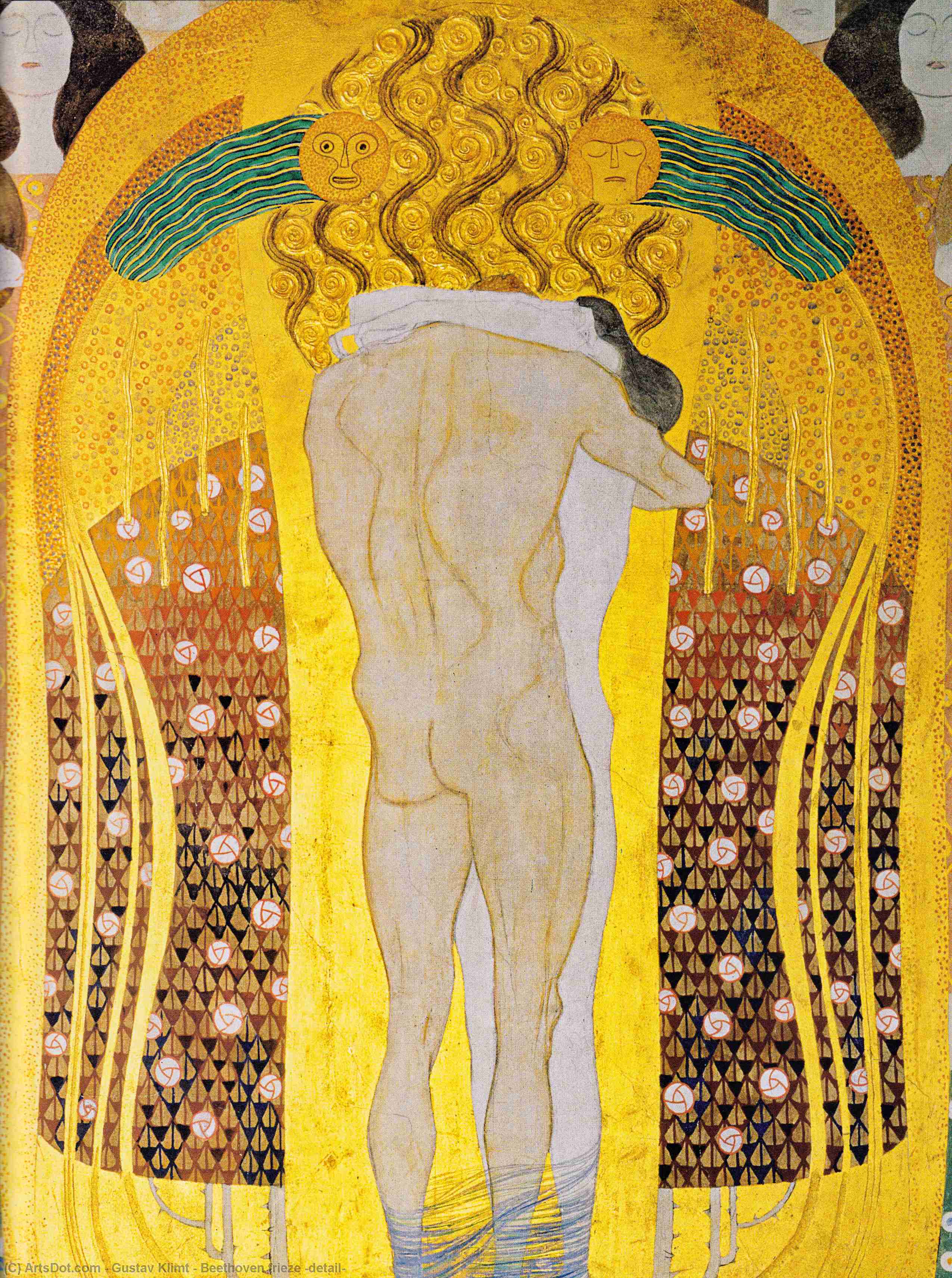
This captivating detail from Gustav Klimt’s monumental Beethoven Frieze (1902) offers a poignant glimpse into a world where love confronts mortality, and earthly passion seeks spiritual union. Created for the Vienna Secession Exhibition celebrating Beethoven, this section transcends mere illustration to become a powerful visual poem exploring the composer's artistic spirit.
Art Nouveau & Symbolist Mastery
Embracing the hallmarks of both Art Nouveau and Symbolism, this work showcases Klimt’s signature style. Flowing, curvilinear lines define the ornate background, while stylized figures embody profound emotional states. The flattened perspective and emphasis on decorative patterns are characteristic of the Vienna Secession's rejection of traditional academic art, prioritizing aesthetic experience and symbolic meaning over realistic representation.
Decoding the Symbolism
At its heart lies a deeply affecting embrace: a male figure tenderly holding a skeletal or ghostly form. This juxtaposition isn’t simply about death; it suggests a yearning for connection beyond the physical realm, perhaps representing the enduring power of love to transcend loss. The two faces framed by golden halos above them are often interpreted as divine witnesses or facets of fate observing this intimate moment. The abundance of swirling ornamentation and symbolic motifs elevates the scene into an allegorical statement about life’s complexities.
Technique & Materials: A Golden Radiance
Klimt masterfully employed a mixed-media technique, combining oil paint with extensive applications of gold leaf. This lavish use of gold isn't merely decorative; it imbues the artwork with an ethereal quality, evoking a sense of spiritual significance and otherworldly beauty. The layering of materials creates rich textures and luminous effects, drawing the viewer into the scene’s emotional core. Hints of red and green within the patterns provide subtle contrast against the dominant golden hues.
Historical Context & Beethoven's Legacy
Commissioned for a grand exhibition honoring Ludwig van Beethoven, the Beethoven Frieze was Klimt’s ambitious attempt to visually interpret the composer’s Ninth Symphony. This section specifically explores themes of longing and fulfillment found within the music. The frieze as a whole aimed to create a “Gesamtkunstwerk” – a total work of art – integrating painting, architecture, and music into a unified aesthetic experience.
Emotional Resonance & Interior Impact
This detail possesses an undeniable emotional power. It evokes feelings of both intimacy and unease, prompting contemplation on themes of love, loss, and the search for meaning. As a reproduction, this artwork brings a touch of Viennese Secession elegance and profound symbolism to any interior space. Its rich gold palette adds warmth and sophistication, making it a captivating focal point in living rooms, bedrooms, or studies – a testament to Klimt’s enduring artistic vision.