Gustav Klimt’s Symphony of Sorrow: Unpacking the Beethovenfries
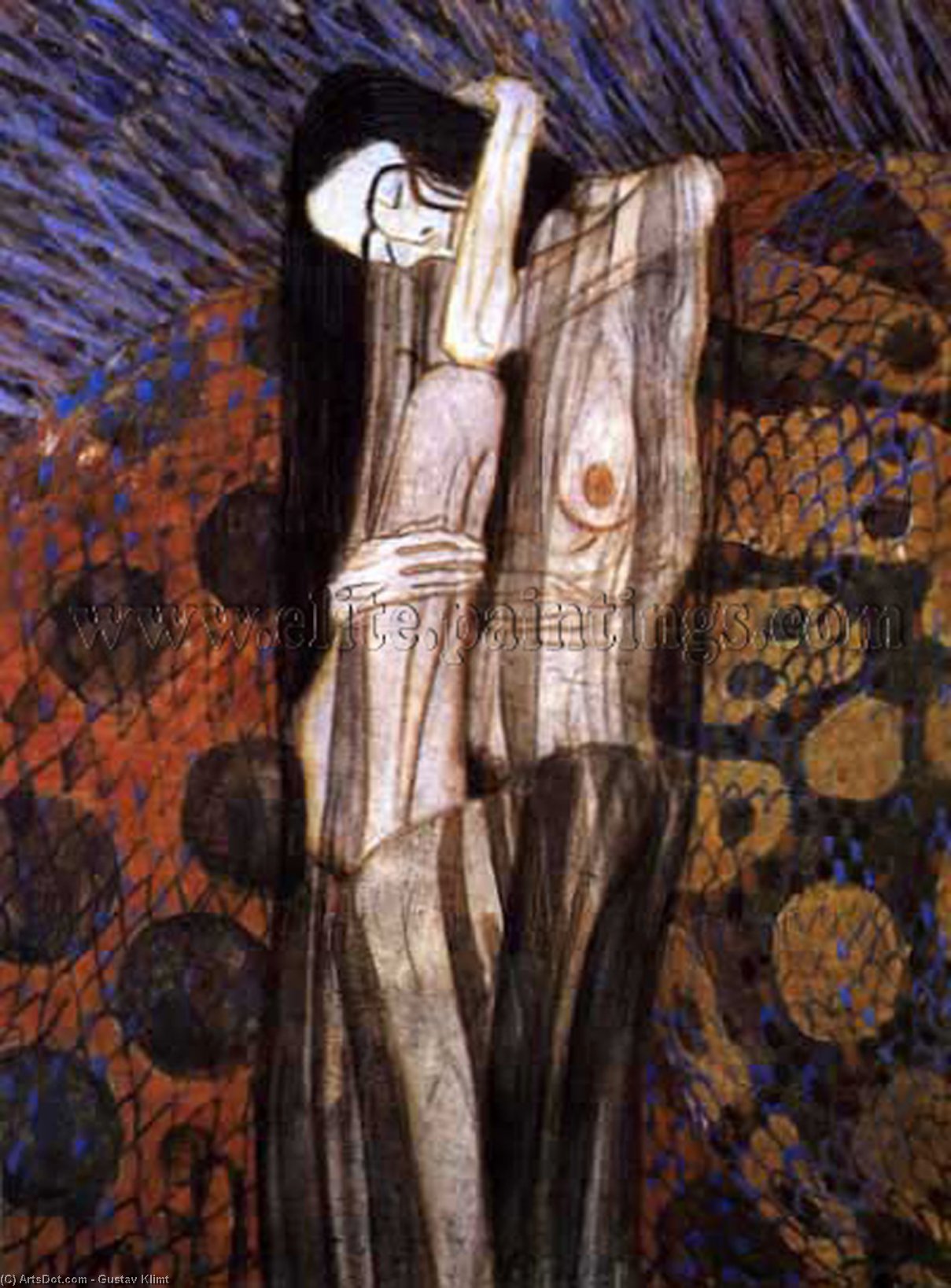
Gustav Klimt's "Beethovenfries – Die feindlichen Gewalten, Der nagende Kummer" (The Enemy Powers, The Gnawing Sorrow) stands as a monumental testament to both artistic ambition and profound emotional depth. Completed in 1901, this vast frieze—a commission for the Vienna Secession’s XIVth Exhibition—isn't merely a depiction of Ludwig van Beethoven; it’s an allegorical exploration of human suffering, struggle, and the elusive pursuit of happiness, rendered with Klimt’s signature blend of Symbolism, Art Nouveau, and a strikingly opulent visual language. The work immediately commands attention, its scale (approximately 2 x 7 meters) demanding reverence and inviting prolonged contemplation.
Klimt's early career was marked by a shift away from the rigid academic traditions he initially embraced, influenced heavily by his father’s gold engraving background. This lineage subtly informs the work’s shimmering surfaces and lavish use of color – elements that would later define his “golden phase.” However, "Beethovenfries" represents a crucial turning point, moving beyond decorative commissions to engage with complex philosophical themes. The Secession itself was a radical movement challenging established artistic norms, and Klimt's commission became a focal point for this new aesthetic direction, aiming to fuse fine art with design and architecture.
A Visual Narrative of Human Condition
The frieze is structured around three distinct panels, each representing a stage in the human experience. The left panel depicts “Die Sehnsucht nach Glück” (The Yearning for Happiness) – a swirling vortex of ethereal female figures, often interpreted as genies or spirits, reaching towards an unattainable ideal. These figures are not static; they writhe and yearn, embodying the relentless pursuit of joy amidst the inevitable disappointments of life. Juxtaposed against this hopeful aspiration is “Die feindlichen Gewalten” (The Enemy Powers), a terrifying vision dominated by the monstrous Typhoeus, a figure representing chaos and destruction. Klimt masterfully utilizes stark contrasts – the vibrant blues of the sky against the fiery reds of the figures – to heighten the dramatic tension.
The central panel, “Der nagende Kummer” (The Gnawing Sorrow), is perhaps the most emotionally resonant. Here, we witness a harrowing depiction of suffering: disease, madness, death, and unrestrained desire all converge in a chaotic tableau. The figures are rendered with an almost brutal honesty, their faces contorted in anguish, reflecting the inescapable realities of human existence. The inclusion of a bird – a recurring motif in Klimt’s work – suggests both freedom and captivity, mirroring the paradoxical nature of hope within despair.
Symbolism and Technique: A Golden Revelation
Klimt's masterful use of color is central to the frieze’s impact. The dominant palette—deep blues, reds, golds, and blacks—creates a powerful visual rhythm, guiding the viewer through the complex narrative. The gold leaf, a signature element of Klimt’s “golden phase,” isn’t merely decorative; it symbolizes divinity, transcendence, and the fleeting beauty of life. It also contributes to the work's overall sense of opulence and grandeur, reflecting the influence of Byzantine mosaics and Japanese art – both of which profoundly impacted Klimt’s artistic vision.
Technically, "Beethovenfries" showcases Klimt’s evolving style. While retaining elements of his earlier academic training, he employs flattened perspectives, simplified forms, and a decorative sensibility that anticipates the Art Nouveau movement. The figures are rendered with bold outlines and expressive brushstrokes, conveying a sense of dynamism and emotional intensity. The frieze's scale necessitates a deliberate use of line and color to create depth and visual interest, demonstrating Klimt’s sophisticated understanding of composition.
A Legacy of Emotional Resonance
"Beethovenfries" remains a profoundly moving work, offering a timeless meditation on the human condition. It is not simply a portrait of Beethoven; it's an exploration of universal themes—joy and sorrow, hope and despair, beauty and destruction – rendered with Klimt’s unparalleled artistic vision. Reproductions of this masterpiece offer a unique opportunity to experience the power and emotional depth of one of Vienna’s most iconic artists. ArtsDot offers meticulously crafted hand-painted reproductions that faithfully capture the original's luminosity, texture, and symbolic richness, allowing you to bring this extraordinary artwork into your home or office.