Introduction to Gustav Klimt and Art Nouveau
Gustav Klimt (1862-1918) was an Austrian symbolist painter who played a significant role in the Vienna Secession movement. His work, characterized by its focus on the female body and distinct style, profoundly impacted art during his time and continues to do so today. The Art Nouveau movement, which emerged in the late 19th century, was an international philosophy that encompassed art, architecture, and decorative arts. It reacted against tired academic art by embracing natural forms such as flowers, plants, and curved lines to create distinctive and attractive designs.
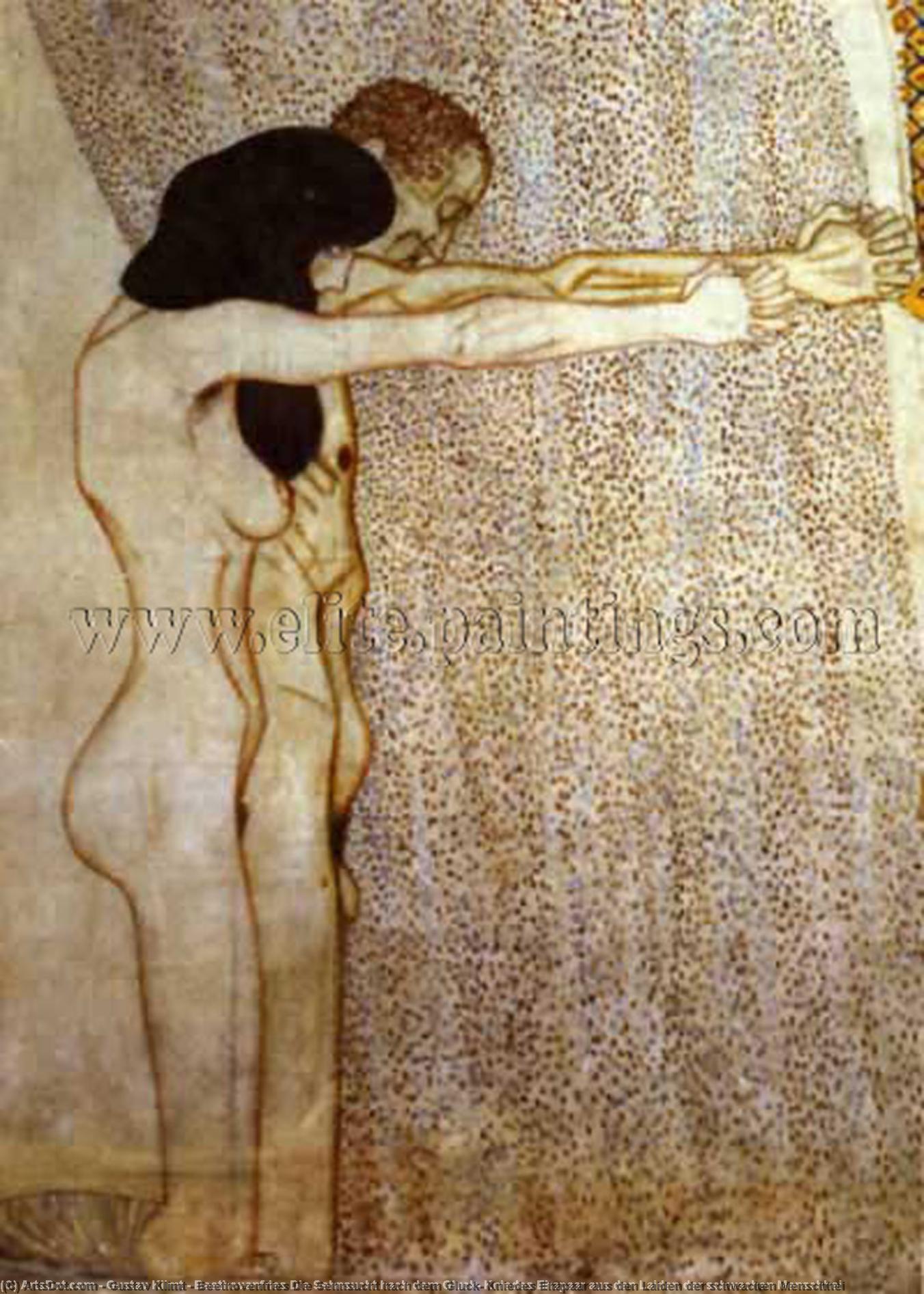
Beethovenfries Die Sehnsucht hach dem Gluck, Kniedes Ehapaar aus den Laiden der schwachen Menschhei
The
Beethovenfries Die Sehnsucht hach dem Gluck, Kniedes Ehapaar aus den Laiden der schwachen Menschhei is a remarkable example of
Gustav Klimt's work and the Art Nouveau movement. This painting showcases Klimt's life-long adoration for the female form, which he often flattened onto the same even plane as the decorative background, turning it into another lovely body shape in the same way as Japanese prints inspired European Art Nouveau artists. You can find more information about this painting on
ArtsDot.com.
The Österreichische Galerie Belvedere Vienna, Austria
This painting is currently on display at the
Österreichische Galerie Belvedere Vienna, Austria, as part of the exhibition "The Women of Klimt, Schiele and Kokoschka." This exhibition explores the numerous and almost obsessive depictions of women painted by
Gustav Klimt, Egon Schiele, and Oskar Kokoschka. You can learn more about the
Österreichische Galerie Belvedere Vienna, Austria on
ArtsDot.com.
Conclusion
Gustav Klimt's work continues to inspire artists and art enthusiasts alike. At
ArtsDot.com, we offer high-quality hand-made oil painting reproductions of Klimt's work, allowing you to bring his masterpieces into your home or office. Some of his notable works include: