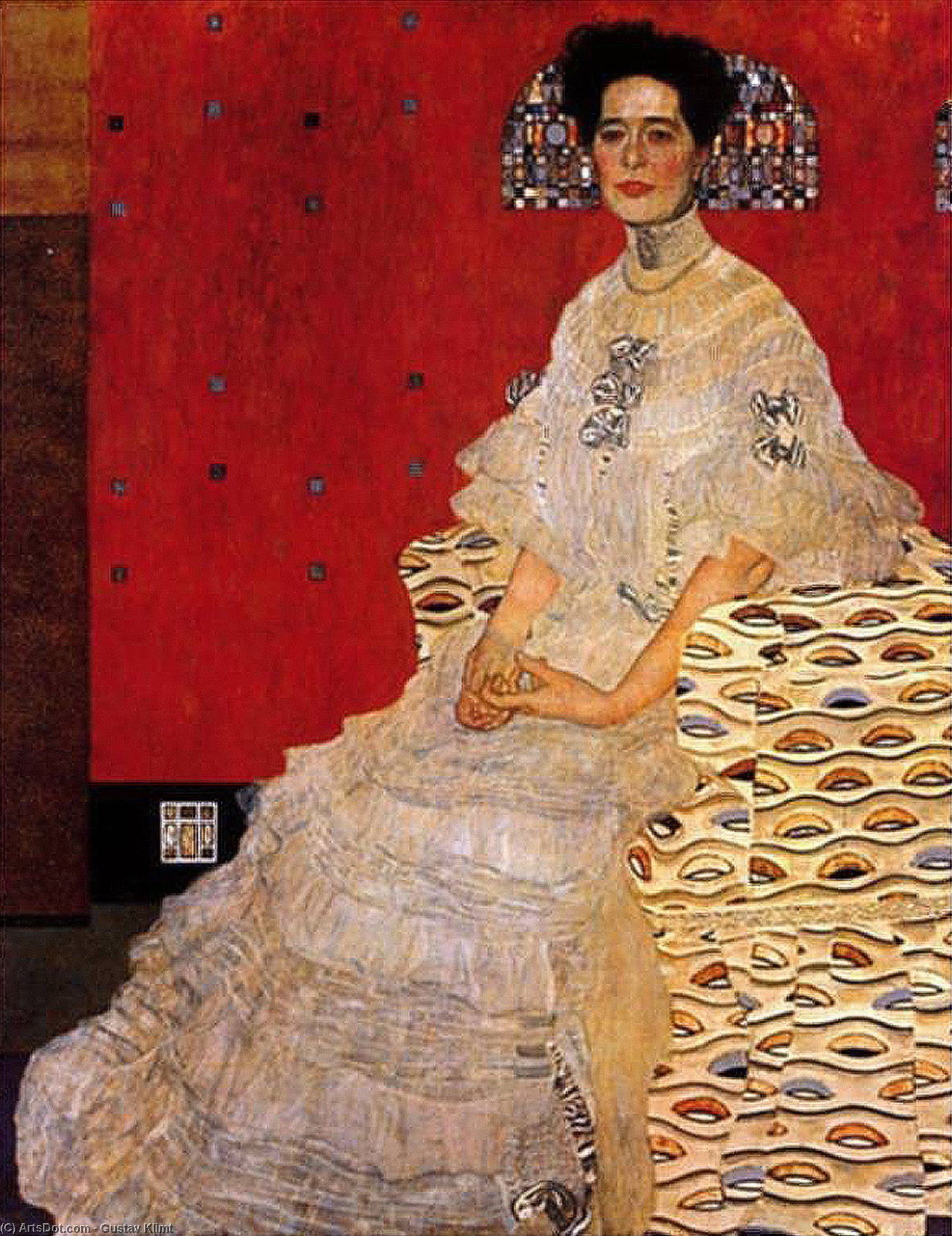
A Glimpse into Viennese Elegance: Klimt’s 1906 Portrait
Painted in 1906, this captivating portrait exemplifies Gustav Klimt's signature style during his celebrated Golden Phase. More than a mere likeness, it offers a window into the opulent world of early 20th-century Viennese society and embodies the artistic ideals of the Vienna Secession movement.
Art Nouveau & The Vienna Secession
This artwork is deeply rooted in Art Nouveau, characterized by its organic lines, flowing forms, and emphasis on decorative beauty. As a leading figure in the Vienna Secession – a group of artists who rebelled against the conservative artistic establishment – Klimt pushed boundaries with his innovative approach to portraiture. He rejected traditional realism in favor of stylized representation, incorporating rich ornamentation and symbolic elements.
Subject & Composition: Fritza Riedler
The subject, Fritza Riedler, a prominent figure within Viennese high society, is presented with an air of both sophistication and enigmatic distance. Klimt positions her centrally within the frame, facing the viewer directly. This frontal composition lends formality but doesn’t invite intimacy; instead, it creates a sense of observation, almost as if we are viewing a carefully constructed icon rather than a candid portrait.
Technique & Materials: A Symphony in Gold
Klimt masterfully employs oil paint and, crucially, gold leaf (or pigment) to achieve the painting’s shimmering effect. The meticulous layering of these materials creates a tactile richness and elevates the work beyond simple representation. Notice how the gold isn't merely decorative; it integrates seamlessly into the patterns and forms, unifying the composition and imbuing it with a sense of luxuriousness.
Symbolism & Emotional Resonance
The painting is rich in symbolic detail. The repeating eye-like motifs adorning the chair are particularly striking – they can be interpreted as representing surveillance, judgment, or perhaps an awareness of being observed. The woman’s aloof expression and the flattened perspective contribute to a feeling of psychological complexity and restrained emotion. Despite the lavish surroundings, there's an underlying sense of isolation and melancholy.
Color Palette & Visual Impact
A striking color palette dominates: deep reds, shimmering golds, creamy whites, and dark browns create a dramatic contrast. The vibrant red background serves to accentuate the figure, while the gold highlights add a touch of ethereal beauty. This combination evokes both warmth and a subtle sense of unease, reflecting the complexities of the subject’s inner world.
A Statement Piece for Discerning Collectors
This portrait is more than just an aesthetically pleasing artwork; it's a cultural artifact that encapsulates a pivotal moment in art history. A reproduction of this piece would serve as a stunning focal point in any interior, adding a touch of Viennese elegance and intellectual depth to your space. It’s ideal for collectors who appreciate Klimt’s unique vision and the enduring legacy of the Art Nouveau movement.