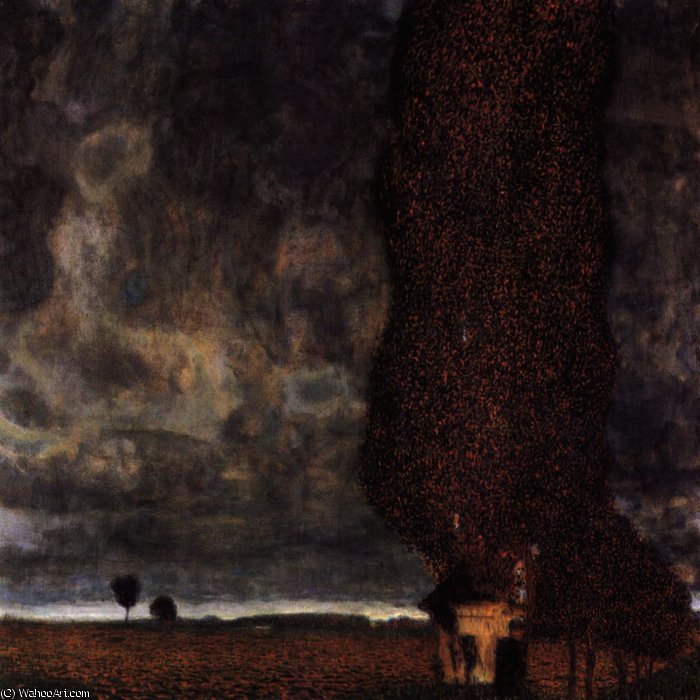
A Tempestuous Vision: Unveiling Klimt’s ‘Die Große Pappel oder Aufziehendes Gewitter’
Gustav Klimt's 1903 masterpiece, *Die Große Pappel oder Aufziehendes Gewitter* (The Large Poplar Tree or Approaching Storm), is a pivotal work within his oeuvre, showcasing the artist’s burgeoning exploration of Symbolism and his profound connection to the natural world. This isn’t merely a landscape; it's an emotional state rendered in vibrant color and dynamic composition.
Subject & Composition: A Solitary Sentinel
The painting centers on a towering poplar tree, dramatically positioned against a swirling, ominous sky pregnant with an approaching storm. The tree dominates the canvas, its form almost flame-like, reaching upwards as if both resisting and embracing the impending tempest. Klimt deliberately isolates the tree, emphasizing its solitary strength and vulnerability. The flattened perspective and limited depth of field contribute to a sense of immediacy and heighten the emotional impact, drawing the viewer directly into the scene’s turbulent atmosphere.
Artistic Style & Technique: Art Nouveau Meets Symbolism
*Die Große Pappel* exemplifies Klimt's distinctive blend of Art Nouveau and Symbolist aesthetics. The flowing lines and organic forms characteristic of Art Nouveau are evident in the sinuous branches of the poplar and the swirling patterns within the sky. However, it’s the symbolic weight imbued into these elements that truly elevates the work. Klimt employed a rich impasto technique – applying paint thickly to the canvas – creating palpable texture and movement, particularly in the cloud formations and foliage. This tactile quality enhances the painting's dramatic intensity. The bold color palette, contrasting vibrant greens and yellows with dark blues and purples, further amplifies the sense of tension and foreboding.
Historical Context & Klimt’s Evolution
Created during a period of significant artistic experimentation in Vienna, *Die Große Pappel* reflects the anxieties and uncertainties of the early 20th century. Klimt was a founding member of the Vienna Secession, a movement that rejected traditional academic art in favor of more innovative and expressive forms. This painting marks a departure from his earlier, more decorative works, signaling a deeper engagement with psychological themes and symbolic representation. It foreshadows the “Golden Phase” for which he would become renowned, yet retains a rawness and emotional directness unique to this period.
Symbolism & Emotional Resonance: Life, Death, and Resilience
The poplar tree itself is laden with symbolism. Often associated with mourning and remembrance, it can also represent resilience and the ability to withstand adversity. The approaching storm embodies both destructive forces and the potential for renewal. The juxtaposition of life (the vibrant tree) and death (the ominous sky) creates a powerful tension that speaks to the cyclical nature of existence.
The painting evokes feelings of isolation, melancholy, and awe in the face of nature’s power. It's a meditation on the delicate balance between beauty and decay, tranquility and turmoil.
A Timeless Masterpiece for Contemporary Spaces
*Die Große Pappel oder Aufziehendes Gewitter* continues to captivate audiences with its emotional depth and artistic brilliance. Its dramatic composition and evocative color palette make it a striking focal point for any interior. Whether adorning a modern living room, a sophisticated study, or a contemplative bedroom, this artwork adds a touch of timeless elegance and intellectual intrigue.
- Ideal For: Collectors of Symbolist art, enthusiasts of Klimt’s work, those seeking impactful statement pieces.
- Style Compatibility: Art Nouveau interiors, modern minimalist spaces, eclectic collections with a focus on emotional depth.
- Emotional Impact: Evokes feelings of contemplation, resilience, and the sublime beauty of nature.