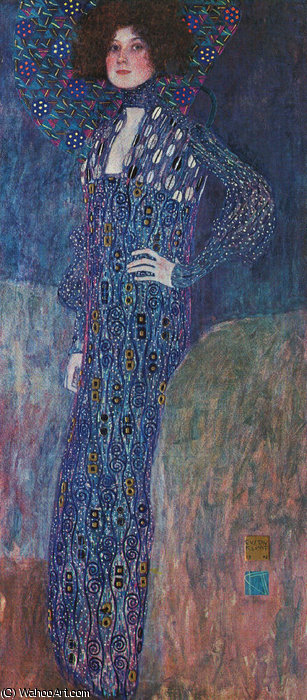
Gustav Klimt’s Portrait of Emilie Flöge: A Symbol of Viennese Elegance
Gustav Klimt’s “Portrait of Emilie Flöge,” completed in 1902, stands as a cornerstone of the Vienna Secession movement and embodies the opulent aesthetic sensibilities of Art Nouveau. More than just a depiction of a woman—Emilie Flöge was Klimt's muse and lifelong companion—the painting is a meticulously crafted exploration of femininity, adorned with shimmering gold leaf and imbued with profound symbolic meaning.
- Subject Matter: The portrait captures Emilie Flöge seated against a subtly textured wall, her gaze direct yet contemplative. Her attire consists of a flowing blue dress accented by a delicate necklace—a deliberate choice reflecting the prevailing fashions of the era and highlighting Flöge’s grace.
- Style & Technique: Klimt's signature style is instantly recognizable through his masterful application of gold leaf, a technique borrowed from Byzantine mosaics and symbolizing divine illumination and wealth. The painting utilizes tempera on canvas, ensuring vibrant colors and textural richness—characteristics typical of Secessionist art.
- Historical Context: Created during Klimt’s formative years as an artist, “Portrait of Emilie Flöge” emerged from the Vienna Secession, a rebellious artistic collective challenging the conservative academic traditions of Viennese art. This movement championed individualism and explored themes of eroticism and spirituality—values that resonated deeply with Klimt's worldview.
- Symbolism: The gold leaf itself transcends mere decoration; it represents enlightenment, immortality, and spiritual transcendence – concepts central to Klimt’s artistic vision. Furthermore, the stylized floral motifs adorning Flöge’s dress symbolize fertility and beauty—elements frequently employed in Art Nouveau designs.
- Emotional Impact: The painting evokes a sense of serene contemplation and understated elegance. Klimt skillfully captures Flöge's inner life through subtle gestures and expressive eyes, inviting the viewer to engage with her quiet dignity and profound femininity. It’s a testament to Klimt’s ability to transform visual representation into an emotional experience.
As seen in Obelisk Art History (https://www.arthistoryproject.com/artists/gustav-klimt/portrait-of-emilie-floge/), this masterpiece exemplifies the Secessionist ethos and Art Nouveau’s fascination with decorative splendor.
You can acquire a stunning high-quality reproduction of “Portrait of Emilie Flöge” at ArtsDot.com (/en/art/gustav-klimt-emilie-floge-oil-on-canvas-historisches-museum-9H5R38-en/) and elevate your interior décor with a piece of Viennese artistic history.
Further insights into Emilie Flöge can be found on Wikipedia (https://en.wikipedia.org/wiki/Portrait_of_Emilie_Fl%C3%B6ge).
Explore the Vienna Secession movement and Klimt’s broader artistic legacy at /en/museums/historisches-museum-austria-vienna-en/ – where you can experience Klimt's influence firsthand.
Discover more about Gustav Klimt’s artistic journey and the enduring beauty of “Portrait of Emilie Flöge” at /en/articles/gustav-klimt-a-golden-legacy-of-sensuality-%26symbolism-in-viennese-art-en/.