A Glimpse into Klimt’s Golden Period: Fir Forest I
Gustav Klimt's *Fir Forest I*, painted in 1901, is more than just a landscape; it’s an evocative mood piece that encapsulates the burgeoning spirit of Austrian Art Nouveau. This work represents a pivotal moment in Klimt’s artistic development, bridging his earlier academic style with the intensely decorative and symbolic language he would become famous for. It offers a captivating window into a world where nature is filtered through emotion and aesthetic sensibility.
Subject & Composition: An Immersive Forest Experience
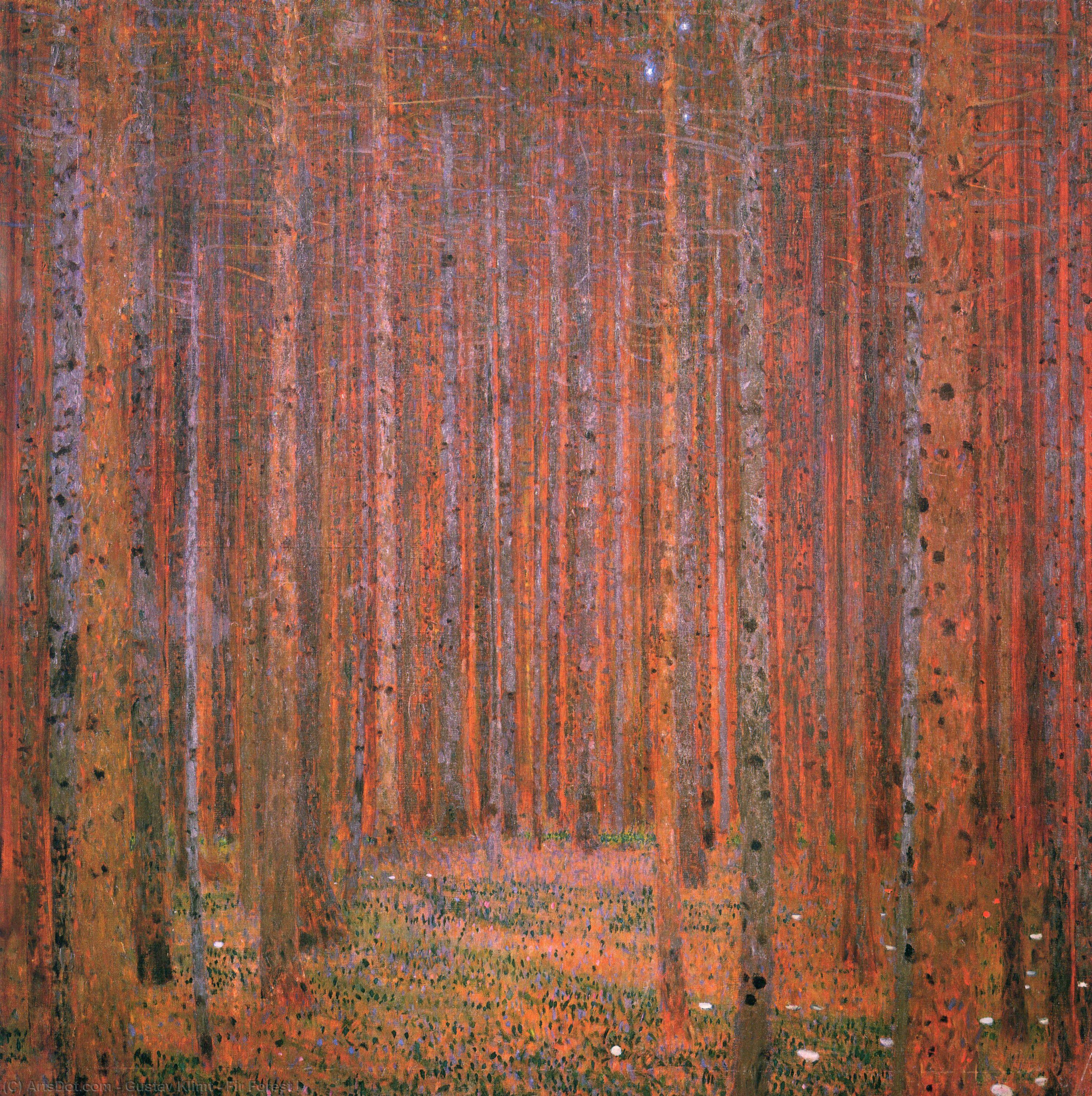
The painting depicts a dense stand of fir trees, rendered not as realistic botanical studies but as powerful vertical forms dominating the canvas. A subtle pathway winds its way through the forest floor, hinting at a journey or passage – though where it leads remains delightfully ambiguous. The composition isn’t about precise representation; instead, Klimt prioritizes creating an *immersive* experience for the viewer. We aren't looking *at* a forest, we are almost *within* it, surrounded by its towering presence and hushed atmosphere. The trees themselves aren’t individually defined but merge into a unified mass of color and texture, emphasizing the collective power of nature.
Style & Technique: A Symphony in Red and Gold
*Fir Forest I* is characterized by Klimt's masterful use of oil paint. He employs a vibrant palette dominated by fiery reds, oranges, and hints of gold – colors rarely associated with traditional forest landscapes. This unconventional choice immediately sets the painting apart. The application of paint is thick and textured, creating an *impasto* effect that adds depth and physicality to the scene. Notice how Klimt doesn’t blend his colors seamlessly; instead, he allows brushstrokes to remain visible, contributing to a sense of energy and movement. This technique aligns with Art Nouveau's emphasis on handcrafted artistry and rejection of industrial uniformity. The influence of Japanese woodblock prints – popular in Vienna at the time – is also evident in the flattened perspective and decorative patterns within the foliage.
Historical Context & Klimt’s Evolution
Painted during a period of significant artistic experimentation, *Fir Forest I* reflects Klimt's growing dissatisfaction with academic conventions. He was a founding member of the Vienna Secession – an artist collective that rebelled against the conservative art establishment and sought to create a “total work of art” encompassing all forms of design. This painting marks a transition in his style; it’s less overtly figurative than some of his earlier works, foreshadowing the increasingly abstract and symbolic compositions he would later explore, particularly during his "Golden Phase." It was also created around the same time as his famous *Beethoven Frieze*, demonstrating a parallel exploration of themes relating to art, nature, and human emotion.
Symbolism & Emotional Impact: Beyond the Surface
While not laden with explicit symbolism like some of Klimt’s later works featuring figures, *Fir Forest I* evokes powerful emotions through its color and atmosphere. The intense reds can be interpreted as representing passion, energy, or even a sense of foreboding. The forest itself often symbolizes the subconscious mind – a place of mystery, introspection, and hidden depths. The pathway suggests a journey of self-discovery, while the density of the trees could represent challenges or obstacles along the way. Ultimately, the painting’s emotional impact is subjective; it invites viewers to project their own feelings and interpretations onto the scene. It's a work that speaks to our primal connection with nature and the enduring power of the landscape to inspire awe and contemplation.
Collecting & Reproduction
Key Features:
- Artist: Gustav Klimt
- Year: 1901
- Style: Art Nouveau, Symbolism
- Medium: Oil on Canvas
- Location: Österreichische Galerie Belvedere, Vienna
For those captivated by the beauty and emotional resonance of *Fir Forest I*, high-quality reproductions are available. These meticulously crafted replicas allow you to experience Klimt’s masterpiece in your own space, bringing a touch of Viennese Secession elegance to any interior. A reproduction isn't merely a copy; it's an opportunity to connect with art history and appreciate the enduring legacy of one of Austria’s most celebrated artists.
Consider this painting for spaces seeking warmth, depth, and a sophisticated artistic statement.