A Symphony of Blossoms: Unveiling Klimt’s “Flower Garden”
Gustav Klimt's 1907 masterpiece, *Flower Garden*, is a radiant celebration of nature and a quintessential example of Art Nouveau at its most captivating. More than just a depiction of blooms, this painting offers a glimpse into Klimt’s unique artistic vision – one that blends decorative beauty with subtle symbolism and emotional resonance.
Subject & Composition: An Immersive Floral World
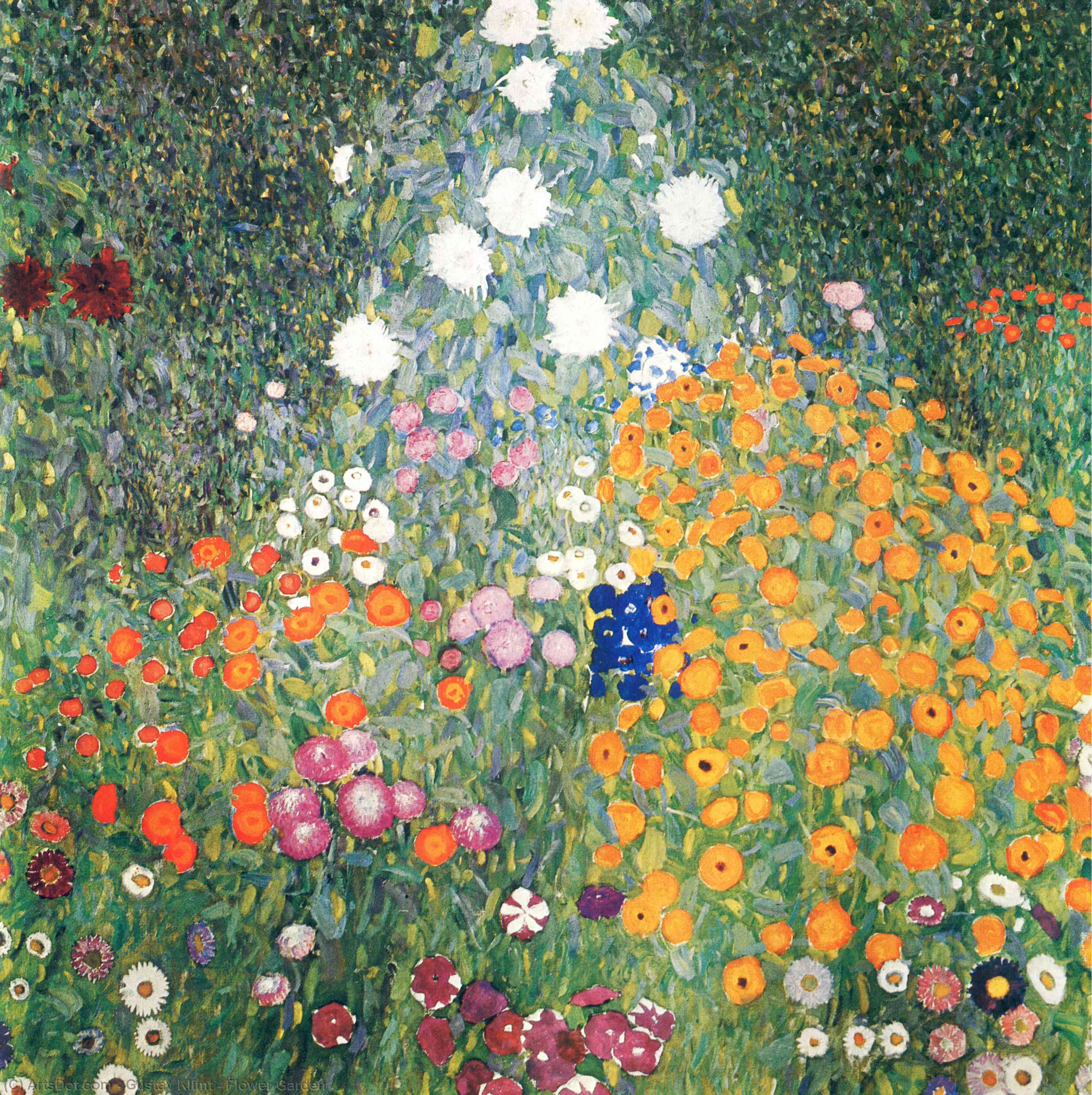
The canvas bursts forth with an abundance of wildflowers, presented in a close-up, almost immersive view. Yellows dominate the foreground, creating a sense of warmth and sunlight filtering through petals. Klimt doesn’t aim for botanical accuracy; instead, he prioritizes color and texture to evoke the *feeling* of being enveloped within a flourishing garden. A potted plant on the left and a vase towards the center subtly anchor the composition, hinting at human presence while remaining secondary to the overwhelming power of nature itself. The density of flowers creates a rich tapestry, inviting the viewer to lose themselves in its intricate details.
Style & Technique: Art Nouveau’s Golden Touch
*Flower Garden* exemplifies Klimt's signature style – deeply rooted in the Art Nouveau movement. Characterized by sinuous curves, organic forms, and a rejection of traditional academic constraints, Art Nouveau sought to unify fine art with applied arts. While this work doesn’t feature the extensive gold leaf often associated with his “Golden Phase,” it shares that era's emphasis on decorative patterns and flattened perspectives. Klimt’s technique is masterful; he employs loose brushstrokes and a vibrant palette to capture the ephemeral beauty of blossoms, creating an impressionistic quality that emphasizes light and color over precise representation. The influence of Japanese art – particularly *ukiyo-e* woodblock prints – is evident in the composition's flattened space and decorative approach.
Historical Context & Symbolism: Nature as Muse
Painted during a period of significant artistic innovation, *Flower Garden* reflects Klimt’s fascination with nature as both a source of aesthetic inspiration and symbolic meaning. The early 20th century saw a growing interest in the natural world as an antidote to industrialization and urban life. For Klimt, flowers often represented femininity, sensuality, and the cycle of life and death. While not overtly allegorical, the painting’s lushness and vibrancy can be interpreted as a celebration of vitality and the fleeting beauty of existence. The work also subtly hints at Klimt's exploration of eroticism – a recurring theme in his oeuvre – through the suggestive forms and vibrant energy of the blossoms.
Emotional Impact & Legacy: A Lasting Impression
*Flower Garden* evokes feelings of joy, tranquility, and wonder. The painting’s immersive quality invites contemplation and allows viewers to connect with nature on a deeply emotional level. Klimt's ability to transform a simple garden scene into a captivating work of art speaks to his genius as a colorist and composer. Today, Klimt remains one of the most beloved and influential artists of the 20th century, and *Flower Garden* stands as a testament to his enduring legacy. His influence can be seen in countless contemporary artists who continue to explore themes of nature, beauty, and symbolism.
Collecting & Reproduction
- For Collectors: Original Klimt paintings command exceptionally high prices at auction, making them rare acquisitions. However, high-quality reproductions allow art enthusiasts to experience the beauty of *Flower Garden* in their own homes.
- Interior Design Inspiration: The painting’s vibrant colors and organic forms make it an ideal focal point for a variety of interior styles – from Art Nouveau-inspired spaces to modern, eclectic designs. Its warm palette complements natural materials like wood and stone, creating a harmonious and inviting atmosphere.
- Reproductions: ArtsDot offers meticulously crafted handmade oil paintings that faithfully capture the essence of Klimt’s masterpiece, providing an accessible way to own a piece of art history.
Discover the timeless beauty of Gustav Klimt's "Flower Garden" and explore more of his iconic works.