The Enchanting Realm of Beech Trees: A Klimt Masterpiece
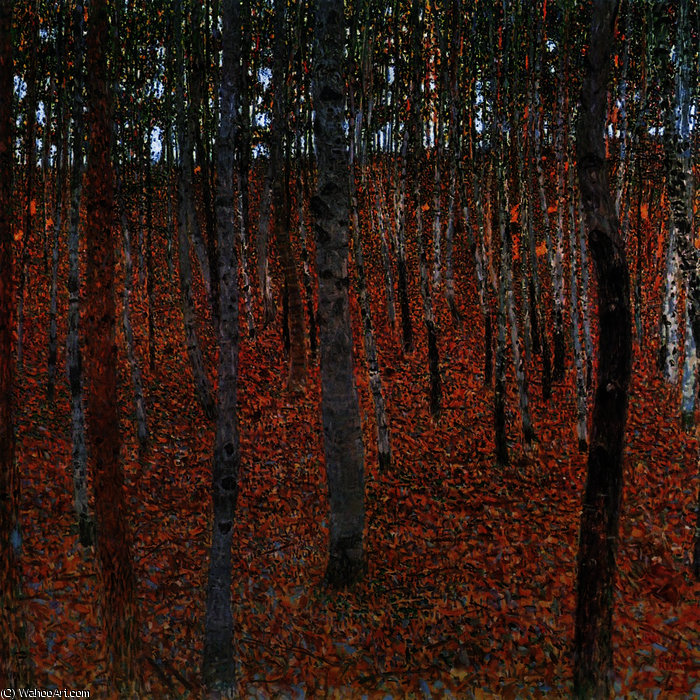
Gustav Klimt’s “Forest of Beech Trees,” completed in 1902, stands as a cornerstone of Symbolist art and an emblem of the Viennese Secession’s audacious embrace of Art Nouveau aesthetics. More than just a depiction of autumnal foliage, this painting delves into profound themes of nature's cyclical beauty and Klimt’s deeply rooted fascination with spiritual symbolism—a legacy that continues to resonate powerfully within the realm of modern art.
Artistic Style and Influences: Bridging Symbolism and Ornamentation
Klimt skillfully blended the tenets of Symbolism with the opulent decorative patterns characteristic of Art Nouveau, resulting in a visual experience unlike any other. “Forest of Beech Trees” exemplifies this fusion perfectly. The artist eschewed traditional representational concerns, prioritizing instead the conveyance of emotion and spiritual significance through meticulously crafted geometric forms and vibrant hues. This stylistic choice reflects Klimt’s desire to transcend mere imitation of reality, aiming for an artistic expression that speaks directly to the subconscious mind.
Historical Context: Vienna's Artistic Renaissance
Painted during Vienna’s burgeoning cultural renaissance—a period marked by intellectual ferment and groundbreaking artistic experimentation—the painting embodies the spirit of its time. The Secession movement, spearheaded by Klimt himself, actively challenged academic conventions and championed new artistic approaches that prioritized subjective experience and symbolic representation. “Forest of Beech Trees” serves as a tangible testament to this era’s commitment to innovation and its rejection of established artistic norms.
Painting Details: Composition and Technique
The painting's composition is dominated by a row of beech trees, arranged in an orderly fashion that contrasts with the organic chaos of nature. Klimt employed bold, saturated colors—primarily reds—to capture the fiery brilliance of autumn leaves, creating a dynamic visual effect. Furthermore, he utilized a technique reminiscent of cloisonné enamel—a method favored by Art Nouveau artists—characterized by intricate geometric patterns overlaid on surfaces to produce shimmering textures and heighten aesthetic impact. The meticulous layering of paint contributes to the overall sense of depth and luminosity.
Relevance in Modern Times: A Timeless Vision
"Forest of Beech Trees" continues to captivate audiences today, lauded for its artistic brilliance and historical significance. Currently housed at the Österreichische Galerie Belvedere in Vienna, Austria—a museum dedicated to showcasing Austrian art from antiquity to contemporary times—the painting remains a celebrated exemplar of Symbolist artistry. Reproductions available at ArtsDot.com offer an opportunity to immerse oneself in Klimt’s visionary aesthetic, preserving this masterpiece for generations to come.