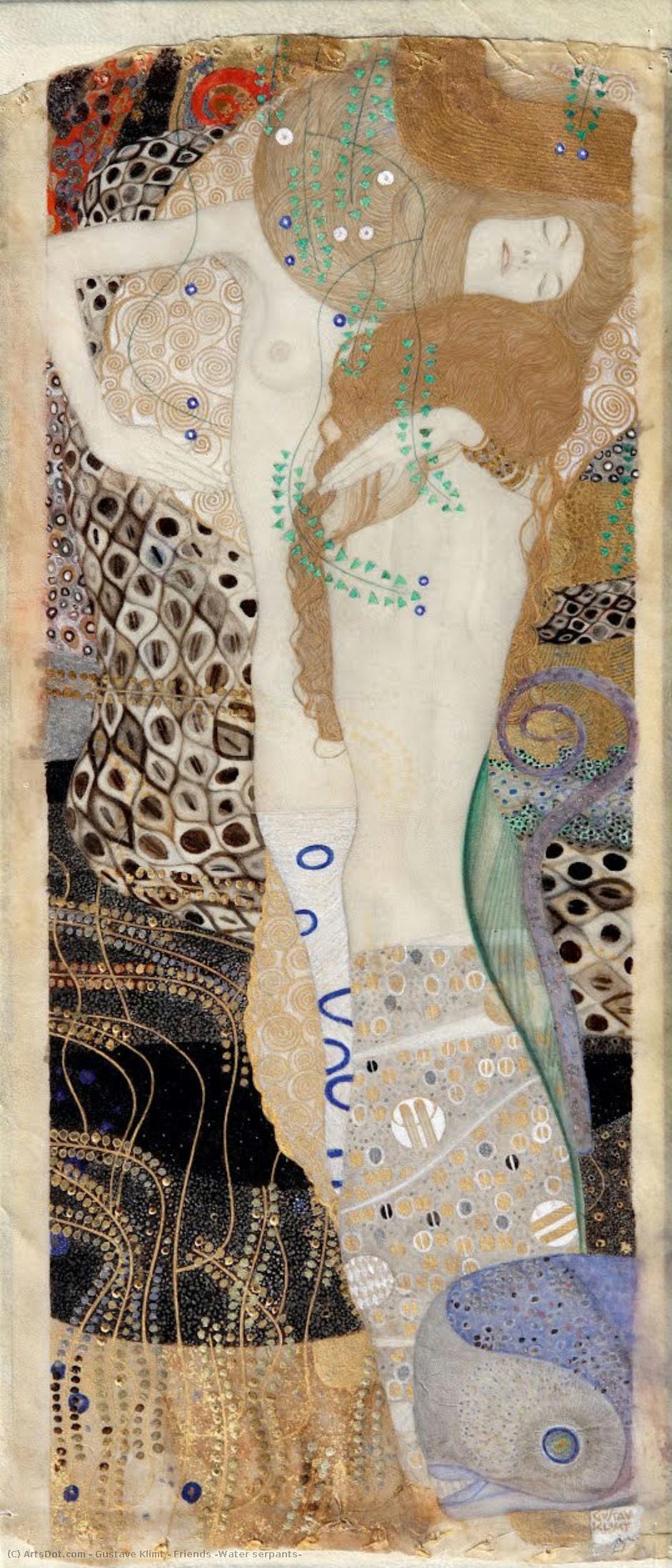
Friends (Water Serpents) – A Symphony of Gold and Myth
Gustav Klimt’s “Friends,” completed in 1907, stands as a cornerstone of Austrian Symbolism and embodies the artistic fervor of its era. More than just a depiction of two women embracing—though their intimate connection is undeniably palpable—the painting operates on multiple levels, layering visual richness with profound mythological references and exploring themes of duality and spiritual harmony.
Painted during Klimt’s prolific period at the University of Vienna, commissioned to adorn the Great Hall's ceiling, “Friends” immediately drew controversy. Critics denounced its opulent ornamentation as vulgar and decadent, accusing Klimt of exploiting female nudity for purely sensual gratification. Despite this initial backlash—a testament to the daring artistic vision of the time—the painting endured, securing its place within the canon of Symbolist art.
Stylistic Innovation: The Art Nouveau Influence
- Style: Klimt’s distinctive style firmly anchors itself in the Art Nouveau movement. Characterized by flowing lines, organic forms, and intricate decorative patterns—particularly the pervasive use of gold leaf—the painting rejects academic conventions in favor of a sensual aesthetic that prioritizes beauty and emotion over strict realism.
- Technique: Klimt employed oil paint on canvas, meticulously applying gold leaf to create shimmering surfaces that capture light and imbue the artwork with an ethereal glow. The technique demanded considerable skill and patience, reflecting Klimt’s dedication to mastering his craft.
Mythological Resonance: Echoes of Odysseus
The painting's symbolism is steeped in classical mythology, specifically referencing Homer’s epic poem “Odysseus.” The two women are positioned as representations of the sirens—mythical creatures who lured sailors off course with irresistible songs—a motif that speaks to the allure of temptation and the struggle between reason and desire. Klimt skillfully juxtaposes smooth, flowing surfaces representing feminine beauty with textured areas symbolizing masculine strength, mirroring Odysseus’s perilous journey home.
Furthermore, the inclusion of birds, fish, and stars contributes to a broader tapestry of symbolic imagery. Birds symbolize aspiration and freedom, while fish represent fertility and regeneration—elements interwoven into Klimt's vision of harmonious union. The scattered stars evoke notions of divine guidance and eternal beauty, elevating “Friends” beyond mere portraiture.
Emotional Impact: Beauty Amidst Controversy
"Friends" transcends its formal constraints to convey a powerful emotional resonance. Despite the criticisms leveled against it during its time, Klimt’s masterpiece continues to captivate viewers with its exquisite craftsmanship and evocative symbolism. The shimmering gold leaf captures the viewer's gaze, inviting contemplation on themes of love, desire, and spiritual transcendence—a testament to Klimt’s enduring legacy as one of Austria’s most celebrated artists.